

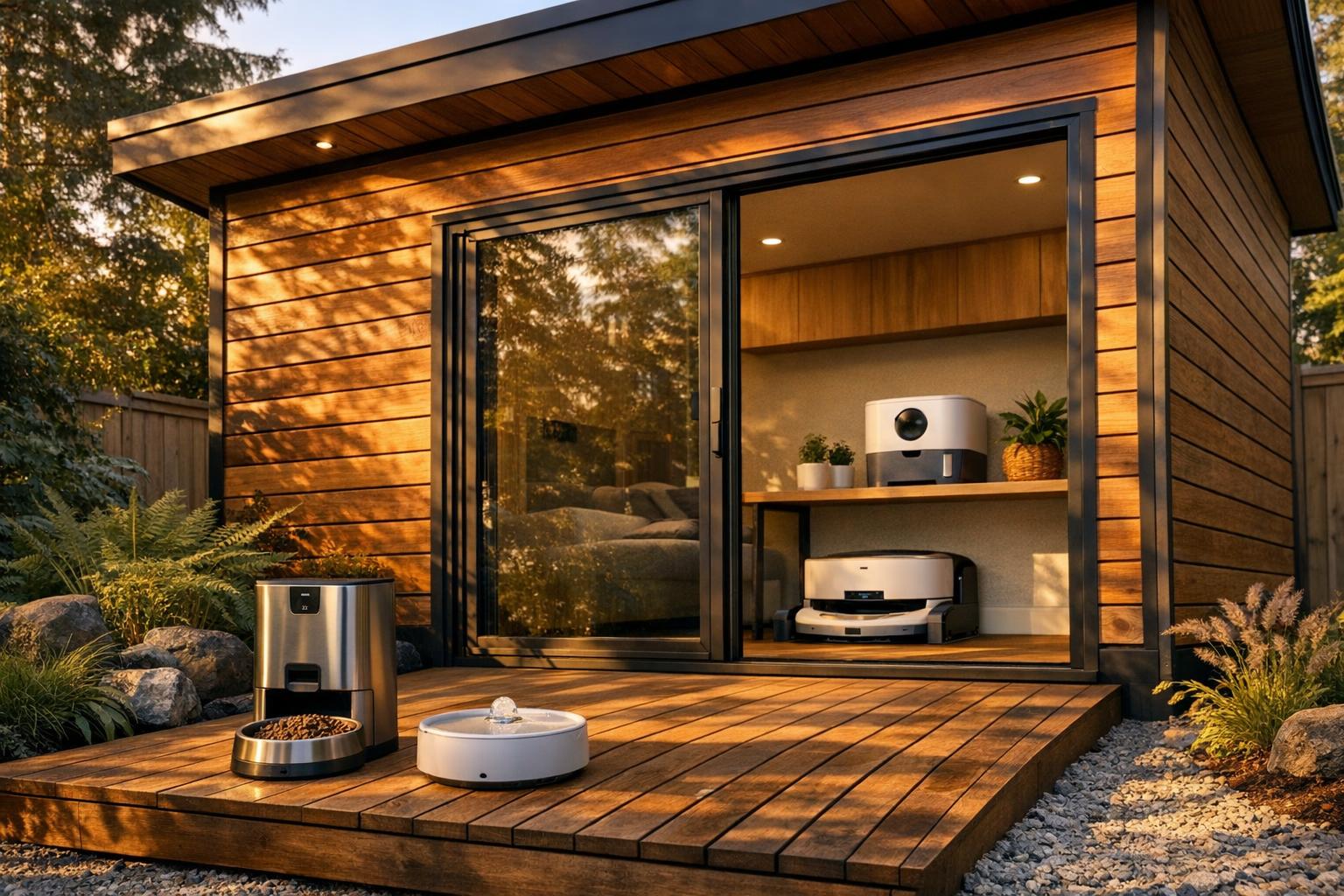
Best 2026 Pet Tech for Tiny Homes and ADUs in Canada: Smart Communication Devices for Better Animal Care
Estimated reading time: 13 minutes
Key Takeaways
- Pet tech matters more in tiny homes and ADUs because pets are closer to doors, heaters, windows, noise, and daily routine changes.
- Tiny Home Living: Discover the Big Benefits and Lifestyle Rewards of Living Small and Small Homes: Compact Living and Efficient Home Design for Stylish and Functional Urban Spaces help frame the broader small-space lifestyle context.
- In Canada, with more than 15,000 new units permitted in 2025, compact living is making remote monitoring and interaction more useful for everyday pet care.
- Best device types for 2026 include two-way cameras, smart collars, telepresence robots, smart feeders, environmental sensors, and shared-care hubs.
- The best setup is not the most expensive one; it is the one that fits your floor plan, internet reliability, climate, and your pet’s actual behavior.
- Canadian buyers should pay attention to privacy, battery backup, LTE fallback, renter-friendly mounting, and cold-weather reliability.
Table of contents
- Why tiny-home and ADU living in Canada makes pet communication more important in 2026
- Why pet tech and smart home integration matter for animal care in small spaces
- The best types of communication devices for pets in 2026
- 2026 Pet Tech Comparison for Tiny Homes and ADUs
- How to choose the right pet tech for a tiny home or ADU
- Space-saving setup and smart home integration tips for ADUs
- Real animal care workflows these devices can improve
- Reliability and safety for Canadian climates and ADU conditions
- Privacy, security, and consent: what Canadian pet owners should check
- What pet tech costs in Canada in 2026
- 3 mini case studies showing the best setup for different Canadian ADUs
- Quick-buy checklist for pet tech in an ADU
- Bonus notes for smart home pet care in an ADU
- Future pet tech trends to watch beyond 2026
- Conclusion
- Frequently Asked Questions
If you leave your dog or cat alone in a small suite for work, errands, or a weekend away, pet tech can make that time safer and less stressful. In a tiny home or ADU, smart home tools and communication devices matter more because pets are closer to doors, heaters, windows, noise, and daily routine changes.
This guide covers the best 2026 pet tech for Canadian small-space living, with practical ways to improve animal care, stay connected, and build a setup that fits a compact home.
For readers looking at the broader tiny living context, see Tiny Home Living: Discover the Big Benefits and Lifestyle Rewards of Living Small and Small Homes: Compact Living and Efficient Home Design for Stylish and Functional Urban Spaces.
Tiny homes and ADUs keep growing in Canada as housing costs rise and zoning rules change. With more than 15,000 new units permitted in 2025, more pet owners are living in compact spaces where remote monitoring and interaction can have a bigger impact on daily care.
Why tiny-home and ADU living in Canada makes pet communication more important in 2026
Canadian housing trends are pushing more people into smaller homes, especially in British Columbia and Ontario. Many ADUs, laneway homes, garden suites, and tiny homes are under 500 square feet.
For homeowners navigating local rules, Canadian ADU Regulations: A Comprehensive Provincial Guide to Secondary Suites, Zoning Laws, and Building Permits is a useful companion read.
That changes how pets live.
In a large house, a pet may move to another room when the sun gets too hot, a hallway gets noisy, or a vacuum starts up. In a compact ADU, there are fewer safe zones and fewer ways for a pet to self-regulate.
Pet communication is also more than just checking a camera feed. Good communication devices can help you:
- See your pet live
- Hear sounds in the room
- Speak to your pet
- Toss treats or trigger feeding
- Get alerts for barking, movement, or room conditions
- Share data with family, sitters, or vets
- Respond fast to stress or environmental changes
Hybrid work adds another layer. Some days you are home. Some days you are not. Pets notice that. In a small home, hallway sounds, delivery noise, neighbour movement, and owner absence can feel bigger and more sudden.
If you are also working remotely, Creating an ADU Home Office: Innovative Solutions for Productive Remote Work in Canada and Digital Nomads in Canada: How to Maximize Remote Work with Tiny Home Offices and Reliable ADU Internet may be helpful.
For animal care, that means better monitoring can help you spot:
- Stress or pacing
- Low activity
- Heat buildup
- Missed meals
- Litter or toileting changes
- Barking or vocalizing patterns
With over 15,000 new units permitted in 2025, pet communication is becoming a real need in compact Canadian homes, not a niche extra.
Why pet tech and smart home integration matter for animal care in small spaces
Pet tech means connected tools that help you monitor, interact with, and automate parts of pet care from anywhere. In a small ADU, that matters because one missed meal, one hot afternoon, or one anxious barking spell can affect the whole home fast.
Smart Home Technology for ADUs: A Complete Guide to Maximizing Comfort, Security, and Efficiency in Canadian Tiny Homes is a strong reference for broader integration ideas.
When pet tech connects to a smart home system, it becomes more useful.
For example:
- Cameras can send movement or sound alerts
- Sensors can help trigger fans or thermostats
- Feeders can run on a set schedule
- Shared access can let a family member or sitter step in
The main benefits are simple.
Peace of mind
You can quickly check if your pet is asleep, pacing, barking, waiting at the door, or resting normally.
Consistency
Automated schedules help prevent missed meals and support steady medication timing.
Faster intervention
If something looks off, like unusual barking or too little movement, you can act sooner.
Environmental safety
Temperature, humidity, and air quality shift faster in a compact ADU than in a larger detached house.
Better care data
Video clips, feeding logs, litter history, and activity trends are useful when talking to a sitter, family member, or vet.
This matters in urban infill suites and in rural cottage ADUs too. If you are not always nearby, connected devices fill the gap between being away and still giving good animal care.
Smart-home-connected pet devices can offer remote video, health data, automated routines, and alerts that reduce stress for pets and owners. For examples of standout 2026 releases, see all the best pet tech that stood out at CES 2026 and broader small-home safety ideas in smart home security for tiny homes.
The best types of communication devices for pets in 2026
The best communication devices for pets in tiny homes depend on what you need most:
- Interaction
- Feeding control
- Health tracking
- Mobility support
- Room condition monitoring
In a small home, compact size and multi-use features matter more than ever. If you are also thinking about layout and privacy, Tiny Home Privacy: Essential Strategies and Design Solutions for Small Spaces and ADU Interiors is worth a look.
Two-way video/audio cameras and treat dispensers
These are stationary pet tech devices that let you:
- Watch live video
- Hear what is happening
- Speak to your pet
- Toss treats from an app on some models
They are useful for:
- Checking separation anxiety
- Interrupting nuisance barking
- Rewarding calm behaviour
- Watching a front door, food bowl, bed, or litter area
Features worth prioritizing:
- HD video
- Night vision
- Wide-angle or 360° view
- App alerts
- Bark or meow detection
- Privacy shutter
- Good low-light performance
In an ADU, one well-placed camera can often cover most of the home. That makes this one of the best-value communication devices for pets in tiny homes.
One downside: sound can echo in a small unit. Adjustable volume and noise filtering help. Upgraded Furbo-style models now offer HD streaming, night vision, and app-based treat tossing.
Smart collars and wearables
These devices stay with the pet instead of watching the room. They can track:
- GPS location
- Activity level
- Sleep
- Wellness signals
- Vibration or haptic cues for training
That makes them different from a camera.
Top ADU and tiny-home use cases include:
- Tracking a dog moving between the main house and ADU
- Watching senior pet activity
- Measuring exercise in pets with limited indoor space
- Using haptic cues for storm anxiety or training reminders
What to check before buying:
- Battery life
- Waterproof rating
- Weight and comfort
- App accuracy
- LTE support
- Fit for cats versus dogs
The main limit is simple: GPS matters less for an indoor-only pet unless the wearable also tracks behaviour or wellness. CES 2026 coverage highlighted AI-powered collars from brands like Invoxia and Whistle with location, wellness data, and vibration-based cues.
Telepresence robots and mobile camera units
These are mobile pet tech tools that move through the home. Instead of one fixed view, they let you check different spots remotely.
That helps in small but divided homes with:
- Loft beds
- Laundry corners
- Bathroom zones
- Under-counter pet spaces
- Separate sleeping nooks
Best uses include:
- Following a curious pet
- Checking several zones
- Starting a short play session
- Reducing the need for multiple cameras
Possible drawbacks:
- Floor clutter can block movement
- Some pets are startled at first
- Battery life is shorter than with a fixed camera
These are best for owners who want active interaction, not just passive monitoring. Compact rolling bots are becoming more common for 360° checks and remote play in small homes.
Smart feeders with scheduling and remote control
Smart feeders are app-connected units that schedule meals and control portions. Some also include:
- Cameras
- Voice recording
- Live video
- Feeding logs
They are especially useful in an ADU because routine stands out more in a compact layout. A missed meal, begging pattern, or food-related vocalizing can disrupt the whole household quickly.
Core uses include:
- Portion control
- Timed meals
- Medication support through pill pockets or meal timing
- Feeding during commutes or short trips
- Reducing anxiety with a predictable routine
Practical checks:
- Hopper size
- Jam resistance
- Backup battery
- Pet-proof lid
- Kibble compatibility
- Whether camera features need a paid subscription
2026 feeder picks such as the Petlibro Granary support app scheduling and remote monitoring, with some models adding camera views at mealtime.
Environmental sensors and climate automation
This smart home category includes sensors that watch:
- Temperature
- Humidity
- Air quality
- CO2
These often connect to thermostats, fans, heaters, or mobile alerts.
They are vital in a compact ADU because small interiors heat up and cool down faster. A pet may spend hours near a sunny window, in a loft nook, or beside an HVAC dead zone without you noticing.
These are not conversational communication devices, but they still communicate by sending condition alerts and triggering action.
Best uses include:
- Preventing overheating in summer
- Managing winter dryness or humidity
- Watching enclosed pet beds or crates
- Checking air quality when litter boxes share the same small interior
Environmental sensors can connect with ADU HVAC systems to maintain safer microclimates for pets. For more on air monitoring, see Tiny Home Air Quality: How to Protect Your Space from Forest Fire Smoke in Canada and Air Quality Sensor Technology for Canadian Tiny Homes: Smarter Indoor Health Solutions for 2026.
Multi-device ecosystems and shared-care hubs
These systems connect several devices in one app, dashboard, or hub.
That is useful in Canadian ADU settings where care may be shared by:
- Family members
- Tenants
- Sitters
- Adult children helping an older parent
Useful features include:
- Role-based permissions
- Combined alerts
- Individual pet profiles
- Shared history
- Easier telemedicine sharing
This setup works well for:
- An elderly parent in a backyard ADU with a cat
- A family property with pets in a secondary suite
- A multi-pet household with different routines
Whisker-style hubs show how litter tracking, alerts, and other data can be shared across caregivers.
2026 Pet Tech Comparison for Tiny Homes and ADUs
Here is a simple side-by-side view of pet tech for ADU buyers in Canada.
| Device category | Best for | Two-way audio/video | GPS tracking | Battery life / backup | Subscription required? | Approximate size | Price range in CAD | Best fit for tiny-home/ADU use |
|---|---|---|---|---|---|---|---|---|
| Cameras/Treat Dispensers | Reassurance, behaviour checks | Yes | No | 24+ hrs backup on some setups | Often $5–10/mo for cloud | 4x4x6 in | $150–300 | One-device coverage of main room |
| Smart Collars/Wearables | Wellness, movement, location | Optional | Yes | 7–30 days | Often about $5/mo for GPS | 2x1x0.5 in | $200–400 | Pets moving between units |
| Telepresence Robots | Active remote checks | Yes | Indoor movement only | 4–8 hrs | Optional | 6x6x4 in | $250–500 | Small divided layouts |
| Smart Feeders | Routine, portion control | Some models | No | Mostly plugged in, some backup | Often $3–7/mo for camera tools | 10x8x6 in | $100–250 | Timed feeding in compact homes |
| Environmental Sensors | Safety, climate alerts | Alerts only | No | 1+ year battery | Often no | 2x2x1 in | $50–150 | Heat and air monitoring |
| Ecosystems/Hubs | Shared care, data history | Varies | Add-on dependent | Varies | Around $10/mo for full plans | 5x3x2 in | $200–600 | Multi-device, multi-caregiver homes |
Sources: Instachew pet tech smart home, Litter-Robot 5, best automatic cat feeder, and best pet tech from CES 2026.
How to choose the right pet tech for a tiny home or ADU
Buying pet tech for an ADU is different from buying for a large detached house. Space, power, mounting, and signal strength matter more.
Use this checklist.
- Compact footprint: Aim for devices under 6 inches where possible
- Low power draw: Under 5W is helpful for always-on use
- Battery backup: Important for cameras, feeders, and internet gear
- LTE or cellular fallback: Helpful in rural or weak-Wi-Fi areas
- Mesh Wi-Fi compatibility: Useful in detached backyard suites or thick-walled units
- Platform compatibility: Match the device with HomeKit, Google Home, or Alexa
- Canadian warranty and bilingual support: Better for returns, setup, and app use
Also avoid:
- Bulky devices that take over counters
- Products that hide basic functions behind subscriptions
- Weak renter mounting options
- Batteries that perform badly in the cold
- Apps with poor caregiver sharing
Compact footprints, low power use, backup power, LTE fallback, mesh support, and major smart home platform support should be priorities in a Canadian ADU.
Space-saving setup and smart home integration tips for ADUs
Good setup matters as much as the device.
Camera placement
- Mount at pet eye level or slightly above
- Try to cover the rest area, feeding spot, and door path
- In a small unit, one camera can often cover up to 80% of the space
Mounting options
- Adjustable arms help fine-tune the view
- Magnetic bases work well for renters
- Adhesive and suction mounts help in no-drill homes
Power and charging
- Use USB-C hubs to reduce cable mess
- Add cable clips and surge protection
- A compact UPS helps during outages
- Solar trickle charging can help in off-grid or cottage ADUs
Connectivity
- Use mesh Wi-Fi nodes in detached units
- One weak signal can ruin two-way audio and alerts
Noise control
- Choose noise-cancelling microphones
- Test speaker volume before leaving your pet alone
- Loud playback can stress pets in small rooms
Privacy zones
- Blur bathrooms, beds, or tenant-sensitive areas when possible
Eye-level placement, magnetic bases, USB-C hubs, mesh nodes, privacy zones, and better microphones all improve performance in a compact ADU. For related home comfort topics, see noise reduction in Canadian housing and privacy in tiny home design in Canada.
Real animal care workflows these devices can improve
Features matter less than outcomes. Here is how pet tech can improve everyday animal care in a small home.
Managing separation anxiety
Problem:
Pets in tiny homes often become very aware of departures and changes in routine.
Device setup:
A camera spots activity, or the owner checks in manually. Two-way audio lets the owner speak. A treat dispenser rewards calm behaviour.
Result:
The pet settles faster, and the owner can interrupt stress before it builds.
This works best with training and enrichment, not as a full replacement for them.
See examples in connected pet care ecosystems and 2026 pet tech coverage.
Medication reminders and timed feeding
Problem:
Meals or pill pockets need to happen on time.
Device setup:
A smart feeder runs on a schedule and sends app updates.
Result:
Fewer missed doses, steadier routines, and less food-related vocalizing in a compact ADU.
Automatic feeders with scheduling features are especially helpful here.
Behavior and wellness monitoring
Problem:
Subtle changes can be hard to notice until they become bigger.
Device setup:
A wearable tracks rest, movement, and routine changes.
Result:
The owner sees early warning signs like restlessness or low activity.
AI alerts are not a diagnosis, but they can tell you when to pay attention. See examples in CES 2026 wearable coverage.
Fitness tracking in limited square footage
Problem:
Pets in an ADU may get less casual movement indoors.
Device setup:
A smart collar logs daily activity.
Result:
Owners can adjust walks, play, and enrichment to make up for reduced indoor space, and share activity data with a vet if needed.
For activity and compact-home planning, see smart collar trend coverage and pet-friendly tiny homes guidance.
Vet telemedicine integration
Problem:
It is hard to explain symptoms from memory.
Device setup:
A hub or app saves feeding history, activity patterns, and video clips.
Result:
Virtual consults become more useful, especially in remote areas or for mobility-limited owners.
Some ecosystems can share data with telemedicine platforms such as Vetster. References include Whisker ecosystem features and broader 2026 pet tech integration trends.
Multi-pet management in a small footprint
Problem:
Two or more pets in a compact home can create confusing routines.
Device setup:
Use feeders, litter tracking, tags, and separate profiles.
Result:
Each pet gets more accurate monitoring, fewer routine mix-ups, and cleaner shared care.
See litter and profile-based care systems and pet-friendly design for Canadian ADUs.
Reliability and safety for Canadian climates and ADU conditions
Canadian weather adds real pressure to pet tech.
Cold-weather battery performance
Lithium batteries often drain faster in low temperatures. Check temperature ratings and use insulated battery packs where needed.
Winter-proofing
For semi-heated areas, outdoor-adjacent spaces, or cottage use, look for hardware and accessories rated to about -30°C. For more climate guidance, see How to Build a Winter-Proof Tiny Home Designed for the Harsh Canadian Climate and Canadian Tiny Home Winterization Checklist: Step-by-Step Guide to Preparing Your Tiny Home for Harsh Canadian Winters.
Connectivity gaps
Detached backyard ADUs and rural properties may need LTE fallback when Wi‑Fi is weak.
Power outages
Use battery backup or a UPS for cameras, routers, and feeders. In outage-prone areas, generator support helps.
Emergency integrations
Smoke and temperature alerts can connect with wider smart home systems for faster response.
Cold-rated accessories, LTE backup, and smart alerts improve uptime and safety. For readiness planning, see tiny home emergency preparedness in Canada.
Privacy, security, and consent: what Canadian pet owners should check
Pet tech may collect:
- Video
- Audio
- Location
- Feeding data
- Behaviour history
Before buying, check for:
- End-to-end encryption
- Local storage options
- Strong passwords and two-factor authentication
- Role-based permissions
- Clear account deletion rules
- Clear data storage location
PIPEDA compliance means the company follows Canada’s private-sector privacy rules for personal information. That matters when a device records inside a home.
In a shared property or rented ADU, be careful where cameras point. Avoid capturing private tenant or family areas. Also avoid products that give no clear answer about data handling or require broad cloud collection for basic use.
Canadian buyers should look for encryption, local storage, and role-based access, plus better clarity around data residency. For small-space privacy planning, see privacy in tiny homes.
What pet tech costs in Canada in 2026
The true cost has three parts:
- Upfront hardware
- Monthly subscription fees
- Extras like mounts, batteries, UPS units, and mesh nodes
Typical hardware ranges in Canada:
- Basic smart feeders: around $100
- Cameras and treat dispensers: $150–300
- Smart collars: $200–400
- Telepresence robots: $250–500
- Environmental sensors: $50–150
- Ecosystems and hubs: $200–600
Typical subscriptions:
- Cloud video
- GPS tracking
- Longer history
- Premium analytics
These often cost about $5–15 per month.
Simple budget tiers:
Low-cost setup
One camera + one feeder + one sensor
Mid-range setup
Add a wearable and a mesh Wi‑Fi node
Premium setup
Use a full ecosystem with shared access, wellness data, and litter tracking
Most one-time buys fall between $100 and $600 CAD, while premium features often add monthly fees.
3 mini case studies showing the best setup for different Canadian ADUs
Urban condo ADU in Toronto
A remote worker lives with a Lab in a 300-square-foot ADU-style condo space. Storms trigger anxiety, and there is not enough room for the dog to move far from windows and noise.
The chosen setup is a mobile camera unit plus a smart collar with haptic cues.
The result is better visibility during storms, calmer remote interruptions, and measurable anxiety reduction. One Toronto-style example in 2026 reporting showed a 40% drop in anxiety markers with this type of combined setup.
Rural cottage ADU in the Okanagan
A weekend property has dogs, chickens, and a compact ADU on-site. The main problem is distance, uneven internet, and summer heat risk.
The chosen setup is an LTE-enabled feeder plus environmental sensors with temperature and CO2 alerts.
The result is reliable feeding and earlier warning when the space gets too hot, even when the owner is away. See feeder options and related rural planning ideas in off-grid ADU mountain retreats.
Multigenerational Vancouver property with backyard ADU
A family shares care for a cat between the main home and a backyard ADU. They need shared visibility without knocking on doors or doing constant in-person check-ins.
The chosen setup is a hub ecosystem with litter tracking, behaviour history, and shared app access.
The result is easier family coordination, more consistent monitoring, and clearer records for care decisions. See hub-style litter tracking systems and multigenerational living with ADUs.
Quick-buy checklist for pet tech in an ADU
Use this list before you buy pet tech for ADU living:
- Test Wi‑Fi strength in every pet area
- Check if basic features need a cloud subscription
- Measure shelf, wall, or floor space first
- Confirm battery backup or UPS support
- Verify LTE or cellular fallback if needed
- Check for bilingual app and support in Canada
- Review privacy settings and PIPEDA-related policies
- Confirm renter-safe mounting options
- Make sure it works with your smart home platform
- Test whether two-way audio has volume control
These checklist points are especially important in small homes where one weak signal, one loud speaker, or one oversized device can affect the whole setup. See pet tech product considerations and ADU-friendly neighbourhood planning in Canada.
Bonus notes for smart home pet care in an ADU
DIY option for tech-comfortable readers
A low-cost camera can sometimes be retrofitted with Raspberry Pi alerts for custom motion or sound notifications in an ADU. This is optional and best for people comfortable with tinkering.
Canadian places to buy and get help
Canadian shoppers may find suitable pet tech through Instachew, Petmate.ca, and Amazon.ca. Setup help may also be available through services such as Best Buy Geek Squad.
Future pet tech trends to watch beyond 2026
Pet tech for ADU living is still evolving.
AI behaviour detection
Future tools may spot small signs of illness, stress, or mobility change even earlier.
Deeper telehealth integration
Data from feeders, cameras, collars, and litter systems may flow more directly into vet platforms.
Ultra-low-power mesh networks
This could make detached and off-grid ADUs easier to support.
Regulatory changes
As ADU rules and connected-device rules change, installation standards, privacy expectations, and placement rules may also shift.
AI behaviour tools, telehealth-linked devices, and low-power mesh systems are key trends after 2026. For future-ready home design, see futureproofing tiny homes in Canada.
Conclusion
The best pet tech for a tiny home or ADU is compact, reliable, easy to place, and genuinely helpful for animal care.
The goal is not to add gadgets for the sake of it. It is to build a small smart home setup that improves daily life for both pets and people.
Best by need:
- Best for reassurance: two-way camera with treat dispenser
- Best for wellness and movement: wearable or smart collar
- Best for routine: smart feeder
- Best for safety: environmental sensor
- Best for shared care: ecosystem hub
The right communication devices depend on your space, internet reliability, climate, privacy needs, and how your pet behaves when alone.
In a Canadian ADU, the best setup is the one that fits the home and supports better care every day.
FAQ
Will smart collars work with limited Wi‑Fi in an ADU?
Yes. Many 2026 smart collars use LTE or cellular service for GPS and can also work with Bluetooth hubs for backup functions. That makes them useful in detached ADUs or spots where Wi‑Fi is weak. See CES 2026 pet tech coverage.
How do I keep pet cameras running during a power outage in an ADU?
Use cameras with battery backup where possible, or connect the camera and router to a compact UPS. In cottage settings, solar trickle charging may also help keep critical pet tech online longer. See pet tech setup options and emergency preparedness guidance.
Are these communication devices winter-proof for Canadian climates?
Some are. Better models and accessories are built for cold-weather use, and some battery packs are rated to about -30°C. Always check the operating temperature before using pet tech in semi-heated or exposed areas. See cold-weather product trends and cold-climate homes in northern Canada.
Can pet tech track multiple pets in one tiny home?
Yes. Many ecosystem platforms separate data by pet using tags, profiles, or device-specific identification. That helps with feeding, litter tracking, and behaviour records in small shared spaces. See multi-pet ecosystem features and multi-generational living in tiny homes.
What smart home platform is easiest for renters in an ADU?
HomeKit and Alexa are often the easiest because many devices are plug-and-play and do not need major wiring. That makes them a good fit for renters and no-drill setups. See device compatibility examples and accessible rental and barrier-free ADU ideas.
How much do subscriptions add to long-term cost?
Many devices work at a basic level without a paid plan, but cloud video, GPS, and advanced analytics often add about $60 to $180 per year. Always check what features are locked behind the monthly fee. See subscription notes on feeders and tiny home resale tips.
Can these devices integrate with vet apps in Canada?
Yes. Some pet tech platforms can share activity data, feeding logs, and video with telemedicine services such as Vetster or similar tools used in Canada. See integration trends in 2026 pet tech and home health care and ADUs in Canada.
Are there space-saving mounts for concrete walls or no-drill rentals?
Yes. Magnetic bases, suction mounts, and renter-safe adhesive mounts can work well when drilling is not allowed or concrete walls make installation harder. See mounting-friendly pet tech products.
Leave a Reply