

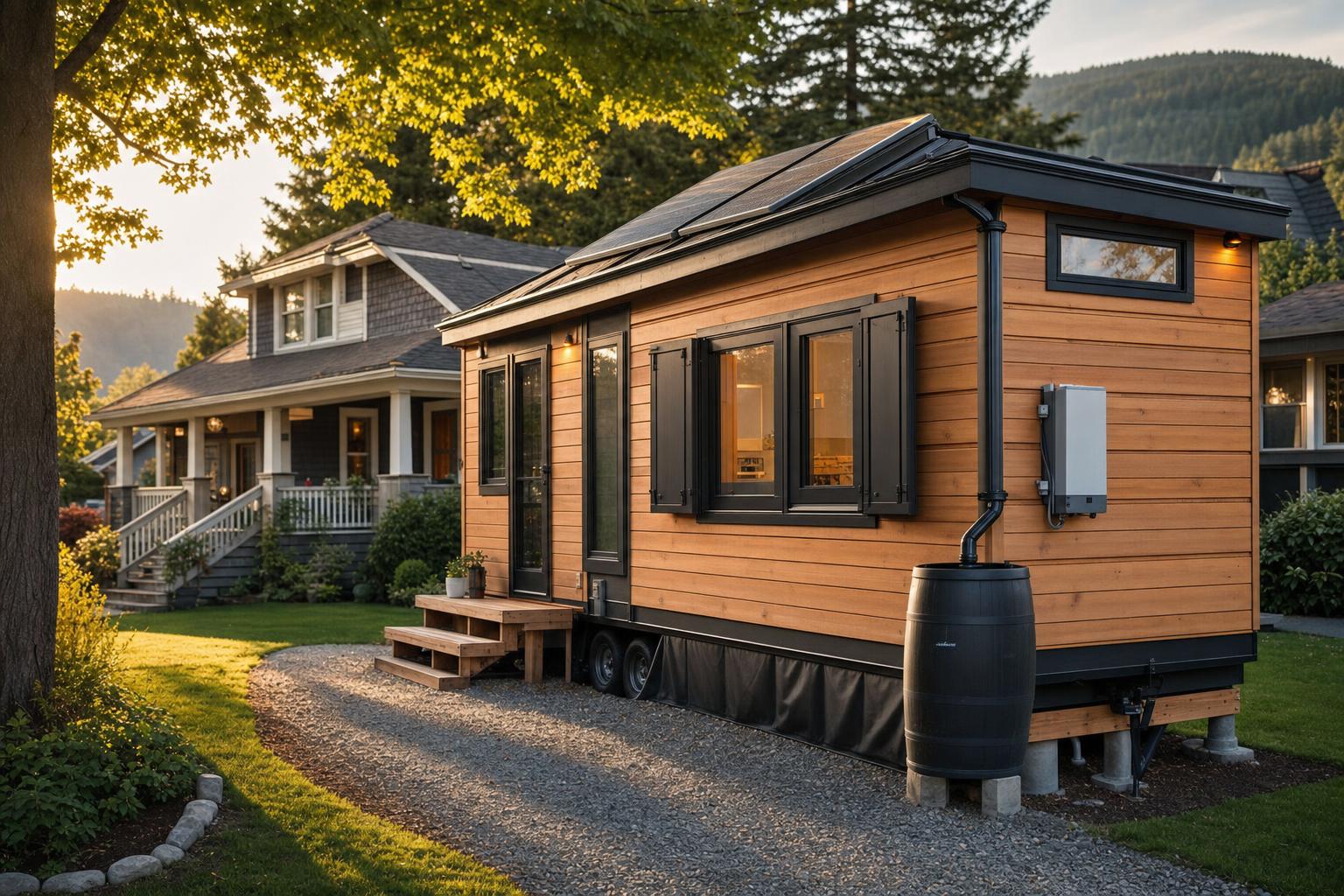
Tiny Home Insurance Innovations in Canada for 2026: Usage-Based, Pay-As-You-Go, and Flexible Coverage for ADUs and Mobile Homes
Estimated reading time: 12 minutes
Key Takeaways
- Tiny home insurance is changing fast in 2026, especially for Canadians with seasonal, mobile, part-time, and rental-ready properties.
- Standard home insurance often does not fit tiny homes, backyard suites, laneway homes, or trailer-based units because occupancy and risk patterns are different.
- Newer products now include usage-based coverage, pay-as-you-go billing, seasonal suspension, storage-only protection, and hybrid policies.
- Tiny home insurance in Canada increasingly depends on how the property is built, used, moved, rented, and permitted.
- Owners of short-term rental ADUs and mobile tiny homes need to pay close attention to transit risk, liability, vacancy rules, and endorsement details.
- Insurance rules vary across Canada, so always confirm coverage terms with a licensed Canadian broker or insurer before purchasing a policy.
Table of contents
- Why this topic matters in 2026
- What counts as a tiny home and ADU in Canada—and why the distinction matters for insurance
- Why standard homeowner policies often fall short for tiny homes and ADUs
- New tiny home insurance innovations in 2026
- Special considerations for Canadian ADUs
- Special considerations for mobile tiny homes
- Typical coverages to look for in a 2026 tiny home or ADU policy
- Common exclusions and red flags that can lead to denial or higher premiums
- Cost comparison and savings scenarios in Canada
- Three real-world case studies with recommended coverage
- How to choose and buy the right policy
- Questions to ask brokers and insurers before you buy
- Risk reduction tips that may lower premiums
- Provincial and regulatory notes for 2026
- FAQs
- Conclusion
- Compliance and disclaimer
Tiny home insurance innovations are changing how Canadians protect small, part-time, mobile, and rental-ready homes in 2026. If you own a tiny home, a seasonal getaway, a trailer-based unit, or one of the growing backyard or laneway units known as ADUs, standard insurance may not fit the way you actually use the space.
That mismatch is becoming more obvious. Many owners no longer live in one place the same way all year. You may stay in a tiny home only in summer, tow it between provinces, rent an ADU on Airbnb for part of the year, or leave it vacant or in storage for months.
This guide explains how products like usage-based coverage, pay-as-you-go options, seasonal suspension, hybrid homeowner/RV/rental coverage, and telematics-enabled protection are reshaping the market. It also covers classification, key coverages, exclusions, pricing, case studies, shopping tips, and common questions.
Important: This article is educational only. Insurance availability, pricing, legal treatment, and underwriting rules vary by province, territory, and insurer in Canada. Always verify details with a licensed professional. For legal and compliance context, see ADU legal clinic guidance for Canada in 2026 and tiny home certification in Canada.
Why this topic matters in 2026
Tiny home insurance innovations matter because housing use is more flexible now.
A unit may be:
- occupied only from May to September
- moved across provincial lines
- rented to guests for part of the year
- vacant in winter
- stored on private land when not in use
Traditional policies were built for permanent, owner-occupied homes with stable use. That is not how many tiny homes and ADUs are used anymore.
“Insurance works best when the policy matches the real risk.”
That is why flexible solutions are growing. In 2026, the main options include:
- usage-based coverage
- pay-as-you-go billing
- seasonal suspension
- hybrid homeowner, RV, and rental products
- telematics-enabled mobile coverage
- storage-only protection for off-season periods
These newer designs aim to align price and protection with how a property is actually used. For related background, see seasonal tiny home living in Canada and tiny home mobility.
What counts as a tiny home and ADU in Canada—and why the distinction matters for insurance
For insurance, the first issue is classification.
There is no single national legal definition of a tiny home in Canada, but many market references place tiny homes at up to about 600 square feet, or 55 square metres.
The main categories are:
- Stationary tiny home: a small dwelling on a foundation or fixed site
- Mobile tiny home: a home built on a trailer with a hitch and towing setup
- Canadian ADUs: secondary self-contained units such as backyard suites, laneway homes, garden suites, or basement units
This matters because insurers do not only insure “a building.” They assess whether the structure, occupancy, legal use, and overall risk profile fit their underwriting rules.
A code-compliant stationary unit may fit home-style coverage. A trailer-based home may need RV-style insurance plus transit protection. Rental-ready ADUs may require landlord or short-term rental endorsements. For more on this distinction, see tiny home on wheels comparisons, types of Canadian ADUs, and short-term rentals in ADUs.
Insurers usually look at:
- how the home was built
- whether it is fixed or movable
- how often it is occupied
- whether it is rented
- whether permits and legal approvals are in place
In simple terms, a legal foundation-based unit with permits is usually easier to insure than a DIY trailer build with unclear certification and part-time guest use. See also ThinkInsure and tiny home legal requirements in Canada.
Why standard homeowner policies often fall short for tiny homes and ADUs
Standard homeowner policies were built around assumptions that often do not fit tiny home insurance needs or ADU use.
Common mismatch points include:
- Full-time occupancy: many tiny homes are seasonal or part-time
- One primary residence: owners may split time between properties
- Standard construction: tiny homes may use custom, container, or DIY methods
- No mobility risk: standard home coverage usually does not address towing or transit
- No guest turnover: short-term rental use often needs specific approval
A simple example helps. A principal residence policy may not respond properly if a backyard unit is rented nightly to guests. Related rental context is covered in hosting guests in ADUs and tiny homes and rental contracts for tiny homes in Canada.
Certification can also be a barrier. If the insurer cannot confirm build quality, permit status, or recognized standards, eligibility may shrink. Vacancy is another issue, especially where policies restrict losses after a long period of non-occupancy. See tiny home certification and tiny home warranty considerations.
Many disputes happen not because the owner had no insurance, but because the policy did not match the real use of the property. Both ThinkInsure and Square One reflect the same broad point: conventional standards and transparent use patterns improve insurability.
New tiny home insurance innovations in 2026: usage-based coverage, pay-as-you-go, and other flexible policies
This is the biggest shift in 2026.
Tiny home insurance is moving away from one fixed annual assumption and toward pricing and coverage based on actual use.
Main innovation categories include:
- usage-based coverage
- pay-as-you-go billing
- seasonal suspension or reduced off-season coverage
- hybrid policies combining homeowner, RV, and rental features
- on-demand liability for short-term rental periods
- telematics-enabled mobile-unit protection
- storage-only coverage when the unit is not in use
These approaches can help seasonal owners avoid paying for full active occupancy when the real risk is lower for part of the year. For additional background, see InsureBC, year-round vs seasonal tiny homes, and seasonal tiny home living.
Typical market ranges often include liability limits from about $250,000 to $2,000,000 and building coverage up to roughly $150,000, depending on provider and property details. Flexible product thinking is also reflected by sources such as Agile Underwriting and Square One.
How usage-based coverage works
Usage-based coverage means the policy price or activation responds to real-world use instead of assuming the home is occupied full-time every month of the year.
In practice, this may use:
- GPS or telematics for mobile units
- occupancy logs or self-reporting
- security or motion sensors
- mileage-based triggers
- location-based risk changes
- water or environmental monitoring systems
Telematics is simply technology that collects driving, location, or usage data so insurance can be priced more accurately. For examples, see remote sensing basics and water leak detection for ADUs.
An insurer may look at:
- number of occupancy days
- how often the unit moves
- where it is parked
- how long it stays in storage
- whether safety systems are installed
The logic is straightforward: you are paying for actual risk periods rather than twelve months of full-use assumptions. Market commentary from InsureBC and related innovation discussions like AI in tiny homes suggest this can help the right part-time owner save meaningfully.
What pay-as-you-go looks like in practice
Pay-as-you-go tiny home insurance charges by active use period, such as a day, week, month, or season, instead of relying only on a traditional annual structure.
Common formats include:
- daily activation for occasional stays
- weekly coverage for holiday use
- monthly billing during active months
- spring-to-fall seasonal coverage
- seasonal suspension during winter or storage
This can help with cash flow because:
- the upfront annual premium is lower
- costs match actual use
- budgeting is easier for part-time owners
But it still has policy wording. Pay-as-you-go does not mean informal coverage. Deductibles, exclusions, liability conditions, and occupancy declarations still matter.
A practical example: a lakeside tiny home used from May to September may cost much less than year-round active occupancy. Some examples from Premier Group suggest seasonal products can land well below a broad full-year setup.
Hybrid and on-demand policy features
Flexible policies often work like a blend of different insurance parts rather than one simple class of product.
A hybrid setup may combine:
- homeowner-style dwelling coverage
- RV-style transit protection
- host or rental liability
- vacancy or seasonal endorsements
- storage-only protection in off months
On-demand features may switch coverage on only when needed. For example:
- guest liability activates while an ADU is rented
- transit coverage activates during towing
- storage protection applies while the unit is parked and unused
These structures are especially useful for Airbnb hosts, snowbirds, seasonal owners, and mobile tiny home users. See snowbird tiny home communities, guest hosting guidance, and Agile Underwriting.
Special considerations for Canadian ADUs
Canadian ADUs create insurance questions that are different from those of a standard detached house.
Insurers usually want to know:
- is the ADU legally permitted
- is it owner-used, tenant-used, vacant, or short-term rented
- does it share utilities with the main house
- is it attached or detached
An ADU may need to be listed separately or specifically scheduled on the main policy. It may also raise liability because more people use the property. If guests or tenants stay there, rental income and commercial-use exposure may require special endorsement. See ADU rental pools in Canada and ADU tax considerations.
Adding an ADU can affect insurance on the main property as well. Rebuild values may need updating for both structures. Related property valuation context can be found in ADU build costs in Canada and ADU investment guidance.
Short-term rental risk is a major issue. Guest injuries, accidental damage, and undisclosed Airbnb or Vrbo use can create major coverage gaps.
Zoning and occupancy rules also vary widely across Canada. Some municipalities are very ADU-friendly; others remain restrictive. A non-permitted ADU may face higher premiums or even denial. See Kingston Specialty Group and Canadian ADU regulations.
Special considerations for mobile tiny homes
A mobile tiny home faces road risk as well as property risk. That is why trailer-based units often need more than one type of coverage.
Key exposures include:
- towing accidents
- theft in transit
- roadside damage
- hitch failure
- cross-provincial movement
- liability in different parked locations
Important coverages often include:
- transit or towing coverage
- roadside assistance
- theft in transit
- collision while moving
- location-based liability
- emergency accommodation if the unit is disabled
Standard RV insurance can be a starting point, but full-time residents should verify occupancy restrictions, liability caps, and exclusions for permanent or semi-permanent living. See tiny homes on wheels and moving a tiny home in Canada.
Usage-based coverage is especially relevant here because insurers may price around:
- mileage
- movement frequency
- route and destination
- storage periods
- GPS or telematics data
Put simply, a trailer-based tiny home may need dwelling protection, transit protection, and liability protection together. Sources like Agile Underwriting, ThinkInsure, and tiny home mobility guidance reflect these concerns.
Typical coverages to look for in a 2026 tiny home or ADU policy
This is the practical checklist.
| Policy type | Best for | Key features | Limitations | Major cost drivers |
|---|---|---|---|---|
| Traditional policy | Full-time stationary homes | Annual coverage, stable wording | Less flexible for seasonal or rental use | Rebuild value, location, claims history |
| Usage-based coverage | Irregular or monitored use | Occupancy or movement-linked pricing | Less useful for full-time use | Occupancy days, mileage, telematics |
| Pay-as-you-go | Seasonal or occasional occupancy | Daily, monthly, or seasonal billing | Must track active periods clearly | Active months, liability level, rental use |
| Hybrid flexible policies | ADUs, mobile homes, mixed use | Combines dwelling, transit, rental, storage | More moving parts to compare | Endorsements, guest use, movement, off-grid systems |
Look for these core coverages:
- Building or Structure: pays for damage to the dwelling itself
- Contents: covers furniture, appliances, electronics, and personal items
- Liability: covers injury or property damage claims from third parties
- Additional Living Expenses: helps if the home cannot be used after a covered loss
- Vacancy, seasonal, or storage endorsements: critical for long non-use periods
- On-demand short-term rental coverage: important for guest stays in ADUs
- Transit coverage: needed for mobile units
- Sewer backup or septic coverage: useful for compact and non-standard systems
- Equipment breakdown: useful for solar, generators, batteries, HVAC, and tankless systems
- Detached structures: for sheds, decks, solar mounts, and storage structures
These broad categories align with guidance from sources such as Square One, InsureBC, and tiny home utilities guidance.
Common exclusions and red flags that can lead to denial or higher premiums
Exclusions are where many buyers get caught.
Main red flags include:
- Non-certified builds: owner-built homes without clear permit or inspection records
- Off-grid systems: solar, batteries, generators, and composting toilets that were not disclosed
- Illegal occupancy: use that local rules do not allow
- Unpermitted ADUs: detached backyard units without approvals
- Undisclosed short-term rental use: guest activity not reported to the insurer
- Long vacancy without compliance: no checks, no winterization, or no monitoring while empty
These issues matter because insurers price known risk. If the real risk is different from what was declared, a claim can be limited or denied. See off-grid living in Canadian tiny homes, composting toilets in tiny homes, and short-term rental ADU guidance.
Before getting quotes, confirm that your permits, certifications, and usage details are documented accurately. Broad insurability themes are echoed by ThinkInsure and Square One.
Cost comparison and savings scenarios in Canada (2026)
Tiny home insurance pricing in Canada varies by province, construction quality, location, rebuild cost, rental use, mobility, claims history, and endorsements.
Here is a simple 2026 cost example chart:
| Scenario | Estimated annual cost |
|---|---|
| Full-time, stationary, code-compliant | $800–$1,500 |
| Seasonal, 4–5 months occupancy | $400–$700 |
| Mobile on trailer, cross-provincial travel | $600–$1,200 |
| ADU with part-time Airbnb use | $1,000–$1,800 |
| Vacation-only, four weeks per year | $150–$300 |
Savings usually come from:
- fewer occupancy days
- lower annual risk assumptions
- telematics discounts
- storage-only periods
- seasonal suspension
Premiums often rise because of:
- guest rentals
- long-distance or cross-provincial travel
- off-grid systems
- weak certification or permitting
- higher liability limits
Who benefits most?
- Pay-as-you-go: best for clear seasonal or occasional use
- Usage-based coverage: best for irregular use or mobile homes with trackable patterns
- Standard annual policy: often best for full-time occupants with steady year-round exposure
These broad market patterns are consistent with guidance from Premier Group, InsureBC, and Square One.
Three real-world case studies with recommended coverage
Case study 1: Seasonal lakeside tiny home, Ontario
Profile
400 sq. ft., stationary, owner-occupied from May to September
Coverage
- pay-as-you-go or seasonal suspension policy
- building: $80,000
- contents: $25,000
- liability: $500,000
- sewer backup: $5,000
- off-season reduced occupancy or storage endorsement
Estimated cost
$450 to $600 per year
Why it fits
The owner is not paying for full active occupancy all year. This is a strong match for seasonal use. Related examples appear through Premier Group, InsureBC, and lakeside ADU guidance.
Case study 2: Mobile tiny home traveling across provinces
Profile
26 x 8 ft trailer, RVIA-certified, full-time traveler
Coverage
- RV-style policy plus transit endorsement
- usage-based coverage with telematics
- building: $120,000
- contents: $40,000
- liability: $1,000,000
- roadside assistance
- theft in transit
- telematics discount around 20%
Estimated cost
$900 to $1,100 per year
Why it fits
Road and transit risk are central. Mileage and location data may help price the risk more accurately. See Agile Underwriting and moving a tiny home between provinces.
Case study 3: Backyard ADU in British Columbia used part-time for Airbnb
Profile
550 sq. ft. laneway home, owner lives in main house, rental use from May to September
Coverage
- main house stays on existing policy
- ADU building: $90,000
- contents: $20,000
- ADU liability: $1,000,000
- on-demand guest liability during rental months
Estimated cost
$1,200 to $1,500 overall, with the ADU component around $400 to $500
Why it fits
This hybrid structure aligns insurance with guest season while keeping year-round property protection. See InsureBC, Square One, and seasonal ADU rentals guidance.
How to choose and buy the right policy
Use this simple process for tiny home insurance, usage-based coverage, pay-as-you-go options, and Canadian ADUs.
Step 1: Document the property and build
Gather:
- exact size
- construction method
- foundation or trailer status
- permits and approvals
- certification records
- replacement value for building and contents
Step 2: Identify the occupancy profile
Be clear about whether the home is:
- full-time
- part-time
- seasonal
- vacant for long periods
- used for short-term rentals
- moved across provinces
Step 3: Match the profile to the policy type
- full-time, permanent, code-compliant: homeowner-style policy
- seasonal use: pay-as-you-go or seasonal suspension
- irregular use: usage-based coverage
- trailer-based use: RV or specialty mobile with transit endorsement
- Airbnb or guest use in ADUs: hybrid or on-demand rental protection
Related rental-use background is available at tiny home Airbnb guidance and short-term rentals in ADUs.
Step 4: Gather multiple quotes
Examples often mentioned in market research include:
- Square One Insurance
- Premier Group
- Agile Underwriting
- Kingston Specialty Group
- Aviva Elite
- Mac Insurance
These examples are educational only, not endorsements.
Step 5: Compare the right questions, not just price
Ask:
- does the policy allow part-time or seasonal occupancy
- is there a storage-only or seasonal pause option
- are transit and roadside issues covered
- are short-term guests covered
- are solar and generator systems covered
- what zoning or permit proof is needed
- what are the vacancy rules
- is telematics optional or discounted
For system-specific questions, see solar-ready ADU design guidance and solar appliances for off-grid use.
Step 6: Review every year
Occupancy patterns change. Rebuild costs change. Product wording also evolves.
That annual review approach is consistent with guidance reflected by InsureBC, Square One, Premier Group, Agile Underwriting, and Kingston Specialty Group.
Questions to ask brokers and insurers before you buy
Take this list to your broker when comparing policies:
- Is my property classed as a home, RV, or specialty dwelling?
- Do you insure mobile tiny homes used as full-time residences?
- Do you offer usage-based coverage or occupancy-based pricing?
- Is pay-as-you-go available by day, month, or season?
- Can I suspend coverage seasonally and keep storage protection active?
- Is Airbnb or Vrbo guest liability included or added by endorsement?
- Are solar panels, generators, batteries, or off-grid systems covered?
- What permits or certification documents do you require?
- Is cross-provincial travel covered?
- What happens if my occupancy pattern changes mid-term?
- Are there exclusions for long vacancy, winterization failure, or undisclosed rental use?
Risk reduction tips that may lower premiums
Do these before requesting quotes.
- Install security systems: smart locks, alarms, and cameras can reduce theft and liability risk
- Get anchoring or engineering proof: especially important for mobile units and weather resilience
- Winterize properly: drain plumbing, monitor heat, and arrange caretaker checks
- Keep certification and build records: this improves underwriting confidence
- Opt into telematics if it fits: may unlock discounts for lower-usage owners
- Keep maintenance logs: these show responsible upkeep
- Confirm zoning compliance for ADUs: this helps avoid surcharge or denial tied to illegal use
Helpful resources include smart home security for tiny homes, ADU maintenance checklists, and tiny home winterization checklists.
Research summaries from InsureBC and Square One suggest that security systems and telematics can support lower pricing in some suitable cases.
Provincial and regulatory notes for 2026
There is no single Canada-wide framework for tiny home insurance or ADU insurance.
Broad 2026 patterns include:
- Ontario: many municipalities are becoming more ADU-friendly, and specialty brokers are active
- British Columbia: strong ADU momentum in major urban areas, with growing insurer awareness
- Alberta: rising interest in ADUs and telematics-linked insurance models
- Atlantic Canada and smaller markets: fewer specialty insurers, so broker negotiation may matter more
Trend themes in 2026 include:
- zoning reforms tied to housing supply
- more insurer testing of telematics and occupancy-linked pricing
- gradual movement toward clearer underwriting definitions
Still, legal occupancy and permit status remain critical everywhere. Local checks are essential. See tiny home friendly municipalities in 2026, along with regional resources from InsureBC and Kingston Specialty Group.
FAQs
Can I insure my tiny home if it’s only occupied part-time or seasonally?
Yes. Many 2026 products support part-time use through usage-based coverage, pay-as-you-go billing, or seasonal suspension. See seasonal tiny home living, InsureBC, and Premier Group.
Does pay-as-you-go cost more in the long run?
Usually not for true part-time users. It may cost more only if occupancy becomes frequent enough that a standard annual policy would have been cheaper. See Premier Group.
How do Canadian ADUs affect my home insurance?
ADUs can change rebuild values, liability exposure, and rental-use classification. If you host guests or earn rental income, your insurer may require endorsements or a hybrid setup. Related resources include Kingston Specialty Group, InsureBC, and ADU investment guidance.
What if my tiny home is owner-built or not certified?
Options usually narrow. Specialty underwriters may still consider the risk, but documentation, inspections, and build quality become far more important. See ThinkInsure, Square One, and tiny home certification guidance.
Are solar panels and generators covered?
Not always automatically. Ask whether the policy includes equipment breakdown or specific off-grid endorsements. See off-grid living, how much solar an ADU may need, and Square One.
Can I get liability coverage for Airbnb guests in my ADU?
Yes. Many flexible policies now offer on-demand or hybrid endorsements that apply during active rental periods. See hosting guests in ADUs and tiny homes, Square One, and InsureBC.
How much can telematics reduce a premium?
Typical discounts in market research are often discussed in the roughly 15% to 25% range for suitable lower-usage or mobile-home cases. See remote sensing basics, water leak detection, and InsureBC.
Conclusion
Tiny home insurance innovations are giving Canadians better options in 2026 than the old one-size-fits-all annual policy.
The right setup depends on how the property is really used, whether it moves, whether it is legally permitted, whether it is rented, and how it was built.
The three main paths are clear:
- usage-based coverage for irregular or monitored use
- pay-as-you-go for seasonal or occasional occupancy
- flexible hybrid policies for mixed-use setups like mobile living, ADU hosting, or part-time rentals
The smartest approach is to document your setup, confirm zoning and permits, compare more than one quote, and review wording carefully with a licensed broker. For final local checks, see ADU legal clinic guidance and tiny home friendly municipalities in 2026.
Compliance and disclaimer
Coverage, underwriting, pricing, and product availability for tiny home insurance and Canadian ADUs vary by province or territory and by insurer. This article reflects general market conditions in 2026, and those conditions may change.
This content is educational only and is not legal, financial, or insurance advice. For policy wording, eligibility, advice, and personalized quotes, consult a licensed Canadian insurance broker or insurer.
Leave a Reply