

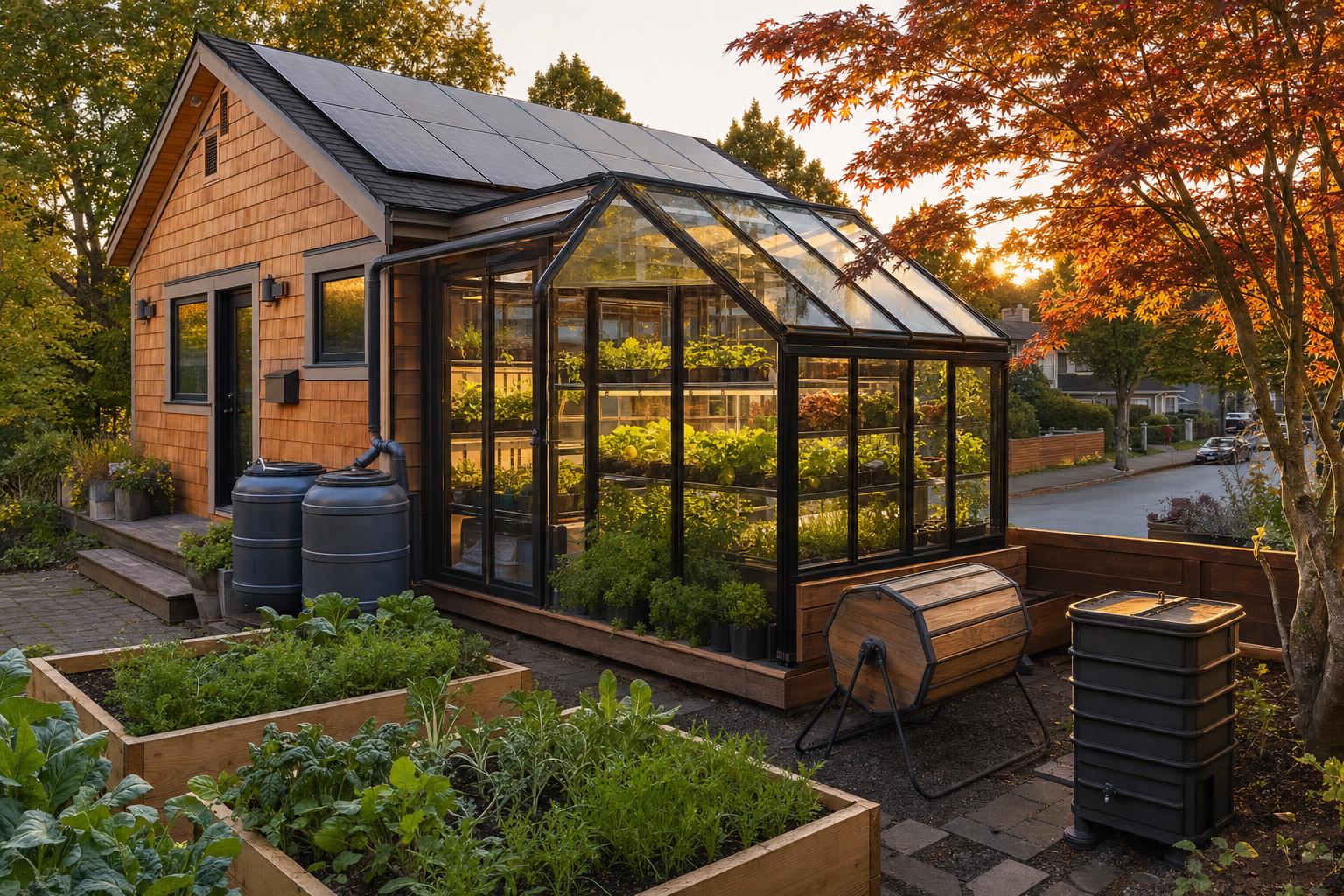
Composting Greenhouse ADU: A Practical 2026 Guide for Canadian Homeowners
Estimated reading time: 12 minutes
Key Takeaways
- A composting greenhouse ADU combines an accessory dwelling unit with a small greenhouse where composting supports heat, nutrients, and healthier soil.
- For many Canadian households, this setup can improve ADU gardening while supporting greenhouse-friendly ADU design.
- The system can divert roughly 250 to 700 kg of organics per year, depending on whether it serves one household or a shared setup.
- A well-designed greenhouse can help grow herbs, greens, and compact vegetables for longer than an outdoor garden alone, especially with a backyard greenhouse ADU approach and cold-climate growing strategies.
- The best results usually come from a simple, phased system: collect scraps, compost properly, grow practical crops, and expand over time.
- This guide covers benefits, system design, layout choices, setup steps, costs, maintenance, and realistic expectations for Canadian homes.
Table of contents
- What Is a Composting Greenhouse ADU?
- Benefits of a Composting Greenhouse ADU
- How a Composting Greenhouse ADU Works
- Designing Your ADU Gardening System
- Step-by-Step Implementation for Waste Reduction and Sustainable Food
- Costs, ROI, and Metrics in 2026
- Maintenance and Troubleshooting
- Case Studies and Inspiration
- Resources and Next Steps
- Frequently Asked Questions
What Is a Composting Greenhouse ADU?
A composting greenhouse ADU is an accessory dwelling unit linked to a small greenhouse where composting helps turn kitchen scraps and yard waste into heat, nutrients, and healthier soil for growing food.
In 2026, this matters more than ever. Canadian homeowners are looking for ways to handle rising food costs, cut waste, and make every square foot work harder. At the same time, ADU gardening is no longer just a hobby add-on. Many people now see an ADU as a flexible space that can support housing, storage, food growing, and eco-conscious living all at once. Resources on greenhouse ADU planning show just how practical that combination can be.
The big benefit is simple: instead of sending organics to landfill, you use them to help grow sustainable food near your kitchen. With the right setup, even a small Canadian property can support herbs, greens, and compact vegetables for much more of the year than an outdoor garden alone. That is especially true when using a backyard greenhouse ADU approach suited to cold-climate gardening.
This guide explains the benefits of a composting greenhouse ADU, how the system works, layout options for Canadian homes, setup steps, costs, maintenance, and realistic performance. It is written for Canadian homeowners, builders, and small-space growers who want a practical path to urban homesteading and zero-waste living.
“A composting greenhouse ADU is not just a garden add-on. It is a small-scale living system that connects waste reduction, food growing, and everyday resilience.”
Benefits of a Composting Greenhouse ADU
A composting greenhouse ADU is appealing because it solves more than one problem at once. It reduces waste, supports food growing, and makes daily living feel more connected to the home.
Waste reduction benefits
A large share of household garbage is organic material. Food scraps, coffee grounds, leaves, and plant trimmings often make up a major share of residential waste by weight in municipal waste streams. That means a composting greenhouse can become a real waste reduction tool, not just a garden feature, especially when paired with smarter recycling habits and zero-waste ADU design.
For a small dwelling, a reasonable model is:
- 5 to 7 kg of organics diverted each week
- about 250 to 350 kg per year from one ADU household
- about 500 to 700 kg per year if the main house and ADU share one composting system
Over time, that creates a circular system. Household organics stop being rubbish and start becoming a useful resource for soil and plant growth. That is one of the strongest reasons to build a composting greenhouse ADU. Even educational sustainability examples, such as those highlighted by EcoSchools, reinforce how visible compost systems can reshape daily habits.
Sustainable food and food security
Compost is decomposed organic material that feeds soil life and improves the physical, chemical, and biological properties of soil. In plain terms, it helps soil hold water better, stay looser, and provide nutrients more steadily.
That matters a lot in small-space ADU gardening because:
- raised beds and containers can produce more in less space
- plants cope better in dry periods
- growers rely less on bought fertilizers
- herbs and greens can be picked close to the kitchen
- harvests can stretch past the normal outdoor season
Local food production also lowers dependence on transported food. That does not mean total self-sufficiency. It means stronger household resilience. Even a modest composting greenhouse can provide steady salad greens, herbs, and a few high-value crops that are costly to buy fresh in winter. For more context, see examples from EcoSchools, practical regenerative living lessons from Verge Permaculture, and Canadian tips for winter gardening in small homes.
Eco-friendly living benefits
A composting greenhouse ADU supports eco-friendly living in several ways:
- reduces landfill methane from organics
- helps build soil carbon
- lowers synthetic fertilizer use
- cuts some food miles, meaning the distance food travels from farm to plate
- reduces packaging waste from store-bought produce
This kind of setup also pairs well with other low-impact features such as rainwater harvesting, passive solar design, and, where allowed, greywater reuse. Community-facing examples, including a compost and greenhouse initiative with Indigenous agricultural innovation potential, show how these systems can support broader sustainability goals.
Lifestyle advantages for occupants
The gains are not only environmental.
A well-designed system can offer:
- fresh greens and herbs a few steps from the door
- a calming daily gardening routine
- a strong feature for eco-minded tenants
- hands-on learning for children, family, or neighbours
- a visible sign of sustainable food and eco-friendly living
Unlike hidden utility systems, this one is easy to see and use every day. That makes the value feel real. It can also align beautifully with biophilic design and broader wellness-focused home design.
How a Composting Greenhouse ADU Works
At its core, the system is simple.
- The greenhouse creates a warmer, more controlled growing space.
- Composting creates nutrients and, in active systems, some heat.
- The ADU provides a steady flow of kitchen scraps and plant waste.
Composting is controlled decomposition carried out by microorganisms. These tiny living organisms need oxygen, moisture, and a good mix of carbon-rich and nitrogen-rich materials to work well.
Common browns include:
- dry leaves
- shredded cardboard
- paper
Common greens include:
- fruit and vegetable scraps
- coffee grounds
- fresh plant trimmings
Healthy compost should smell earthy, not rotten. The greenhouse helps because it shelters the system from rain, snow, and wind. It can also help hold heat and moisture, which supports decomposition and plant growth. For visual demonstrations, this composting video guide is useful, and some homeowners also explore related sanitation systems like composting toilets for tiny homes in Canada.
Composting methods for ADU settings
Hot composting
Hot composting, also called thermophilic composting, heats up through strong microbial activity.
It offers:
- faster breakdown
- better weed seed and pathogen reduction
- useful volume for bigger households
It usually works best when the pile is large enough, often around 1 cubic metre. It also needs turning or another way to add air. This method suits shared systems, larger lots, or homes with regular yard waste. The same composting video guide can help explain the temperature and airflow basics.
Cold composting
Cold composting breaks down more slowly and produces less heat.
It suits people who want:
- lower effort
- fewer interventions
- an overflow system for extra material
It is less useful if you want heat support inside the composting greenhouse, but it can still deliver steady waste reduction.
Vermicomposting
Vermicomposting uses worms, usually red wigglers, to process food scraps.
It is a strong fit for ADU gardening because it:
- works in compact spaces
- produces rich worm castings
- fits under benches or in sheltered corners
- handles daily kitchen scraps well
Worm bins do need protection from extreme heat and cold, so they work best in insulated or protected areas. Related reading on compact compost systems can be found in this guide to composting systems for tiny homes in Canada.
Bokashi
Bokashi is a fermentation-based pre-composting method using inoculated bran.
Its benefits include:
- low odour when sealed
- acceptance of more food scraps than many standard bins
- good fit for tiny kitchens
The fermented material still needs to be buried or finished in compost or soil, so bokashi works best as part of a larger composting greenhouse system.
For many households, the best model is a hybrid:
- bokashi or worms for daily scraps
- a larger bin or bay to finish material
- greenhouse beds that use the finished compost
That combination gives good waste reduction without needing a large pile from day one.
Greenhouse types suited to ADUs
Attached or lean-to greenhouse
Best for:
- narrow lots
- easy winter access
- fast kitchen scrap transfer
Cost level: mid to higher
Climate fit: strong if detailed well
Best compost fit: worms, bokashi, small bins, or carefully managed compost bays
Attached structures save space but often face more code and moisture concerns.
Adjacent freestanding greenhouse
Best for:
- more siting flexibility
- easier separation from the ADU wall
- simpler maintenance access
Cost level: mid
Climate fit: strong with good orientation and insulation choices
Best compost fit: larger bins or bays, hot composting, shared systems
Hoop house or polytunnel
Best for:
- budget-conscious projects
- seasonal growing
- simple layouts
Cost level: budget
Climate fit: varies by region and snow load
Best compost fit: simple bins, cold compost, or seasonal use
Sunroom conversion
Best for:
- existing structures
- homeowners adapting space already on site
Cost level: varies
Climate fit: depends on construction quality
Best compost fit: worms, bokashi, and light compost handling
Designing Your ADU Gardening System
Good design makes the system easier to use every day. That matters more than chasing the most advanced setup. Early planning often starts with Canadian ADU design principles and choosing the right ADU size for your lot and goals.
Attached vs adjacent greenhouse
An attached composting greenhouse ADU has clear advantages:
- direct access in winter
- easy movement of scraps from kitchen to bin
- a shared wall that may help stabilize temperature
- efficient use of small urban lots
But there are cautions:
- moisture management is critical
- condensation can damage walls if detailing is poor
- permits may be more complex
- the ADU wall assembly needs protection
An adjacent greenhouse offers:
- more siting freedom
- better separation from pests and dampness
- possibly simpler approvals
Its trade-offs are:
- less convenience in snow or rain
- possible need for separate water or power
- a longer walk for daily use
In many Canadian cities, attached lean-to designs suit tight lots. In suburban or rural settings, a nearby freestanding structure often gives more flexibility for ADU gardening. Before deciding, review local permit guidance such as Ontario ADU permitting or British Columbia ADU permitting.
Passive solar orientation and envelope choices
In Canada, a greenhouse should usually face south or south-east to catch more winter light. This can make a big difference in shoulder seasons.
Thermal mass means materials that absorb heat during the day and release it slowly at night. Examples include:
- water barrels
- masonry
- concrete
- soil beds
For the greenhouse shell, common options include:
- double-wall polycarbonate for good insulation and durability
- glass for clear views and light, often at higher cost
- an insulated north wall to reduce heat loss
Also plan for:
- snow load
- wind exposure
- local winter temperatures
- summer overheating risk
Passive solar thinking works best when it is part of a whole-home eco-friendly living strategy rather than a stand-alone feature. Helpful references include whole-home permaculture planning, solar-ready ADU design in Canada, and guidance for cold-climate homes in northern Canada.
Routing kitchen scraps from the ADU
The system should be simple enough that people actually use it.
Useful options include:
- a sealed countertop compost bin
- a lidded pail by the door
- a direct hatch or chute in some new builds, where permitted and sanitary
It also helps to post an accepted-items guide, especially if the ADU is rented or shared. What belongs in the system depends on the composting method. Worm bins, bokashi buckets, and hot compost piles each have different rules. This compost sorting and handling video is a useful reference, along with compact-home guidance from Canadian tiny home compost system resources.
Sanitation, odour control, pest-proofing, ventilation
A healthy composting greenhouse should smell earthy, not foul.
To keep it that way:
- use rodent-proof bins
- add fine mesh where needed
- keep airflow moving
- avoid wet, compacted piles
- bury fresh scraps under browns when possible
The greenhouse itself should have:
- operable vents
- windows or roof vents
- an optional exhaust fan for humid summers
- easy-to-clean floor surfaces
- gravel or drainage for wash-down
Most odour and pest problems come from too much moisture, too little oxygen, or exposed food scraps. Supporting resources include the hot composting explainer, the compost handling guide, and practical advice on pest control for tiny homes in Canada.
Water management
Water planning matters as much as compost planning.
Smart options include:
- guttering that feeds rain barrels
- simple irrigation lines to beds or containers
- drainage that stops the floor from staying soggy
Greywater reuse may be possible in some areas, often for subsurface irrigation only, but rules vary widely. Always check local bylaws and plumbing code before designing around greywater. Rainwater harvesting is usually easier to approve and manage. See integrated water and permaculture examples, rainwater harvesting for tiny homes, and greywater recycling for ADUs.
Step-by-Step Implementation for Waste Reduction and Sustainable Food
This is the practical path from idea to working system.
Step 1 — Site assessment and permits
Before buying anything, check:
- zoning rules
- setbacks
- whether the greenhouse counts as a separate accessory structure or part of the ADU
- snow load requirements
- sun exposure
- drainage
- walking access
- nearby water or power needs
- local composting rules
Attached structures usually face more permitting review than detached ones. Start with municipal planning and building staff, then consult broader references such as the Canadian ADU regulations guide and the 2026 ADU legal clinic guide.
Step 2 — Materials and equipment checklist
Core items often include:
- framing
- foundation or base
- glazing
- doors and vents
- compost bins or bays
- worm bin if using vermicomposting
- compost thermometer
- aeration fork
- moisture meter
- raised beds or containers
- soil mix
- irrigation supplies
Each item has a simple role. The frame and glazing protect the space. Vents stop overheating. Bins keep compost tidy. Thermometers and moisture checks help you fix problems early. If you want hot compost, a bin around 1 m³ often performs better than a tiny pile. For build planning, review this compost systems video and consider related envelope ideas such as green roof concepts for tiny homes.
Step 3 — Build in phases
You do not need the perfect composting greenhouse ADU on day one.
A practical phased approach is:
- Start with scrap collection and a worm bin or bokashi bucket.
- Add a few raised beds and a simple greenhouse structure.
- Expand to larger compost bays or hot composting later.
This lowers cost, cuts stress, and helps habits form first. If you are comparing build paths, see the difference between a DIY prefabricated ADU kit and a prefab versus custom ADU build.
Step 4 — Compost setup instructions
To start a compost pile or bin:
- lay down a base of browns for airflow
- add greens and browns in alternating layers
- keep moisture like a wrung-out sponge
- monitor temperature if aiming for hot compost
- turn or aerate when the pile needs oxygen
Examples of greens:
- food scraps
- coffee grounds
- fresh grass or clippings
Examples of browns:
- dry leaves
- shredded cardboard
- shredded paper
Common signs of imbalance:
- bad smell: often too wet or lacking oxygen
- no heat: often too small, too dry, or too heavy in browns
Good composting depends on moisture, air, and balance between materials. The composting explainer video and scrap management guide can help troubleshoot early issues.
Step 5 — Plant selection for small-space sustainable food
For ADU gardening, focus on crops that give fast, useful harvests.
Strong choices include:
- lettuces
- spinach
- kale
- chard
- Asian greens
- basil
- parsley
- thyme
- chives
- cherry tomatoes
- peppers
- cucumbers on trellises
- bush beans
- radishes
Pick crops that are:
- high value
- quick to harvest
- expensive to buy fresh
- easy to grow vertically or densely
Succession planting means replanting right after harvest so beds stay productive. Companion planting means pairing crops that help each other. These two habits boost sustainable food output from a small footprint. For more crop ideas, explore urban gardening tips and compare with alternatives like a hydroponic tiny home system.
Step 6 — Seasonal calendar
A simple Canadian rhythm looks like this:
Spring
- repair the structure
- seed cool crops
- restart or refresh compost
Summer
- vent often
- water carefully
- harvest and replant
Fall
- collect leaves for browns
- plant cool-season crops
- prepare winter compost materials
Winter
- rely more on worms or bokashi
- keep minimal greens or microgreens going
- protect against frozen water lines and excess humidity
Exact timing depends on province, local climate, and whether the greenhouse is insulated. For seasonal planning, see seasonal tiny home living in Canada and winter gardening guidance.
Step 7 — Monitoring and routine checks
Keep an eye on:
- compost temperature
- moisture
- odour
- pest activity
- plant health
- greenhouse overheating
For hot compost, a target of about 55 to 65°C often shows strong activity. Regular checks help prevent small issues from turning into bigger ones. Helpful references include the temperature-focused composting guide, the maintenance video, and tools for smart water management in Canadian ADUs.
Costs, ROI, and Metrics in 2026
The price of a composting greenhouse ADU depends on design choices. Start your budgeting with broader references on ADU construction costs in Canada and hidden ADU building costs.
Main cost drivers include:
- attached vs detached greenhouse
- DIY vs professional build
- glazing quality
- climate-ready upgrades
- plumbing, electrical, or automation
Planning ranges for 2026 in Canada are roughly:
- small greenhouse: CAD $3,000 to $10,000+ installed
- compost setup: CAD $300 to $1,000
- add-ons such as rainwater capture or controls: CAD $500 to $3,000+
These are planning ranges, not fixed quotes.
What readers get in return
Return on investment is not only about cash.
A working system may deliver:
- 250 to 700 kg of organics diverted each year
- regular compost for beds and containers
- several hundred dollars in produce value from herbs, greens, and small crops
- better household resilience
- stronger rental appeal for eco-minded occupants
A rough payback may fall in a 5 to 10 year range, depending on build cost, crop success, and how much of the system is used. Local food production and integrated home systems can also lower dependence on outside inputs over time. See examples from Verge Permaculture and this ADU investment guide for Canada.
Incentives and grants
It is worth checking for:
- municipal sustainability grants
- urban agriculture support programs
- green building incentives
- provincial environmental funding
- utility rebates linked to water or energy features
Some compost and greenhouse projects also connect with wider community sustainability and agricultural innovation efforts, including Indigenous-led initiatives. Explore the Moose Jaw Today greenhouse and compost project story and available ADU grants and municipal incentives in Canada.
Maintenance and Troubleshooting
Long-term success comes from simple, regular habits. A good starting point is this ADU maintenance checklist for Canada.
Regular maintenance tasks
Weekly or biweekly:
- add browns when needed
- check moisture
- turn or aerate compost
- inspect for pests
- harvest mature crops
Monthly or seasonally:
- clean glazing
- inspect seals, vents, and doors
- top up beds with compost
- check drainage before wet or freezing weather
These small tasks protect both the composting greenhouse and the ADU.
Common problems and fixes
Slow composting
Possible causes:
- pile too small
- too dry
- too cold
- too much carbon
Fixes:
- increase volume
- add more greens
- moisten the pile
- insulate or move it to a better spot
Bad odours
Possible causes:
- too wet
- too compacted
- too many scraps without browns
Fixes:
- add dry browns
- turn the pile
- improve drainage and airflow
Pests
Possible causes:
- exposed scraps
- wrong inputs
- poor sealing
Fixes:
- bury scraps
- use sealed bins
- add mesh
- avoid problem foods unless using bokashi
Greenhouse overheating
Possible causes:
- poor venting
- too much solar gain
Fixes:
- open vents
- add shade cloth
- improve airflow
- use thermal mass
Worm bin issues
Possible causes:
- overheating
- overfeeding
- excess moisture
Fixes:
- feed less
- add bedding
- move the bin to steadier temperatures
Most compost problems come back to moisture, oxygen, and feedstock balance. For extra help, use the compost temperature guide, the kitchen scrap management video, and advice on pest control in tiny homes.
Case Studies and Inspiration
These are modeled examples to show what a composting greenhouse ADU can look like in practice. For more inspiration, see Canadian ADU stories and successes.
Case study 1: Urban attached greenhouse
A 1-bedroom laneway ADU has a 9 m² lean-to greenhouse attached to the sunny side.
Features:
- worm bin under a bench
- one compact hot compost bay outside the main glazing line
- herbs and greens produced nearly year-round
Likely results:
- about 400 kg of organics diverted per year
- steady lettuce, spinach, basil, and parsley
- very easy daily use because the greenhouse is steps from the kitchen
This model works well where space is tight and convenience matters most. Related ideas can be found in guides to urban infill ADUs and urban gardening.
Case study 2: Cold-climate detached greenhouse
A Prairie property places a freestanding greenhouse near the ADU.
Features:
- two compost bays
- rainwater capture
- thermal mass barrels
- cool-season crops in shoulder seasons
The key advantage is separation from the dwelling while still using composting greenhouse methods to extend the growing season. This suits colder regions where snow load and venting need careful design. See more on cold-climate gardening and northern home design.
Case study 3: Shared multi-unit setup
A main house and more than one garden suite share a centralized greenhouse and compost area.
Features:
- bokashi buckets in each unit
- one shared finishing compost station
- produce shared among households or neighbours
This kind of layout increases waste reduction and spreads the value of sustainable food beyond a single household. It also shows how ADU gardening can scale in small communities. Explore related planning ideas through co-living ADU developments and eco-village sustainability planning.
Resources and Next Steps
If you are planning a composting greenhouse ADU, start with the basics.
Gather:
- site dimensions
- notes on sun exposure
- a rough budget
- your preferred composting method
- a list of crops you actually want to eat
Then look into:
- your municipal planning and building department
- local composting bylaws
- greenhouse suppliers familiar with Canadian winters
- designers and builders with ADU experience
- urban agriculture groups or extension-style support
Educational sustainability resources can help with planning, and permaculture-style thinking can help you connect compost, water, sunlight, and food growing into one practical system. Good composting guides also make day-to-day operation much easier. Useful starting points include EcoSchools sustainability examples, Verge Permaculture’s home transformation case study, the compost handling video guide, and this overview of the ADU greenhouse guide.
Start simple. Build habits first. Then improve the structure, composting system, and planting plan over time.
Frequently Asked Questions
Is a composting greenhouse ADU safe next to my ADU?
Yes, if it is designed properly. The key points are ventilation, pest-proof bins, moisture control, durable detailing, and local code compliance. A healthy system should be clean, controlled, and well managed. See the composting guide, the kitchen scraps video, and the Canadian ADU regulations guide.
Can a composting greenhouse work with my ADU gardening setup in a small yard?
Yes. Small yards can still support ADU gardening with lean-to greenhouses, vertical growing, worm bins, bokashi buckets, and compact raised beds. The design just needs to match the space. See small homes and compact living ideas.
Which composting method is best for small ADU kitchens?
For very small spaces, worms and bokashi are often the easiest. Worm bins turn scraps into castings with little footprint. Bokashi stays sealed and low odour. Small-bin composting also works, but it usually needs more outdoor space to finish well. Helpful references include the compost handling video and this guide to compact compost systems for tiny homes.
How much sustainable food can I realistically grow in an ADU greenhouse?
It depends on light, climate, crop choice, and how well you manage the space. Start by expecting strong yields from herbs and greens. Tomatoes, peppers, and cucumbers can also do well if light and warmth are good. For crop planning, see urban gardening tips and winter gardening guidance.
Will composting attract pests or create smells for my ADU tenants?
Not if the system is healthy. Good compost should smell earthy, not foul. Sealed bins, proper browns-to-greens balance, and pest-proof storage greatly reduce problems. Review the compost basics video, the scrap sorting guide, and practical advice on pest control.
Do I need permits to add a greenhouse to my ADU?
Often, yes or at least some form of approval. Attached and detached structures may be treated differently by local authorities, so always check before building. Start with Ontario permitting guidance, British Columbia permitting guidance, and this overview of ADU permits in Canadian cities.
Can greywater be used in a composting greenhouse?
Sometimes, but rules are strict in many places. Greywater is usually more regulated than rainwater harvesting and may only be allowed for certain irrigation uses. Always confirm local code first. See greywater recycling for ADUs and greywater landscaping guidance.
What’s the easiest way to start if I’m not ready for a full build?
Start with a sealed kitchen scrap bin, a worm bin or bokashi bucket, and a few raised beds. That gives you a simple ADU gardening system for sustainable food without a major build. For starter ideas, see urban gardening tips and backyard greenhouse ADU inspiration.
A composting greenhouse ADU can turn a small home into a practical hub for waste reduction, sustainable food, and eco-friendly living. The best results usually come from starting simple, building good habits, and expanding the system over time.
Leave a Reply