
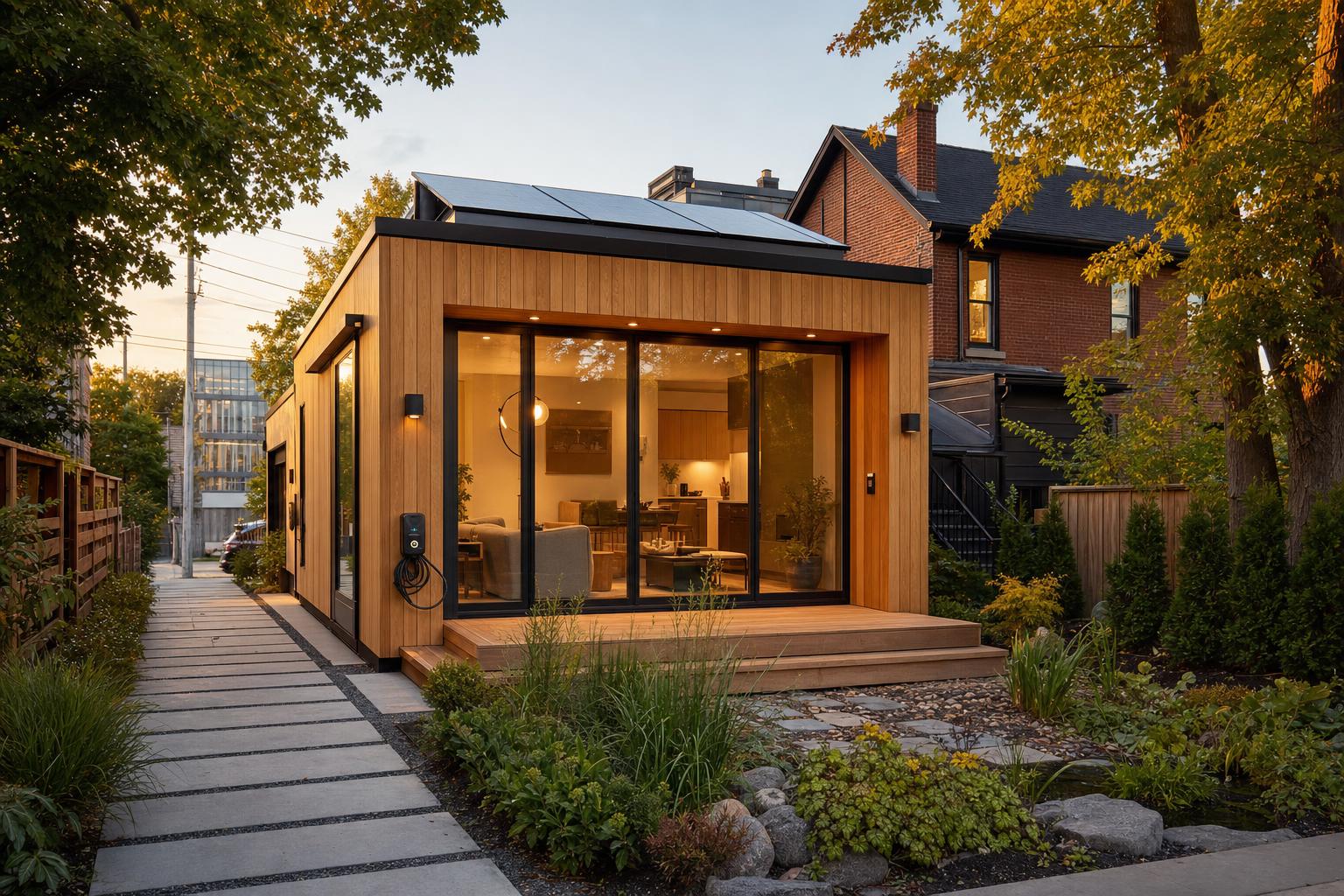
Tiny Home Tech Startups Canada: The Startups Accelerating Compact Living in 2026
Estimated reading time: 13 minutes
Key Takeaways
- tiny home tech startups Canada matter in 2026 because housing pressure, ADU policy changes, climate goals, and labour shortages are all pushing Canada toward compact housing solutions.
- This showcase covers Canadian startups working in prefab building, modular systems, smart living, sustainability tech, and ADU technology.
- You’ll learn what each startup builds, what problem it solves, how the product works, and where it fits best.
- The article also includes buyer guidance, market context, and future trends shaping compact housing.
- There are 2+ concrete case studies to show how these systems work in real projects.
- This is a practical shortlist, not a hype list or a generic explainer.
Table of contents
- Why tiny homes and ADUs matter in Canada in 2026
- What tiny home tech means in 2026
- How we selected the most promising Canadian startups
- Canadian startups transforming tiny home tech and ADU living
- The key technology clusters shaping tiny home tech in Canada
- Real-world tiny home and ADU case studies in Canada
- How to choose the right tiny home tech or ADU solution
- Why investors and accelerators are watching Canadian startups in this space
- What is still slowing adoption
- Where tiny home tech and ADU innovation are heading next
- Frequently asked questions about tiny home tech startups in Canada
tiny home tech startups Canada are accelerating a new era of compact, efficient living in 2026.
Across the country, Canadian startups are building the tools that make small homes more practical: prefab construction systems, smart living controls, energy-saving equipment, and ADU technology for faster design, permitting, and installation.
This matters now because Canada still faces housing shortages in major cities and smaller communities, while zoning rules are slowly opening the door to laneway homes, garden suites, and other accessory dwelling units.
At the same time, climate goals, rising construction costs, and labour shortages are pushing the market toward better building innovation.
In this article, tiny home tech means the products and systems that make small-footprint housing more efficient, code-compliant, comfortable, and easier to scale. In 2026, that usually means combining prefab construction, ADU technology, and smart living systems instead of treating them as separate choices.
Below, you’ll find the Canadian startups to watch, what they actually build, how their technology works, and what homeowners, builders, investors, and planners should know about costs, timelines, and fit.
Why tiny homes and ADUs matter in Canada in 2026
Tiny homes and ADUs matter because Canada needs more housing options that can fit inside existing neighbourhoods. In cities such as Toronto, Vancouver, Montreal, Calgary, and Halifax, supply pressure remains high. Full redevelopment is slow and expensive. By contrast, a backyard suite, laneway home, or small modular unit can add livable space with less land acquisition and less disruption.
That is why ADUs are getting more attention. They are increasingly seen as a practical infill housing option. A property owner can add a rental unit, a home for family, or a downsizing space without waiting for a large condo project or a new subdivision. Source: secondary unit benefits in Canada
Policy change is another driver. More municipalities are testing or allowing laneway homes, garden suites, and ADUs in low-rise areas. That matters because ADU technology only scales if local rules allow installation, servicing, and occupancy. Source: Canadian ADU regulations guide
Environmental pressure is also shaping the market. Smaller homes usually use fewer materials and less energy than large detached homes. But in Canada, good design must also handle snow loads, deep cold, wildfire risk, and tough transport conditions in rural and remote regions.
This creates room for innovation, not just in the structure, but in envelopes, ventilation, utility systems, and remote monitoring.
Construction pressure adds one more reason. Builders still face labour shortages, material cost swings, and long project timelines. Industrialized construction, digital workflows, and modular systems can reduce some of that friction. This is where Canadian startups fit. They are filling gaps with factory-built systems, compliance-ready ADU packages, integrated smart living controls, and energy or water systems built for compact homes. Source: prefab house modern housing
These trends sit inside a larger Canadian proptech and construction innovation shift toward industrialized building and digitalization. Sources: Proptech in Canada 2025 Report, Building the future: Canada’s 2026 construction outlook
What tiny home tech means in 2026
In this article, tiny home tech means “the set of construction systems, hardware, software, and sustainability solutions specifically optimized for small-footprint homes and ADUs, with the goals of faster delivery, better energy performance, easier operation, and a better occupant experience.”
That definition matters because many people think tiny homes are only about style or living with less. Here, tiny home tech is about what makes small homes practical: compliance, comfort, durability, lower operating costs, and repeatable delivery.
Prefab and modular construction systems
Prefab systems are modules, panels, or kit parts built in a factory and then moved to site. This can mean wall panels, structural insulated panels, lightweight steel framing, composite panels, or full modular box units. Sources: modular homes cost efficient and green, prefab ADU vs custom build
The benefits are clear:
- shorter build times
- tighter quality control
- less weather delay
- better labour efficiency
- more repeatable thermal performance
For Canada, climate-specific prefab matters. Some startups are engineering modular systems for hard northern conditions, which shows how far construction innovation has moved beyond simple “tiny cabin” thinking. Sources: Canadian startup advances Arctic housing innovation, cold climate tiny home construction
ADU technology
ADU technology is the set of systems and workflows that make backyard suites, laneway homes, and garden suites easier to design, permit, service, and install. Source: ADU glossary Canadian terms
That can include:
- standard floorplans
- pre-engineered mechanical, electrical, and plumbing layouts
- modular foundation systems
- simpler utility hookups
- permit and compliance documentation packages
So ADU technology is not just the box you live in. It also includes the process tools that reduce project friction before the build even starts. Source: ADU digital permitting in Canada
Smart living hardware and software
In compact housing, smart living means connected controls and digital systems designed for small spaces. These systems often manage:
- heating
- cooling and ventilation
- lighting
- shading
- security
- appliance timing
- remote monitoring
In a small home, one weak control system can affect the whole space fast. If ventilation is poor, the whole unit feels it. If heating overshoots, comfort drops quickly. That is why smart living design matters more in tiny homes than many buyers expect. Sources: smart home technology for ADUs, AI tiny homes
Sustainability tech
Sustainability tech covers the systems that reduce environmental impact in both operation and construction. That includes:
- solar and battery packages
- high-R-value envelopes
- greywater systems
- HRV or ERV ventilation
- low-carbon materials
- rainwater capture where suitable
High-performance envelopes and climate resilience are especially important in Canada. The same remote and Arctic housing work noted above shows how insulation, durability, and logistics-aware design are central to compact housing innovation. Sources: Arctic housing innovation, net-zero ADU sustainable communities
How we selected the most promising Canadian startups
This article features notable startups to watch. It is not a strict ranking because most companies do not publish enough comparable data for a fair scorecard.
We used five filters.
1. Canadian presence
The company needed to be based in Canada or have major operations, manufacturing, or deployment activity in Canada.
2. Direct relevance to tiny homes or ADUs
The startup had to offer a product designed for tiny homes, modular small homes, backyard suites, or another clear small-footprint use case.
3. Evidence of innovation
Here, innovation means more than good branding. We looked for signs such as:
- proprietary systems or materials
- code-ready product packages
- unique digital tools
- faster installation workflows
- measurable energy, cost, or time savings
4. Evidence of traction
Traction can include:
- pilot projects
- customer deployments
- partnerships with builders or municipalities
- accelerator participation
- published case information
5. Geographic spread
We aimed for a broader Canadian picture, not just one city or one corridor.
This approach fits the wider Canadian proptech ecosystem, where accelerators, innovation programs, and industry platforms are helping early-stage firms test housing and construction tools in real markets. Sources: REACH Canada, Proptech in Canada 2025 Report, Canada construction innovation analysis
Canadian startups transforming tiny home tech and ADU living
The heart of the tiny home tech startups Canada story is productization. These Canadian startups are not just talking about compact housing. They are building systems that aim to make small-footprint homes faster to deliver, easier to operate, and better suited to Canadian conditions.
CABN — Brockville, Ontario
Company snapshot
Founded in 2017, CABN is a Canadian startup focused on off-grid and low-impact compact homes with integrated sustainability systems.
What they build
CABN builds compact prefabricated homes designed around efficient envelopes, energy systems, and small-footprint living.
The problem they solve
They target buyers who want lower energy use, simpler living, and faster deployment than a conventional custom cottage or small house.
How the technology works
CABN homes combine prefabricated construction with integrated building systems and a design approach aimed at energy performance and low environmental impact. Depending on model and site, packages may include advanced insulation, compact layouts, and optional off-grid features.
Who it is best for
Rural homeowners, recreational property owners, downsizers, and buyers looking for a compact primary or secondary dwelling. Source: tiny house living in Canada
Estimated pricing / installation / lead time
Pricing varies by model, finishes, and site work. Buyers should expect site prep, delivery, permits, and utility servicing to sit outside the base unit in many cases.
Real-world proof
CABN has built a visible brand around compact, design-led prefab living in Canada, showing demand for homes that combine tiny home tech with sustainability.
Roadmap / what’s next
The likely growth path is broader model standardization and stronger integration of energy and monitoring systems.
Nestron-style compact smart housing players in Canada’s ecosystem — market watch category
Not every relevant company is a pure startup builder. Some are system-focused firms or emerging market entrants. In Canada, this matters because the tiny home tech market includes platform, supply, and install-layer innovation, not only home brands.
Promise Robotics — Edmonton, Alberta / Vancouver presence
Company snapshot
Promise Robotics is a Canadian construction technology company using robotics and automation in homebuilding.
What they build
Its core offer is automated manufacturing technology for housing production rather than a consumer tiny home product.
The problem they solve
Housing builders need more output with fewer labour bottlenecks. That matters directly for ADUs and compact modular housing, where repeatable production is key.
How the technology works
Promise Robotics focuses on robotic and software-driven fabrication workflows that can help produce building components more efficiently and consistently.
Who it is best for
Prefab manufacturers, modular builders, and housing producers aiming to scale.
Estimated pricing / installation / lead time
This is enterprise infrastructure, not a homeowner purchase. Costs depend on manufacturing scope and deployment setup.
Real-world proof
The company has become one of the more visible names in Canadian construction innovation discussions.
Roadmap / what’s next
More factory automation could lower production friction for ADU technology and compact prefab units over time.
Mappedin — Kitchener, Ontario
Company snapshot
Mappedin is a Canadian startup best known for indoor mapping technology.
What they build
Its main products are digital mapping and spatial tools, which are not tiny-home products by themselves, but they show how spatial software can support smart living, property management, and multi-unit compact housing environments. Source: remote sensing basics
The problem they solve
Compact housing and rental ADU operators need better digital visibility, especially in clustered or managed environments.
How the technology works
Mappedin creates digital indoor maps and interfaces that can connect to property tools and navigation layers.
Who it is best for
Builders, property operators, and pilot projects with multiple units rather than single-home consumers.
Estimated pricing / installation / lead time
Enterprise pricing varies by deployment.
Real-world proof
Its traction in Canadian tech makes it relevant to the broader housing digitization story.
Roadmap / what’s next
Spatial data could play a bigger role in ADU clusters and managed rental communities.
1VALET — Ottawa, Ontario
Company snapshot
1VALET is a Canadian startup focused on smart building and resident experience technology.
What they build
It offers smart living software and hardware integrations for access, security, communication, and automation in residential settings.
The problem they solve
Owners of rental ADUs or multi-unit small housing projects need easier monitoring, access control, and occupant management. Source: ADU concierge services in Canada 2026
How the technology works
The platform can connect smart entry, intercom, building access, and digital management tools into one resident-facing system.
Who it is best for
Rental investors, ADU operators, and builders planning small clusters or managed compact housing.
Estimated pricing / installation / lead time
Pricing depends on hardware scope and unit count. Single-unit use cases may be limited compared with larger deployments.
Real-world proof
1VALET is part of the growing Canadian smart-living and proptech layer around housing operations.
Roadmap / what’s next
Expect more integrated monitoring and automation features for smaller rental formats.
ecobee — Toronto, Ontario
Company snapshot
ecobee is one of the best-known Canadian smart home firms, and it matters for tiny home tech because climate control is critical in compact spaces.
What they build
Smart thermostats, sensors, and home monitoring tools.
The problem they solve
Small homes can overheat, overcool, or feel stuffy quickly. Better HVAC control improves comfort and can reduce energy waste. Source: eco-friendly heating ADU guide Canada
How the technology works
ecobee devices use smart scheduling, occupancy sensing, and app-based control to manage heating and cooling more efficiently.
Who it is best for
Homeowners adding a backyard ADU, compact-home buyers, and landlords wanting remote visibility.
Estimated pricing / installation / lead time
Thermostat hardware is relatively affordable compared with full building systems, but compatibility depends on HVAC setup and wiring.
Real-world proof
ecobee’s market traction makes it a practical smart living layer for ADUs and compact homes.
Roadmap / what’s next
More automation and energy management features are likely as home systems become more connected.
Mysa — St. John’s, Newfoundland and Labrador
Company snapshot
Mysa is a Canadian startup focused on smart thermostats for electric heating systems.
What they build
Smart thermostats for baseboards, mini-splits, and electric home heating.
The problem they solve
Many Canadian compact homes and suites use electric heat. Mysa helps manage that energy use more precisely.
How the technology works
Its devices connect to home Wi‑Fi and allow scheduling, zoning, and remote control through an app.
Who it is best for
ADU owners, tiny homeowners, and retrofit projects using electric heating.
Estimated pricing / installation / lead time
Hardware costs are modest compared with structural upgrades, though electrician support may be needed.
Real-world proof
Mysa has become a strong fit for Canadian climates and electric-heating homes.
Roadmap / what’s next
Growth will likely centre on broader home energy management and device integration.
BioNorth Solutions / Arctic housing innovation example — northern Canada relevance
Company snapshot
A Canadian startup highlighted for advancing Arctic housing innovation with a modular system designed for remote deployment.
What they build
A lightweight, modular building system for harsh northern conditions.
The problem they solve
Remote communities face extreme logistics costs, short build seasons, and climate performance challenges. Source: northern Canada ADU solutions
How the technology works
The system is designed for local assembly and resilient envelope performance, with lessons drawn from advanced engineering methods. The pilot context reported a build cost around $90,000, though that figure is project-specific and should not be treated as a standard market price.
Who it is best for
Remote community housing, northern pilots, and specialized compact housing deployments.
Estimated pricing / installation / lead time
Costs vary sharply based on transport, labour, site conditions, and servicing. Remote pricing is never one-size-fits-all.
Real-world proof
The Arctic pilot is one of the clearest examples of climate-specific compact housing innovation in Canada.
Roadmap / what’s next
If scaled, this type of system could reshape remote modular housing economics. Source: Canadian startup advances Arctic housing innovation
ADDY — Vancouver, British Columbia
Company snapshot
ADDY is a Canadian proptech startup better known for real estate investing access, but it is relevant because funding models affect ADU and compact housing adoption.
What they build
A platform that broadens access to real estate investment.
The problem they solve
Housing innovation needs capital pathways. Smaller housing formats and pilot projects often need new funding and ownership models. Source: ADU financing and co-ownership in Canada
How the technology works
Digital investment workflows allow broader participation in real estate deals.
Who it is best for
Investors watching the compact-housing and infill space rather than owner-builders.
Estimated pricing / installation / lead time
Not a direct housing product.
Real-world proof
Its inclusion shows that the tiny home tech ecosystem also includes capital and market infrastructure.
Roadmap / what’s next
Alternative financing could become more important for scaled ADU communities.
Startup discovery and ecosystem context for the shortlist came from Canadian startup and proptech sources, while performance claims should always be checked against company-specific data. Sources: Canada startups list, Canadian tech entrepreneurs to watch in 2026, best technology startups in Canada, REACH Canada, Proptech in Canada 2025 Report, Canada’s 2026 built-environment outlook
The key technology clusters shaping tiny home tech in Canada
Construction innovation
Construction innovation in tiny home tech usually falls into four models:
- panelized systems
- volumetric modular units
- flat-pack systems
- automated or semi-automated fabrication
The appeal is simple: faster cycle times, more controlled quality, repeatable insulation performance, and less waste or rework.
But there are limits too. Large modules may face transport rules. Tight lots may limit crane access. Site prep still matters. And code compliance can change from one municipality to the next.
These industrialized construction trends are already visible across the broader Canadian market, not just in tiny homes. Remote modular work in the Arctic also shows why logistics-aware systems matter in Canada. Sources: Proptech in Canada report, building the future in Canada, Arctic modular work
ADU technology
ADU technology lowers project friction. That means:
- permit-ready documentation
- standard layouts
- utility planning
- foundation options
- code-aware design packages
A faster permit or easier servicing plan can be just as valuable as a faster factory build. Many backyard suites get delayed not by framing, but by planning, setbacks, drainage, utility coordination, or foundation issues. Sources: ADU digital permitting Canada, utility connections for Canadian ADUs
Smart living systems for tiny homes
Smart living matters more in small homes because compact volumes react fast. Heat builds up faster. Moisture problems spread faster. One room often has many uses, from sleeping to working to dining.
Useful smart living features include:
- occupancy-aware lighting
- remote HVAC monitoring
- indoor air quality tracking
- smart locks for rental ADUs
- energy dashboards
In rural or remote settings, connectivity and privacy need extra thought. A good system should still work in a basic mode if the internet drops. Sources: best internet for tiny homes in Canada, remote sensing basics
Sustainability and circularity
Operational sustainability in tiny home tech includes better insulation, airtightness, smart ventilation, and right-sized renewable energy packages. Embodied sustainability includes lower-carbon materials, better factory precision, and less site waste.
For Canada, moisture control and ventilation are just as important as insulation. High-performance envelopes need healthy fresh-air systems too. Arctic housing work shows why resilience and envelope quality are central to compact housing design. Sources: Arctic housing innovation, net-zero ADU sustainable communities
Real-world tiny home and ADU case studies in Canada
Case study 1: Urban backyard ADU in Ontario
A homeowner in Ontario wants a garden suite for rental income and family overflow. The lot seems suitable, but the early step is not design. It is feasibility.
First, the owner checks zoning, setbacks, height limits, tree issues, and servicing capacity. Then they compare a standard ADU package against a custom design. The standard plan wins because it shortens permit work and keeps costs more predictable. Sources: ADU permits in Canadian cities, ADU cost to build in Canada 2025
The selected vendor provides permit drawings and a pre-engineered layout for plumbing and electrical runs. Site prep and utility trenching still take time, but the factory-built shell reduces on-site disruption. A smart thermostat, lock, and ventilation control system are added during commissioning.
The result is a faster path to occupancy than a fully custom backyard build, with better comfort control and simpler remote access for tenant turnover.
Lessons learned
- servicing checks should happen early
- standard plans often save time
- data wiring and energy controls should be planned upfront
Case study 2: Remote or northern modular deployment
In a remote Canadian setting, the main challenge is not only housing need. It is logistics. Labour is harder to access. Materials are costly to move. Weather windows are short.
That is why advanced modular systems matter. A Canadian startup featured in Arctic housing innovation used a lightweight, locally assembled building system aimed at reducing transport burden and build complexity. In the reported pilot context, the build cost was around $90,000, compared with much higher traditional northern build costs.
That number is specific to the pilot and should not be generalized, but it shows the scale of the problem the technology is trying to solve.
The wider lesson is that innovation for northern housing is not a niche sideshow. It is some of the most important tiny home tech work in Canada because it combines climate resilience, local assembly, and logistics efficiency. Sources: Canadian startup advances Arctic housing innovation, northern Canada ADU solutions
Lessons learned
- remote housing needs logistics-first design
- local assembly can reduce dependence on outside crews
- lightweight high-performance systems can change cost math
Case study 3: Municipality or builder pilot cluster
Imagine a builder and municipality working together on a small cluster of standardized backyard or infill ADUs in an established neighbourhood. Instead of treating each unit as a one-off, the team uses repeatable layouts, shared compliance logic, and a limited set of foundation and servicing strategies.
This reduces design repetition and can help planners assess projects faster. It also gives policymakers better real-world data on neighbourhood fit, utility demand, and occupant outcomes. Sources: ADU digital permitting Canada, urban infill guide
Lessons learned
- standardization can help gentle density scale
- builder-startup partnerships improve repeatability
- municipal confidence grows when documentation is clear
How to choose the right tiny home tech or ADU solution
Prefab vs on-site construction
Prefab means factory-built. On-site construction means most assembly happens on the property.
Prefab often works best when:
- the site is straightforward
- the layout can follow a standard model
- speed matters
- weather risk is a concern
On-site can work better when:
- the lot is tight or awkward
- crane access is limited
- heritage or neighbourhood rules are strict
- the design is highly custom
Prefab often gives better quality control and less neighbourhood disruption. On-site can give more design flexibility. Source: prefab ADU vs custom build
Checklist for integrating ADU technology
Before buying, check these points:
- verify zoning and setbacks
- confirm the property can legally host an ADU
- assess water, sewer, and electrical servicing
- compare standard plans with custom plans
- ask if the vendor provides permit drawings
- check frost and foundation suitability
- clarify who handles site prep
- confirm who does utility connections
- review warranties and after-sales support
Checklist for smart living integration
For smart living systems, start with the basics:
- choose core controls first: HVAC, ventilation, lighting, security
- decide if remote monitoring is needed
- check Wi‑Fi and connectivity quality
- design for future upgrades such as batteries or EV charging
- make sure the home still works if the internet goes down
- review privacy and data rules for rental units
Province-specific permit and utility tips
In BC and Ontario, ADU and garden suite discussions are generally more mature, but city rules still vary a lot. Sources: tiny home permits in British Columbia, tiny home permits Ontario guide
In Quebec, local by-laws and documentation standards need careful review.
In the Prairies and Atlantic Canada, policy may still be evolving city by city.
In northern and rural areas, transport, utility servicing, and off-grid or semi-off-grid options matter much more.
Readers should always verify rules with local planning departments, building officials, and licensed professionals before buying or building. Source: tiny home friendly municipalities 2026
ROI and economics
ROI can come from several places:
- lower energy bills from better envelopes and controls
- rental income from a legal ADU
- property value impact
- lower maintenance risk through monitoring
- better use of existing land
But there are risks too:
- financing costs
- vacancy risk
- insurance complexity
- servicing overruns
- customization creep
Why investors and accelerators are watching Canadian startups in this space
Housing efficiency, digitalization, and construction modernization are drawing growing investor and accelerator interest in Canada. That does not mean every startup is funded or proven. It means the market problem is big enough to attract attention.
Tiny-home and ADU startups are appealing because they sit at the meeting point of several strong themes:
- housing need
- repeatable productization
- climate alignment
- municipal relevance
- possible affordable housing applications
Accelerators and ecosystem groups can help startups move from pilot stage to market adoption. In Canada, REACH Canada is one example of a program helping real estate and property technology companies scale. Broader proptech and built-environment reporting also points to continued interest in digital and industrialized housing tools. Sources: Proptech in Canada 2025 Report, building the future in Canada, Canadian startups ecosystem, MaRS 2026 entrepreneurs to watch, Seedtable Canada startups
What is still slowing adoption
The market is promising, but there are real barriers.
Regulatory fragmentation
Every municipality can have different rules on setbacks, height, lot coverage, parking, and servicing. That makes national scaling hard.
Financing and insurance
Lenders and insurers may treat tiny homes, modular homes, and ADUs differently depending on whether they are permanent structures, movable units, or secondary dwellings. Sources: tiny home insurance in remote Canada, ADU mortgage Canada 2026
Consumer trust
Many buyers still ask basic questions:
- Is modular quality as good?
- Who services the smart systems?
- Will resale value hold?
- What happens if the vendor disappears?
Supply chain and manufacturing
A startup may have a strong prototype but still lack factory capacity, installer networks, or service teams across provinces.
Servicing and maintenance
Smart living and energy systems need clear support after installation. Without that, even good technology can create buyer stress.
These barriers fit wider built-environment innovation challenges in Canada, where scaling often depends on policy alignment, operational capacity, and trusted delivery. Sources: Proptech in Canada 2025 Report, Canada built-environment innovation challenges
Where tiny home tech and ADU innovation are heading next
By 2030, the biggest shift will likely be convergence.
Instead of buying structure, heating, ventilation, energy controls, and security as separate layers, buyers may get more integrated packages. One vendor stack could combine the shell, mechanical systems, smart living controls, and remote diagnostics. Sources: smart home tech trends, tiny home automation Canada 2025
Regional manufacturing hubs are another likely trend. More Canadian factory capacity could reduce lead times, cut transport burden, and lower some embodied emissions tied to long-distance shipping.
AI and automation will probably grow in practical ways, not science fiction ways. Useful examples include:
- layout optimization
- predictive maintenance
- automated energy scheduling
- occupancy-aware comfort settings
Data could also improve permitting. As municipalities see more real-world performance data from deployed ADUs and compact homes, confidence may grow. That could help shape future code and policy decisions. Sources: blockchain for ADU Canada, ADU digital permitting Canada
“The strongest compact housing systems in 2026 are not just smaller homes. They are better coordinated housing products.”
Canadian startups are making compact housing more practical in 2026. The strongest solutions do not rely on one feature alone. They combine efficient construction, smoother permitting and servicing, integrated smart living, and better sustainability performance.
That is why tiny home tech startups Canada are worth watching closely. The best fit depends on the site, the province, local rules, and what matters most to the buyer: speed, customization, operating efficiency, resilience, or rental return.
But the direction is clear. Canadian startups are turning tiny homes and ADUs into a more scalable part of Canada’s housing and climate response.
Frequently Asked Questions
What does tiny home tech include?
Tiny home tech includes construction systems, smart living controls, software, energy equipment, and sustainability tools designed for small homes and ADUs.
How is ADU technology different from a standard prefab build?
ADU technology includes the workflow around the building, not just the building itself. It often covers permit drawings, servicing logic, standard layouts, foundation options, and compliance-ready packages.
Are there Canadian startups making smart home systems specifically for tiny homes?
Yes. Some Canadian startups and tech firms provide smart thermostats, access control, monitoring, and resident management tools that fit compact homes and ADUs well, even if they also serve larger housing formats. Source: smart home technology for ADUs
How much does a tiny home or ADU tech-enabled build cost in Canada in 2026?
Costs vary widely by province, site servicing, size, customization, and delivery method. A base prefab unit is only part of the budget. Site prep, permits, delivery, foundation work, utility hookups, and taxes can change the total a lot. Source: ADU cost to build in Canada 2025
What should homeowners look for before buying a prefab ADU?
Check zoning, setbacks, servicing, permit support, warranties, lead times, and what is included in the quoted price. Also check who handles site prep and utility work.
Can smart living systems reduce energy bills in tiny homes?
Yes, especially when they improve heating schedules, ventilation control, and occupancy-based operation. The savings depend on the HVAC type, insulation quality, and how the home is used. Source: energy efficiency in tiny homes Canada
Leave a Reply