

Estimated reading time: 13 minutes
Key Takeaways
- Universal design in tiny homes means creating small spaces that are safe, comfortable, and usable for people of different ages, abilities, and mobility levels.
- Good design does not need to feel medical or institutional; it can support barrier-free living while still looking modern and stylish.
- In Canada, accessibility planning should also account for winter climate, permits, zoning, snow loads, drainage, and local bylaws.
- Features like zero-step entries, curbless showers, wider doors, reachable storage, and smart lighting can dramatically improve independence in a tiny footprint.
- Starting with universal design from day one is often more affordable than retrofitting later, especially as homes need to adapt over time.
Table of contents
- What is universal design in tiny homes?
- Why universal design matters in tiny homes
- Tiny home trends in 2026 that support accessibility
- Smart layout and circulation strategies for barrier-free living in a small footprint
- Accessible kitchen design for tiny homes
- Accessible bathrooms and barrier-free bathing
- Doors, thresholds, ramps, and entry design
- Storage, furniture, and multi-use design without losing accessibility
- Materials, finishes, and lighting for universal use
- Assistive technology and smart-home features
- Canadian housing considerations in 2026
- Regulations, standards, and permits in Canada
- Cost, budgeting, and funding options
- Canada-focused case studies
- Sample floor plans and visual resources
- Product suggestions and supplier ideas for Canada
- DIY vs hiring professionals
- Quick-action barrier-free living checklist
- Final recommendations
- Frequently Asked Questions
Universal design in tiny homes creates safe, comfortable, independent living without giving up style. In 2026, it is becoming a smart way to build homes that work better for real people and real Canadian housing conditions.
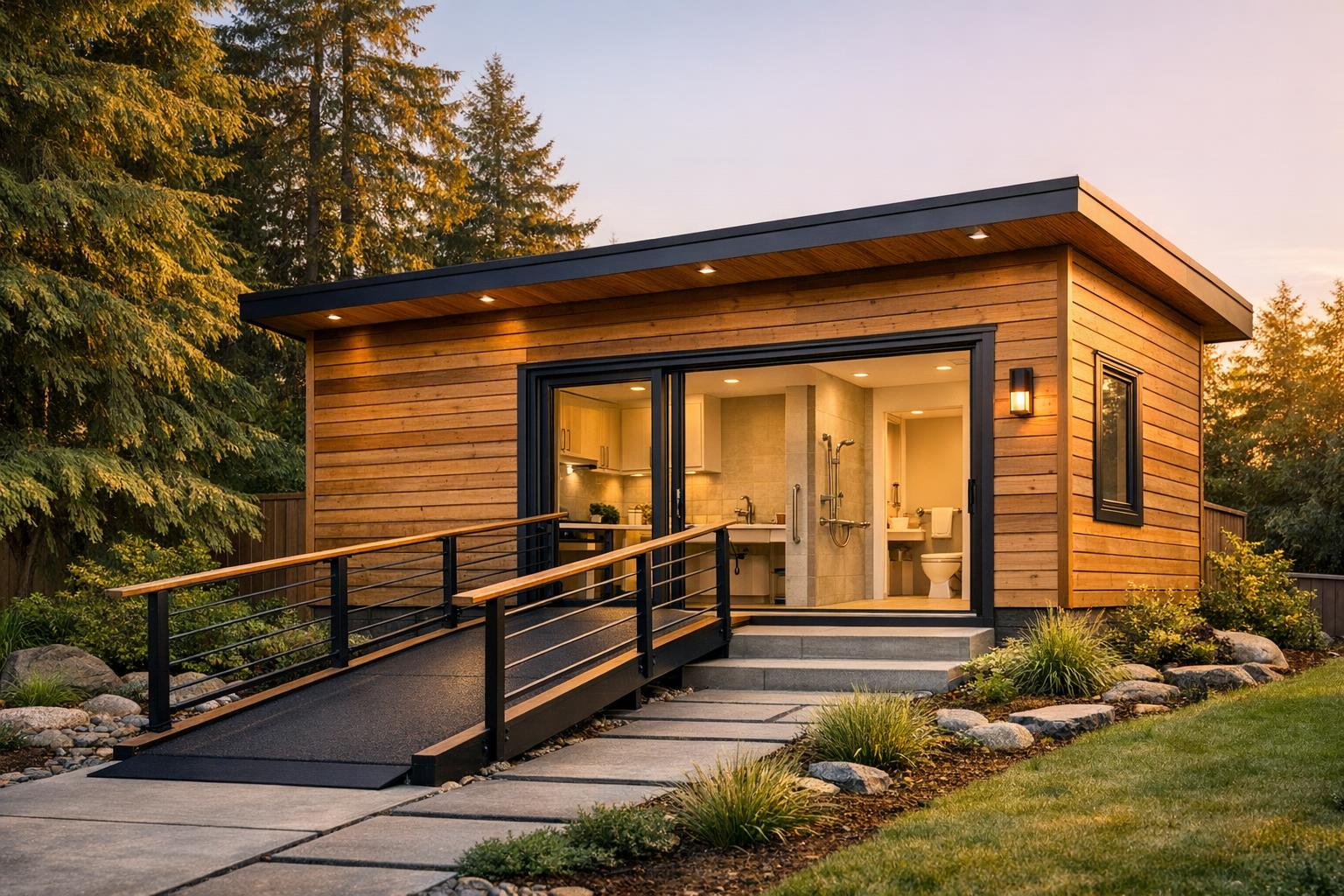
Put simply, universal design in tiny homes means planning small spaces so people of different ages, mobility levels, and abilities can live safely, comfortably, and independently. The goal is not to make a home look medical or institutional. The goal is to make it easy to use, beautiful to live in, and ready for change over time.
This guide explains how to blend accessibility features into modern tiny home trends while fitting Canadian realities such as winter climate, permits, site limits, and local rules. It is especially useful for tiny-home owners, families planning for aging parents, builders, designers, and anyone interested in barrier-free living.
Helpful Canadian perspectives on this topic can be found through the CMHC housing expert discussion on universal design, the Canadian Human Rights Commission’s discussion of universal design and accessible housing, and Universal Design for Housing in Canada.
What is universal design in tiny homes?
Universal design is a way of designing homes so they can be used by people with different abilities, at different ages and life stages. It supports independent living and aging in place from the start, instead of waiting to add fixes later.
In tiny homes, this approach matters even more because every inch has to work harder. A good plan must support movement, reach, comfort, and safety all at once.
It helps to separate a few related terms:
- Universal design: broad inclusivity built in from day one
- Accessible design: features that often respond to specific disability needs or code rules
- Aging in place: staying in your home safely as needs change over time
- Barrier-free living: reducing obstacles like steps, narrow doors, hard-to-reach controls, and slippery surfaces
The 7 principles of universal design are simple and practical:
- Equitable use: the space works for different people without separating users
- Flexibility in use: features adapt to different needs and preferences
- Simple and intuitive use: the layout is easy to understand
- Perceptible information: light, contrast, touch, or sound help people use the home
- Tolerance for error: the design lowers the chance of injury
- Low physical effort: daily tasks take less strain
- Size and space for approach and use: there is enough room to reach, turn, and move
In Canadian housing, guidance such as the CMHC Universal Design Guide and Canadian universal design housing resources can help shape better dwelling design, even when full accessibility is not legally required. For added perspective in the tiny-home context, the Accessible Tiny Homes podcast discussion is also useful.
In a compact home, thoughtful design is not a luxury. It is the difference between daily ease and daily friction.
Why universal design matters in tiny homes
Tiny homes make good design better and bad design worse. In a small footprint, one step, one tight turn, or one badly placed cabinet can limit independence every single day.
The main benefits are clear:
- Safety: fewer falls, less twisting, less awkward reaching
- Independence: easier to cook, bathe, move around, and manage the home alone
- Future-proofing: the home still works after injury, illness, pregnancy, or aging
- Inclusivity: more guests and family members can use the space
- Resale appeal: more buyers can imagine living there
Many people assume accessibility ruins style or takes too much space. Good universal design usually does the opposite. It uses features like integrated grab bars, curbless showers, sliding doors, hidden storage, and convertible furniture to keep pathways open and the home looking clean.
In the best tiny homes, accessibility feels seamless, not clinical.
Cost is another common concern. According to the CMHC discussion on universal design, planning accessible features into new construction can add only a modest amount up front compared with the much higher cost of later renovations. Additional insight is echoed in the discussion of why universal design matters in Canada.
Tiny home trends in 2026 that support accessibility
The encouraging part is that many current tiny home trends already support accessibility.
Key trends include:
- Prefab and modular construction: features can be planned and installed before delivery
- Single-level layouts: ideal for retirees, families, and mobility needs
- Multi-functional furniture: fold-down tables, wall beds, and movable seating free up circulation space
- Fold-away ramps and modular thresholds: practical when site conditions vary
- Energy-efficient systems: support heated floors, backup power, and year-round comfort
- Adaptable backyard suites: increasingly relevant in Canadian housing
These ideas align well with the rise of modular backyard suites in Canada and broader conversations around accessible tiny home design.
The big shift in 2026: accessibility is no longer treated as a niche add-on. It is increasingly part of smart, modern, small-space design.
Smart layout and circulation strategies for barrier-free living in a small footprint
Layout is the foundation of barrier-free living. Expensive products cannot fix a poor floor plan.
Useful planning dimensions often include:
- 30 x 48 inches clear floor space at key fixtures and appliances
- 60-inch turning radius where possible for wheelchair turning
- 32–36-inch hallway and door widths as a practical target
These are planning recommendations, not universal legal rules. Always check local requirements and the actual user’s needs.
Best practices include:
- Looped circulation so users do not get trapped in dead ends
- Zero-step entries and as few level changes as possible
- Flexible zones for sleeping, dining, and living
- Clear pathways that remain open even when furniture folds out
Outside the home, access matters too:
- smooth paths from parking to the door
- weather-protected routes
- safe drainage
- space to clear snow and ice
For Canadian conditions, winter changes everything. Durable thresholds, careful drainage, and snow-friendly approaches should be built in from the start. Resources like guidance on curbless entry tiny homes in Canada and winter-proof tiny home planning are especially relevant.
Accessible kitchen design for tiny homes
The kitchen is one of the most-used spaces in any home. If the kitchen is hard to use, independence drops every day.
A strong accessible tiny-home kitchen should include:
- Adjustable-height counters in the 28–34 inch range, especially for prep work
- Knee space under sinks and cooktops for seated use
- Side-opening ovens for safer access
- Pull-out shelves and drawers instead of deep cabinets
- Lever handles and D-shaped pulls
- Pull-down pantry hardware and lazy susans
For easier daily use:
- keep common items between 28–48 inches where possible
- add under-cabinet and task lighting
- use contrast at counter edges
- add tactile markers on appliance controls
Style still matters. Sleek hardware, clean millwork, and strong visual contrast can make a kitchen feel current rather than clinical. Helpful examples can be found in tiny home kitchen design in Canada and Canadian universal housing guidance.
Accessible bathrooms and barrier-free bathing
The bathroom is often the highest-risk room in a tiny home. That makes universal design especially important here.
Core features include:
- Roll-in or curbless showers
- Fold-down shower seats
- Grab bars matched to the room’s finish
- Handheld shower heads
- Toilet heights of 17–19 inches
- transfer space beside the toilet and in front of fixtures
- Non-slip flooring
- Underfloor heating for comfort and quicker drying in winter
A wet-room layout can work extremely well in a tiny footprint. It allows the whole bathroom to be waterproofed with minimal thresholds and easy movement between fixtures.
Done well, this kind of bathroom feels spa-like, simple, and modern. For more detail, see the accessible tiny home guide for Canada and Canadian curbless entry guidance.
Doors, thresholds, ramps, and entry design
A tiny home entry has to work in real life, not just on paper.
Good planning points include:
- 32-inch clear widths at doors
- Pocket or sliding doors to save space
- Flush or very low thresholds, ideally under 0.5 inch
- Retractable, portable, or fold-down ramps where full permanent ramps are difficult to fit
In Canada, exterior access matters as much as the front door. Plan for:
- freeze-thaw resistant materials
- covered entries
- anti-slip finishes
- drainage away from the threshold
- space to move in winter boots or with mobility equipment
- snow and ice removal around ramps and landings
The route from sidewalk or parking to the home should be safe and usable in every season. The resources on winter-proof tiny homes and flood-resistant ADU design in Canada can support better entry planning.
Storage, furniture, and multi-use design without losing accessibility
One of the most common tiny-home mistakes is prioritizing clever storage over safe reach and clear movement.
Better options include:
- Pull-out and pull-down shelving
- storing everyday items in the 28–48 inch reach zone
- Height-adjustable beds and tables
- firm seating that is easier to stand up from
- built-in benches with hidden storage that do not narrow pathways
Every transforming feature should be tested in both positions. A wall bed or fold-down table should never block a wheelchair path, turning space, or transfer zone.
When done properly, multi-use design actually improves accessibility because it reduces clutter and keeps the floor open. For examples, see tiny home storage solutions and smart furniture ideas for Canadian ADUs.
Materials, finishes, and lighting for universal use
Finishes affect safety, comfort, cleaning, and wayfinding every day.
Useful choices include:
- Non-slip flooring with low glare
- durable finishes that handle moisture and winter wear
- high-contrast edges on counters, door frames, and any unavoidable step
- layered lighting with ambient, task, and accent light
- Motion-sensor lighting for night use
- Voice-controlled lighting for low physical effort
- tactile and audible cues where useful
Perceptible information means the home itself helps users understand how to move through it. Contrast, labels, lighting, and intuitive control placement all contribute to that.
Additional ideas are covered in tiny home lighting design guidance and sustainable flooring options for tiny homes.
Assistive technology and smart-home features
Technology can make accessibility feel smoother, especially when space is limited.
Helpful tools include:
- Voice controls for lights, blinds, heating, doors, and media
- Motorized lifts or adjustable counters
- controls mounted in reachable zones of about 15–48 inches
- Remote monitoring or safety alerts
- smart thermostats and easy-to-read ventilation controls
For off-grid or rural homes, resilience matters too. Battery backup, electrical load planning, and winter reliability should be considered from the start.
Tech should support good physical design, not replace it. Useful references include the Accessible Tiny Homes podcast and practical examples from smart-home technology for ADUs.
Canadian housing considerations in 2026
Designing for Canadian housing means accounting for climate, geography, and local rules early.
Important climate issues include:
- high insulation levels for comfort and efficiency
- strong ventilation and moisture control
- roof and structural planning for snow loads
- freeze-thaw effects on ramps, thresholds, hardware, and finishes
Some prairie areas can see snow loads up to 40 psf, so structure matters.
Site planning also changes by location:
- Urban sites may face zoning, ADU, or bylaw limits
- Rural sites need planning for sun, wind, drifting snow, and service access
Rules vary by province and municipality, so plans should be checked before final decisions. Helpful starting points include the CMHC housing expert guidance, the Canadian Human Rights Commission housing discussion, and examples of tiny-home-friendly municipalities in 2026.
Regulations, standards, and permits in Canada
There is no single rulebook for every tiny home in Canada. Requirements depend on whether the home is permanent, movable, an ADU, or tied to another property use.
Useful references include:
- National Building Code accessibility guidance
- provincial and municipal code variations
- CSA B651
- CSA/ASC B652
- CMHC universal design guidance
- Rick Hansen Foundation guidance and tools
A practical permit strategy is to submit clear plans showing:
- door widths
- clear floor spaces
- ramp details
- bathroom layouts
- entry conditions
- turning and transfer areas
It also helps to document how the design improves safety and usability. See ADU permits in Canadian cities, Ontario tiny home permit guidance, and British Columbia tiny home permit guidance.
Cost, budgeting, and funding options
In 2026, costs vary by region, finish level, site conditions, and labour rates, but rough planning ranges can still help.
- Ramps: $2,000–$5,000
- Roll-in showers: $3,000–$7,000
- Adjustable counters: $1,000–$3,000
- Lifts: $5,000–$15,000
What changes the price?
- site access and ground conditions
- new build versus retrofit
- weatherproofing and winter detailing
- level of customization
- local permits and labour costs
The better question is often long-term value. Good universal design can reduce future renovation costs, lower fall risk, support caregiving, and help people stay independent longer.
Funding options may include municipal programs, provincial supports, financing tools, and housing resources. Start with the broader context from why universal design matters in Canada and explore practical planning through ADU financing in Canada and ADU grants and municipal incentives.
Canada-focused case studies
Urban case study: Vancouver modular ADU conversion
A roughly 300 sq ft single-level backyard suite was built for aging parents. The old setup had stairs and poor access. The new suite added wider doors, a roll-in shower, an adjustable kitchen area, and better circulation for independent living.
The key lesson was that modular construction made it easier to build accessibility into the project before delivery. Early bylaw checks also helped avoid delays.
“Modular wins for quick, accessible installs without site mess.”
For related examples, see modular backyard suites in Canada and accessible ADU design in Canada.
Rural case study: Ontario off-grid tiny home
A roughly 200 sq ft prefab home used fold-down ramps, heated floors, and a looped layout to support year-round use after mobility loss. The one-level plan reduced barriers, while off-grid resilience helped maintain comfort and access in a remote setting.
“Universal principles ensured equitable use despite space limits.”
This example shows how climate resilience and accessibility can support one another. Related reading includes off-grid living in Canadian tiny homes and winter-proof tiny home design.
Sample floor plans and visual resources
Plan A: Under 400 sq ft accessible layout
This plan uses an open central living and kitchen zone with 36-inch circulation paths. One kitchen work area has knee space below. The bathroom is an 8 x 8 roll-in room with curbless entry, transfer space, and strong drainage. Sleeping uses a pull-out wall bed or convertible setup so the main floor handles all daily needs. A loft is optional only if reached by a lift or used for storage, not daily living.
Plan B: Under 250 sq ft compact looped layout
This smaller plan keeps all key functions on one level. It uses 32-inch doors, a curbless wet room, an adjustable counter island, and fold-away seating with wall-integrated storage. The layout stays simple so users can move in a loop instead of backing out of tight corners.
The most useful plan drawings should label:
- clear floor spaces
- turning areas
- transfer zones
- reach ranges for storage
For planning inspiration, see Universal Design for Housing in Canada and the accessible tiny home guide for Canada.
Product suggestions and supplier ideas for Canada
A practical product shortlist should focus on what to look for, not just brand names.
Useful product categories include:
- adjustable shelving systems
- lever faucets
- modern-finish grab bars
- modular furniture
- compact side-opening ovens
- accessible storage hardware
Examples often discussed in this space include adaptable storage ideas from IKEA or Structube, lever faucet options from Delta, and modular solutions from builders such as Teacup Tiny Homes.
When comparing products, check for:
- durability
- grip
- visual contrast
- easy cleaning
- warranty support
- suitability for Canadian climate conditions
DIY vs hiring professionals
Some upgrades are realistic for DIY work, especially lower-risk changes.
Often suitable for DIY:
- applying non-slip finishes
- swapping cabinet pulls
- installing lever handles
- improving lighting
- adding contrast markers
- moving everyday items into lower-reach storage
Usually better for professionals:
- plumbing for roll-in showers
- electrical work for heated floors or smart systems
- structural ramps
- framing changes
- door widening
- lift installation
- wet-room waterproofing and drainage
For user-specific planning, occupational therapists can be extremely helpful. Accessible design consultants and licensed builders with tiny-home experience can also reduce expensive mistakes. To explore support options, see finding a contractor for a tiny home and whether to hire an architect for an ADU.
Quick-action barrier-free living checklist
Use this simple yes-or-no checklist to review a tiny home plan quickly.
Entry and circulation
- Are doors at least 32 inches clear?
- Is there a zero-step or low-threshold entry?
- Is there enough turning space where needed?
Bathroom
- Is there a roll-in or curbless shower?
- Are grab bars installed or blocked in for future use?
- Is the floor slip-resistant?
Kitchen
- Is there knee space at a sink or work surface?
- Are storage areas and appliances easy to reach?
- Are handles easy to grip?
Bedroom and living area
- Is there clear 30 x 48 inch floor space near the bed or seating?
- Are seat and bed heights supportive for transfers?
Storage
- Are everyday items within safe reach?
Tech and lighting
- Are key controls easy to reach, read, and use?
- Are there motion, voice, tactile, or contrast supports?
Permits and planning
- Have local code and zoning rules been checked?
- Have CMHC guidance sources or Canadian universal design housing resources been reviewed?
Final recommendations
Universal design in tiny homes is not about adding medical-looking features. It is about planning a flexible, attractive home that works for more people, for longer, with less risk and more independence.
The smartest path is simple:
- start with the floor plan
- prioritize zero-step entry and clear circulation
- make the kitchen easy to use
- build a safe bathroom
- add smart storage, finishes, and technology
- then confirm permits, budget, and professional support
In 2026, accessibility is best seen as a style-neutral upgrade and a practical response to changing Canadian housing needs. Good universal design supports barrier-free living without making a tiny home feel less modern.
It simply makes the home work better.
Frequently Asked Questions
What is the difference between universal design and accessible design in a tiny home?
Universal design aims to make the home usable for a wide range of people from the beginning. Accessible design often focuses more specifically on disability-related requirements or code-based accommodations.
Can a tiny home still look modern if it includes accessibility features?
Yes. Features like curbless showers, integrated grab bars, sliding doors, modern lever hardware, and open layouts can look sleek and intentional rather than medical.
What are the most important universal design features in a tiny home?
The biggest priorities are usually a zero-step entry, clear circulation, low or flush thresholds, a safe bathroom, reachable storage, and a kitchen that is easy to use from standing or seated positions.
Are universal design upgrades expensive?
They can add cost, but building them in from the start is often much cheaper than retrofitting later. The long-term value is also higher because the home becomes safer, more flexible, and more livable.
Do Canadian tiny homes have to meet the same accessibility rules everywhere?
No. Requirements vary by province, municipality, building type, and whether the unit is movable, permanent, or used as an ADU. Always verify local rules before finalizing a design.
Is a loft a good idea in a universally designed tiny home?
Usually only if the loft is for storage or is accessed by a lift. For daily living, one-level layouts are generally safer and more practical for long-term accessibility.
Leave a Reply