

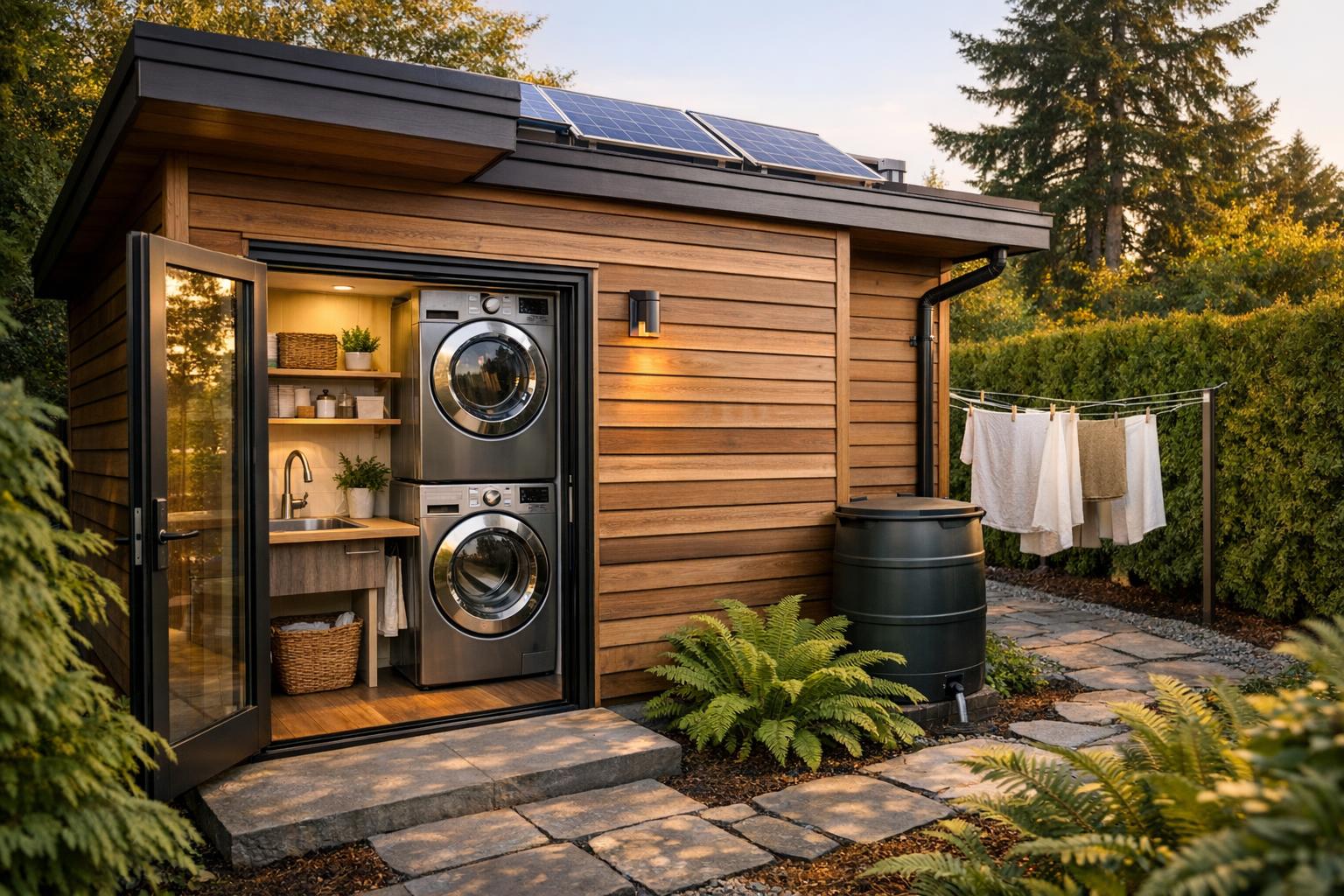
Eco-Laundry for Tiny Homes: How to Start a Water-Saving Tiny Home Business in Canada for 2026
Estimated reading time: 12 minutes
Key Takeaways
- Eco-laundry for tiny homes is designed for small spaces, low utility use, and simple living, making it a practical service for tiny houses, cabins, off-grid homes, and compact communities.
- This niche solves a real problem for residents who lack room, hookups, septic capacity, or easy access to a laundromat.
- Strong business models include fixed micro-laundries, mobile routes, pickup-and-drop services, and host partnerships.
- Efficient machines, sustainable cleaning products, and careful water tracking can help reduce resource use by roughly 50% to 70% in many setups.
- Many operators can launch with about $5,000 to $25,000 and may reach break-even within 6 to 12 months, depending on pricing, route density, and partnerships.
- In Canada, success depends on combining convenience, measurable water saving, sustainable cleaning, and compliance with local rules.
Table of Contents
- Why Eco-Laundry for Tiny Homes Is a High-Potential Tiny Home Business in 2026
- Best Business Models for an Eco-Laundry for Tiny Homes Service
- Choosing Eco-Laundry Equipment for Water Saving in Tiny Homes
- Sustainable Cleaning Practices That Make Eco-Laundry More Credible
- Water Saving Tactics and Greywater Rules for Eco-Laundry in Canada
- How to Run the Day-to-Day Operations of a Tiny Home Business
- Canadian Entrepreneurship Essentials for Starting an Eco-Laundry Business
- How to Market an Eco-Laundry for Tiny Homes Service
- Startup Costs and Financial Planning for an Eco-Laundry Tiny Home Business
- How to Measure Water Saving and Sustainability Success
- FAQ About Starting Eco-Laundry for Tiny Homes in Canada
Eco-laundry for tiny homes is more than a niche idea. It is a service model built for people who need laundry solutions that fit small footprints, limited hookups, low power availability, and water-conscious living.
For many tiny home residents, standard laundry setups are simply not realistic. Full-size machines often demand too much space, too much water, too much electricity, or infrastructure that a compact property does not have. That is why guides on tiny house laundry solutions, the ultimate tiny house laundry guide, top laundry units for tiny homes, and tiny home laundry in Canada keep getting attention.
A strong eco-laundry model uses low-water machines, low-energy drying, and sustainable cleaning products that are safer for both people and the environment. It also creates a practical business opening in 2026 for founders who can provide convenience with clear water-saving value.
The opportunity is simple: tiny home residents need better laundry options, and operators who can deliver efficient, low-waste service may find a profitable local niche.
Why Eco-Laundry for Tiny Homes Is a High-Potential Tiny Home Business in 2026
Tiny home residents face a very different laundry problem from people in standard houses. Full-size machines require more room, water, and power than many compact homes can spare. Remote cabins and off-grid homes also deal with water storage limits, septic constraints, and higher power costs.
As shown in resources on tiny house laundry solutions, how laundry works in a tiny house, tiny home communities and eco-living, and off-grid living in Canadian tiny homes, residents often end up driving to laundromats, hand-washing, or squeezing in equipment that is not ideal.
This is exactly why eco-laundry is such a strong niche. It solves a frequent, frustrating, everyday problem while matching what many customers already care about:
- Convenience
- Low waste
- Resource efficiency
- Sustainable cleaning
- Simple local service
A focused service can work especially well for:
- Tiny home villages
- Co-ops
- Campgrounds
- Eco-retreats
- Airbnb hosts
- Rural homes
- Off-grid cabins
The environmental value matters too. With compact high-efficiency washers, cold-water cycles, smart scheduling, and biodegradable detergent, many setups can reduce resource use by about 50% to 70% compared with standard laundry methods.
In Canada, affordability concerns and growing interest in lower-impact housing continue to push attention toward smaller homes and greener services. Customers increasingly want proof, not just promises.
So is this worth pursuing? Yes, especially if you can combine local convenience, measurable water saving, and a clear customer niche.
Best Business Models for an Eco-Laundry for Tiny Homes Service
You do not need one perfect model. You need the model that fits your location, budget, customer density, and access to water and power.
Fixed micro-laundry in a tiny home community
This model uses a shared laundry room, shed, converted container, or utility building with one or two compact machines in one location. It works best for clustered sites.
Pros
- Lower travel cost
- Predictable demand
- Easier hookups
- Easier maintenance
Cons
- Depends on one location
- Needs owner approval
- Limited geographic reach
Resources on tiny house laundry solutions, top laundry units for tiny homes, and tiny home communities support this approach for shared demand sites. Startup costs may land around $8,000 to $15,000.
Mobile laundry service
A mobile eco-laundry setup uses a van or trailer to serve several sites. It may involve pickup and drop-off, portable washers, twin-tub systems, or a small wash station.
Pros
- Wider service area
- Flexible routes
- Useful for scattered customers
Cons
- Vehicle costs
- Weather challenges
- More route planning
- Fuel affects margins
This is ideal where customers are dispersed. But route density is everything. Insights from mobile and off-grid setup examples, portable tiny-home laundry demonstrations, and mobile tiny home service models show that if stops are too far apart, profitability drops quickly.
On-demand drop-off and pickup
This is often the easiest way to start. It is a wash-and-fold model with eco-friendly options like cold washing, fragrance-free detergent, and low-heat drying.
You can add upsells such as:
- Linen service for short-term rentals
- Premium fragrance-free cleaning
- Fast turnaround
- Delicate fabric care
The ultimate tiny house laundry guide and ideas for hosting guests in tiny homes support this as a flexible entry model. Typical pricing may range from $15 to $25 per load.
Partnership or host model
In this model, you place equipment on a host property or in a tiny home community and share revenue with the site owner.
This works well because it reduces real estate costs and helps expansion. Sources discussing tiny house laundry setups, compact units for tiny homes, and property support and concierge-style services make this model especially useful where residents have space but no operator.
Compare the models
| Model | Best location | Startup complexity | Scalability | Typical startup cost | Estimated monthly revenue | Best customer type |
|---|---|---|---|---|---|---|
| Fixed micro | Tiny home park or co-op | Medium | Medium | $8,000–$15,000 | $1,500–$3,000 | Clustered residents |
| Mobile | Rural or scattered sites | High | High | $10,000–$25,000 | $2,500–$5,000 | Off-grid and remote homes |
| Drop-off | Town + nearby tiny homes | Low to medium | Medium | $5,000–$12,000 | $2,000–$4,000 | Busy households, Airbnb hosts |
| Partnership | Host sites with shared demand | Medium | High | $5,000–$10,000 per site | $1,000–$2,500 per site | Communities and site operators |
After Year 1, well-run models may reach margins of about 30% to 50%. In strong rural routes in B.C. or Ontario, a mobile model may approach meaningful annual revenue if the schedule is tight and consistent. See more context in land-lease and community-based tiny home opportunities.
Choosing Eco-Laundry Equipment for Water Saving in Tiny Homes
Equipment determines both your eco-claims and your margins. Good equipment should offer:
- A compact footprint
- Low litres per load
- Low kWh per cycle
- Reliable performance
- Easy maintenance
- Parts available in Canada
High-efficiency front-loaders
High-efficiency front-loaders clean by tumbling clothes through a small amount of water rather than filling a whole tub. That makes them ideal for water saving and lower detergent use.
Compact combo or stackable units fit much better in sheds, closets, and narrow utility spaces. The tiny-home laundry unit roundup and Canadian tiny-home laundry overview frequently mention compact units like the EdgeStar combo format for these scenarios.
Compact heat-pump dryers
Heat-pump dryers are ventless and recirculate warm air, often using much less energy than standard vented dryers.
They fit tiny homes because they offer:
- No venting complexity
- Better efficiency
- Stackable design
- Suitability for small indoor spaces
As discussed in the tiny house laundry guide and heat-pump tiny home resources, some estimates suggest these dryers can use about 60% less electricity than standard dryers.
Washer-extractors and twin-tub spinners
Twin-tub spinners make sense for:
- Low startup budgets
- Limited power access
- Mobile service pilots
- Off-grid use
Portable examples shown in tiny-home portable laundry videos and off-grid living guidance suggest some options can use just 20 to 40 litres per load.
Sizing guidance
For many tiny home users, 5 to 10 lb capacity is enough because laundry loads tend to be smaller and more frequent.
- Choose based on weekly demand, not one user
- Focus on throughput if serving many residents
- Avoid oversized machines that waste space and energy
- Avoid undersized machines that create bottlenecks
Cost and ROI
| Equipment type | Capacity | Water per load | Energy savings | 2026 estimated cost | Best use case |
|---|---|---|---|---|---|
| EdgeStar combo | 9 lb | 40L | 50% savings | $2,000 | Fixed micro-laundry |
| Heat-pump dryer | 4–6 lb | N/A | 60% energy savings | $1,800 | Indoor compact drying |
| Twin-tub spinner | 5 lb | 25L | Strong off-grid suitability | $800 | Mobile or pilot setup |
If you charge around $20 per load, efficient equipment may pay for itself in about 12 to 18 months. For extra context, compare ideas from tiny house laundry methods and equipment-focused tiny home laundry planning.
Sustainable Cleaning Practices That Make Eco-Laundry More Credible
Sustainable cleaning is not just about using a green-labelled soap. It is about building a full system that includes chemicals, packaging, dosing, drying, and fabric care.
Eco-friendly detergents
Look for detergents with:
- Biodegradable ingredients
- Concentrated formulas
- Cold-water performance
- Low fragrance or fragrance-free options
- Low packaging waste
Laundry sheets and refill systems are strong fits for compact operations because they save storage space and reduce packaging. Plant-based options such as Nellie’s are often cited as eco-friendly examples, along with low-waste ideas in zero-waste tiny home living.
Reduce chemical use
Auto-dosing and proper measurement help prevent waste. Too much detergent can create extra rinse cycles, increase water use, and leave residue on fabrics.
Ways to cut chemical waste:
- Use concentrated refills
- Buy in bulk where practical
- Offer fragrance-free options
- Replace dryer sheets with wool dryer balls
According to eco-friendly laundry routine guidance with natural laundry soap, wool dryer balls may reduce drying time by roughly 25% to 40%.
Extend garment life
True sustainable cleaning also means fewer damaged clothes and fewer rewashes.
- Wash cold when possible
- Run full loads
- Use gentle cycles for delicate items
- Spot clean before full washing
- Sort by soil level
- Add microfiber filters for synthetic fabrics
Longer garment life means lower waste and better customer satisfaction.
Wastewater considerations
Important: biodegradable soap does not mean wastewater can be discharged anywhere. Rules vary by municipality, province, property type, and system design.
This matters especially for:
- Off-grid sites
- Septic systems
- Campgrounds
- Shared properties
- Mobile setups
Before changing wash-water handling, review examples related to tiny home wastewater solutions in Canada and ask local authorities what is permitted.
Water Saving Tactics and Greywater Rules for Eco-Laundry in Canada
Water saving is one of the biggest advantages of an eco-laundry business. In tiny homes, reduced water use affects utility costs, septic stress, water storage, and marketing credibility.
Compare standard vs eco water use
A standard laundry load may use around 100 litres. An eco-laundry load may use about 20 to 40 litres. That suggests possible savings of roughly 60% to 80%.
The simplest ways to reduce water use immediately are to:
- Use HE front-loaders
- Wash in cold water
- Run only full loads
- Avoid extra rinses
For more context, see how people handle laundry in tiny houses, portable low-water setups, and greywater recycling for tiny homes in Canada.
Practical water saving methods
- Full loads only where possible
- Low-water cycles
- Accurate detergent dosing
- Sorting to avoid rewashes
- Leak checks
- Preventive maintenance
- Better route planning for mobile models
- Clear bag-size rules for customers
These tactics can save around 30 to 50 litres per load in many small-scale operations. Supporting ideas can be found in the 2026 tiny house laundry guide, eco-friendly laundry routine advice, and smart water management for compact homes.
Greywater capture and reuse
Greywater is lightly used water from washing that may sometimes be reused for non-drinking purposes, where allowed. But legality varies widely.
Always check:
- Municipal bylaws
- Provincial environmental rules
- Septic restrictions
- Property owner rules
- Public health guidance
Review examples related to greywater recycling guides, greywater solutions for tiny homes, and off-grid laundry and water handling videos, but do not assume those examples automatically apply to your municipality.
Metering and reporting
Tracking litres per load helps you:
- Cut costs
- Prove environmental value
- Support grant applications
- Improve marketing
A basic tracking framework includes baseline machine water use, current machine water use, loads per week, and monthly litres saved.
Caution: consult local authorities before changing wastewater disposal methods or adding any greywater capture or reuse system.
How to Run the Day-to-Day Operations of a Tiny Home Business
A good eco-laundry service needs more than green equipment. It needs consistency, convenience, and simple systems.
Pricing models
Common pricing formats include:
- Per load
- Monthly subscription
- Linen bundles
- Premium eco package
Typical price points:
- $10 to $20 per load
- About $50 per month for subscriptions
- Around $25 for eco-bundles or add-ons
Best fit matters. Per-load works for occasional users. Subscriptions are ideal for communities. Linen bundles work especially well for Airbnb hosts and cabins.
Scheduling and routing
If you run a mobile model, group stops by area. Fixed pickup days make life easier for both the business and the customer.
Booking can start simple:
- Text
- Phone
- Web form
- Basic app
Efficient routing is part of sustainability because it cuts fuel use, wasted labour, and turnaround delays.
Inventory and maintenance
Compact operations need tight inventory control. Track:
- Detergent refills
- Wool dryer balls
- Lint cleaning tools
- Hoses and pumps
- Spare parts
- Cleaning supplies
Do quick daily checks and deeper quarterly reviews. Refill systems such as Nellie’s can also support compact storage and low-waste positioning. For maintenance mindset, review checklists like small-property maintenance checklists in Canada.
Customer experience
Customers want:
- Easy booking
- Clear pricing
- Reliable turnaround times
- Contactless payment
- Text or email updates
- Fragrance-free options
Eco-conscious buyers also want evidence. If you claim water saving or low-waste cleaning, be ready to explain how.
Canadian Entrepreneurship Essentials for Starting an Eco-Laundry Business
Canadian entrepreneurship involves more than spotting a good niche. Your legal structure, insurance, permits, and compliance approach all affect risk and growth.
Choose a business structure
Sole proprietorship
Best for solo founders testing demand with lower cost and simpler setup.
Corporation
Often better for liability separation and long-term expansion.
Co-op
A smart option for resident-run systems in shared communities.
Choose based on:
- Liability risk
- Tax needs
- Number of owners
- Growth plans
Permits and environmental considerations
Depending on your model, you may need:
- Municipal business licensing
- Zoning approval
- Sanitation compliance
- Wastewater or greywater approval
- Vehicle and parking permissions for mobile service
Rules differ across provinces and municipalities. The same setup may be accepted in one region and restricted in another.
Funding and grants
Possible funding paths include:
- Federal green business support
- Utility rebates
- Water-efficiency incentives
- Equipment financing
- Small business loans
Start your search with Canada business grants resources and planning material like green upgrade financing guidance. Always verify current 2026 eligibility before relying on any funding option.
Insurance
Most operators should review:
- General liability
- Equipment and property coverage
- Commercial auto for mobile service
- Pollution or environmental liability where needed
- Customer goods coverage
Some small operations may pay around $1,000 per year for liability coverage, though actual pricing varies. For niche property context, see tiny home insurance considerations in remote Canada and Canadian legal planning guidance.
Compliance note: because environmental and greywater rules vary across Canada, consult your municipality, provincial regulators, and insurer before launch.
How to Market an Eco-Laundry for Tiny Homes Service
This niche grows through trust, partnerships, and visible local value. It usually does not require mass advertising.
Define target audiences
Your best customers may include:
- Tiny home communities
- Off-grid homeowners
- Rural cabins
- Campgrounds
- Eco-resorts
- Airbnb hosts
- Co-living communities
What they often care about:
- Convenience
- Reliability
- Low utility use
- Sustainable cleaning
- Easy pickup and delivery
Low-cost marketing channels
- SEO for “eco-laundry for tiny homes” plus your city or province
- Local Facebook groups
- Community boards
- Instagram or TikTok videos
- Builder and site-manager partnerships
- Referrals from campground operators and rental hosts
Your website copy should naturally include terms like tiny home business, eco-laundry, water saving, and sustainable cleaning. Helpful references include how to launch a tiny home business and a broader tiny home business guide for Canada.
Partnerships
Strong partners include:
- Tiny home builders
- Property managers
- Campground owners
- Solar or renewable energy installers
- Sustainability groups
These partners can generate warm leads and credibility. Businesses already serving the tiny-home market, such as those featured in tiny-home equipment resources and community-focused tiny home development, are especially useful adjacent allies.
Case study style examples
A realistic pilot might be a New Brunswick off-grid laundry route serving 50 homes with low-power washers and saving around 10,000 litres per year.
Another example could be an Ontario co-op model where the operator shares revenue with site hosts to lower fixed location costs.
For inspiration, review portable tiny-home laundry examples and tiny home community startup ideas in Canada.
Messaging angles
- Laundry built for tiny home living
- Lower water use, less detergent waste
- Pickup and delivery for off-grid and remote communities
- Trackable environmental savings
Startup Costs and Financial Planning for an Eco-Laundry Tiny Home Business
Before buying equipment, validate demand. Speak with communities, hosts, Airbnb operators, and likely users first.
Startup budget tiers
| Line item | Low | Medium | High |
|---|---|---|---|
| Equipment | $2,000 | $6,000 | $12,000 |
| Vehicle | $0 | $3,000 | $8,000 |
| Permits/Insurance | $500 | $1,000 | $2,000 |
| Supplies/Marketing | $500 | $1,000 | $2,000 |
| Total | $5,000 | $12,000 | $25,000 |
These ranges fit many small eco-laundry models, especially lean pilots and local service launches.
Break-even
If your average revenue is about $15 per load, you may need roughly 150 loads per month to cover costs, depending on rent, labour, fuel, and equipment financing.
Subscriptions and host partnerships can smooth cash flow. Planning references from the tiny house laundry guide, tiny-home unit comparisons, and creative small-property income strategies support the idea that lean operators may break even in 6 to 12 months.
30/60/90-day launch plan
First 30 days
- Survey local communities and hosts
- Choose your model
- Estimate utility access and space needs
- Register the business
- Draft a short business plan
Day 31–60
- Secure equipment
- Test sustainable cleaning products
- Confirm permits and insurance
- Build a pricing sheet
- Set up booking and payment
Day 61–90
- Soft-launch with a pilot group
- Collect testimonials
- Track water and energy data
- Refine pricing
- Improve turnaround times
- Start local SEO and partnerships
Quick startup checklist
- Validate demand
- Choose a model
- Check regulations
- Source equipment
- Set pricing
- Create branding
- Set KPI tracking
- Launch a pilot
How to Measure Water Saving and Sustainability Success
If you want customers to trust your eco-laundry claims, measure real outcomes.
Core KPIs
Track these numbers:
- Water saved per month — litres saved compared with standard laundry use
- Energy used per load — aim for less than 1 kWh where possible, depending on equipment
- Customer retention rate — repeat users show trust and convenience
- Revenue per visit — helps improve pricing and upsells
- Loads per machine per week — reveals capacity and bottlenecks
- Detergent use per load — controls cost and chemical waste
Example targets:
- 5,000L water saved per month
- 80% retention
- $20 revenue per visit
Tracking methods
You do not need advanced software at the start. You can use:
- Machine logs
- Smart plugs
- Water meters
- A spreadsheet
- A simple monthly dashboard
Even a basic sheet works well at the pilot stage.
Using metrics in marketing
Measured claims are far stronger than vague claims. Good examples include:
- We have saved X litres of water since launch
- Our service uses cold-water washing and low-dose detergent
- Our machines use less water per load than standard setups
Be honest and specific. Use only claims you can verify through tracking, ideally supported by frameworks like smart water management methods and lightweight monitoring ideas such as remote sensing basics.
FAQ About Starting Eco-Laundry for Tiny Homes in Canada
Is greywater legal in Canada?
It depends on the province, municipality, and property type. Some off-grid or non-potable reuse may be allowed in certain situations, but you must confirm with local authorities before installing or using any system. See off-grid greywater examples and Canadian greywater recycling guidance.
Are startup cost estimates of $5,000–$25,000 realistic?
Yes. That range can work for many small-scale models, especially portable, pickup-and-drop, or mobile pilots. A branded fixed site or multi-location operation may cost more. Compare planning assumptions with tiny-home laundry unit costs and the Canadian tiny home business guide.
Which is better, mobile or fixed?
Mobile is usually better for dispersed customers. Fixed works better for clustered communities with steady shared demand. See tiny house laundry solutions and tiny home community models.
What products are best for sustainable cleaning?
Choose cold-water-capable, concentrated, biodegradable detergents in refill or low-waste formats. Nellie’s, wool dryer balls, and accurate dosing systems can all help reduce waste. More ideas are covered in natural eco-friendly laundry routine guidance and zero-waste tiny home living resources.
Can this work as a side hustle before becoming a full business?
Yes. Pickup-and-drop or host models can begin small. But even as a side hustle, you still need insurance, clear pricing, and compliance checks. Review startup context in the tiny home business guide for Canada.
Final thought: eco-laundry for tiny homes stands out because it combines a practical service with measurable sustainability. In a market shaped by compact housing, off-grid living, and rising interest in low-impact services, that combination is not just appealing. It is commercially useful.
If you can deliver convenience, efficient equipment, sustainable cleaning, and credible water-saving results, this tiny home business can become a durable local opportunity in 2026 and beyond.
Leave a Reply