

Tiny Home Furnishing in Canada 2026: Seasonal Hacks for Year-Round Comfort
Estimated reading time: 14 minutes
Key Takeaways
- Seasonal planning matters in Canadian tiny homes because temperature, humidity, and gear can overwhelm small spaces fast.
- Flexible furniture, layered textiles, and rotational storage make year-round living easier without adding clutter.
- Climate-smart layouts help tiny homes stay cosy in winter and breathable in summer.
- Low-bulk seasonal decor like cushion covers, throws, mirrors, and curtains refreshes a space without consuming storage.
- DIY upgrades and budget sourcing can improve comfort, storage, and style without wasting money or square footage.
Table of contents
- Why Seasonal Planning Matters for Tiny Home Furnishing in Canada
- Seasonal Assessment Checklist: What Your Tiny Home Needs Before You Furnish
- Core Seasonal Furnishing Hacks for Comfort, Style, and Function
- Space-Saving Tips That Work in Real Tiny Homes
- How to Adapt Tiny Home Interiors to the Canadian Climate
- Materials and Seasonal Decor That Work Hard in Small Canadian Spaces
- 3 Tiny Home Layout Examples for Seasonal Furnishing Success
- Build a Seasonal Storage System You Can Actually Maintain
- DIY Seasonal Furnishing Hacks for Tiny Homes
- How to Budget for Tiny Home Furnishing Without Wasting Space or Money
- Keep It Safe: Maintenance Tips for Tiny Homes in Every Season
- Your 2026 Seasonal Styling Calendar for Year-Round Living
- Frequently Asked Questions
A tiny home that feels cosy during a Prairie blizzard and still easy to live in during a humid Ontario summer needs more than taste. It needs smart seasonal furnishing hacks.
In 2026, tiny home furnishing in Canada has to handle big swings in temperature, moisture, and daily gear without turning a small space into a cluttered one. Seasonal furnishing hacks are simple, practical changes to furniture, textiles, storage, and layout that help a home stay comfortable and useful through winter, spring, summer, and fall.
This guide covers seasonal decor, space-saving tips, materials, DIY ideas, climate-smart layouts, storage systems, and budget-friendly sourcing for the Canadian climate. The goal is simple: better year-round living in a tiny home that can change with the seasons instead of fighting them.
For extra inspiration on decorating small spaces and making them feel bigger, see these ideas from Homes & Gardens, Tiny Home Tours, and Green Building Canada.
Why Seasonal Planning Matters for Tiny Home Furnishing in Canada
Tiny home furnishing is different from furnishing a standard house. In a tiny home, every item must earn its place. If a chair blocks a walkway, if a blanket has nowhere to go in summer, or if wet boots spread slush across the floor, the whole home feels harder to use.
That pressure is stronger in the Canadian climate. Small interiors react fast to weather and moisture. A cold draft is more noticeable. Summer heat builds faster. Spring mud and fall dampness can take over the entry in a day.
The main challenges are clear:
- limited square footage
- very little hidden storage
- furniture that often needs more than one job
- bigger impact from temperature and moisture changes
Good seasonal planning focuses on four goals:
- thermal comfort: keep warmth in during winter and heat out during summer
- smart storage: rotate bulky seasonal items without clutter
- furniture flexibility: use pieces that fold, stack, or adapt
- aesthetic refresh: change the look with simple seasonal decor swaps instead of buying more furniture
When done well, seasonal furnishing hacks make year-round living feel flexible, not cramped.
Instead of forcing one setup to work in every month, you give your home a simple system for change. For more on tiny-space redecorating and adaptable interiors, see Green Building Canada’s tiny space redecorating tricks, Tiny Home Tours’ interior design hacks, Wild Abundance on tiny house furniture, and ADU Start’s overview of tiny home living benefits.
Seasonal Assessment Checklist: What Your Tiny Home Needs Before You Furnish
Before buying anything, do a seasonal furnishing audit. This means looking at what you actually use in each season, what can be rotated out, and what creates stress in your space.
Start with your seasonal inventory
Winter gear
- heavy bedding
- parkas
- wool layers
- gloves and hats
- winter boots
- boot trays
- extra rugs
Summer items
- light linens
- portable fans
- cooling bedding
- beach towels
- picnic gear
Transitional items
- rainwear
- mudroom mats
- moisture-control bins
- all-season throws
Audit your existing furniture
Walk through your home with a tape measure and a notebook. Check:
- floor space around beds, tables, and seating
- dead zones in corners or under furniture
- whether items can fold, stack, slide, or hide storage
- where drafts happen
- where dampness builds up
- where clutter always lands
Ask simple questions:
- Can the bed store anything?
- Can the table disappear when not in use?
- Does the entry bench also store boots or bags?
- Is there a wall that could hold shelves or hooks?
Use an access-frequency system
This is one of the best space-saving tips for year-round living.
- Daily-use items stay visible and easy to reach
- Weekly-use items can go in under-seat or overhead storage
- Seasonal-use items go in labelled bins
Follow a seasonal timing framework
- Early September: prepare for cold-weather furnishings, heavier layers, rugs, and winter gear
- Late April: prepare for warm-weather furnishings, lighter bedding, and more airflow
- Quarterly mini-reset: declutter, rotate, clean, and relabel storage
A printable checklist would work well for this process because it turns a big job into a simple routine. The key is to review before the season changes, not after your home already feels crowded. For more organization ideas, see Extra Space Storage’s tiny house organization ideas and ADU Start’s tiny home storage solutions.
Core Seasonal Furnishing Hacks for Comfort, Style, and Function
This is the main practical takeaway of the article. The best seasonal furnishing hacks do not ask you to buy more than your space can handle. They help you change comfort, function, and style with the least bulk possible.
Layer textiles instead of overfurnishing
In a tiny home, extra furniture often creates more problems than comfort. Textiles do more with less space.
Winter textile ideas
- thick area rugs to reduce cold-feeling floors
- wool or fleece throws
- thermal curtains for windows and doors
- flannel bedding
Summer textile ideas
- cotton or linen bedding
- lightweight washable slipcovers
- thinner rugs or exposed easy-clean flooring
- lighter-coloured curtains that filter harsh sun
Textiles are one of the easiest forms of seasonal decor. They shift the look and feel of a room without changing the floor plan. They are also easier to store than another chair, side table, or bench. For low-clutter decorating ideas, explore small-space designer hacks, tiny home decor hacks that won’t create clutter, and ADU Start’s tiny home decor ideas.
Choose modular and convertible furniture
Modular furniture can be reconfigured, folded, nested, or repurposed. That makes it ideal for tiny home furnishing.
Good examples include:
- Murphy beds
- fold-down dining or work tables
- nesting stools
- stackable side tables
- benches with interior storage
This matters in the Canadian climate because winter usually means more time indoors. You may want extra seating, a work surface, or a cosy reading corner. In summer, you may want more open floor space and better airflow. Furniture should expand when needed and disappear when not needed. That is one of the smartest long-term space-saving tips. See more in Tiny Home Tours, Wild Abundance, and ADU Start’s smart furniture guide.
Prioritise multi-use pieces
Each piece of furniture should ideally solve at least two problems.
- storage ottoman = seating + hidden blanket storage
- entry bench = seating + boot storage + mudroom landing zone
- loft stairs with drawers = circulation + storage
- dining bench = dining seat + seasonal gear compartment
These options support year-round living because they reduce visual clutter and improve daily routines in every season. When one item can hold gear, support seating, and define a zone, you need fewer total pieces. More examples can be found at Wild Abundance, Extra Space Storage, and ADU Start.
Refresh the room with low-bulk seasonal decor
Seasonal decor in a tiny home should not mean bins full of ornaments that only sit on shelves. Use low-bulk swaps that replace existing items instead of adding more.
- cushion covers
- throw blankets
- table runners
- wall prints
- one seasonal wreath
- mirrors to increase light
Mirrors are especially useful in darker months. They bounce light around the room and can make a tiny home feel larger and brighter in winter. See ideas from Homes & Gardens and ADU Start’s tiny home light design guide.
Space-Saving Tips That Work in Real Tiny Homes
These space-saving tips focus on storage and daily use. They are practical, not decorative.
Build upward with vertical storage
Vertical storage uses wall height so your floor stays open.
- wall-mounted shelves
- pegboards in kitchens and entry zones
- magnetic strips for knives, tools, or spice tins
- hooks on walls, cabinet sides, and ceilings where suitable
This works well in micro homes because it pulls daily items out of jammed drawers and off crowded counters. For more examples, see Tiny Home Tours, Extra Space Storage, and ADU Start’s tiny home storage ideas.
Use the forgotten spaces
Some of the best storage is hidden in plain sight.
- under-bed drawers
- under-seat bins
- toe-kick drawers
- loft-edge shelving
- overhead cabinets
Use roll-out drawers for heavy seasonal items. Use bins for less-frequent-use goods. This helps year-round living because off-season items stay available without being underfoot. Learn more from Extra Space Storage and ADU Start.
Keep kitchen furnishings collapsible and rotational
Tiny home furnishing in the kitchen should protect clear surfaces.
- stackable bowls
- nesting cookware
- fold-flat drying racks
- rotating seasonal appliances
A slow cooker, extra kettle, canner, or holiday servingware does not need to live on the counter all year. Rotate tools by season and store what is not in active use. More ideas: Extra Space Storage and ADU Start’s tiny home kitchen design guide.
Add hidden organisers
Small organisers can stop large messes.
- back-of-door organisers
- over-shelf baskets
- narrow pull-out bins
- wall pockets for gloves, hats, and dog gear
These are especially helpful near the entrance, where seasonal accessories often pile up fast. See more at Extra Space Storage and ADU Start.
How to Adapt Tiny Home Interiors to the Canadian Climate
A tiny home in Canada has to respond to weather, not just style.
Winter strategies
Winter furnishing should support warmth without crowding the space.
- window insulation film
- thermal curtains
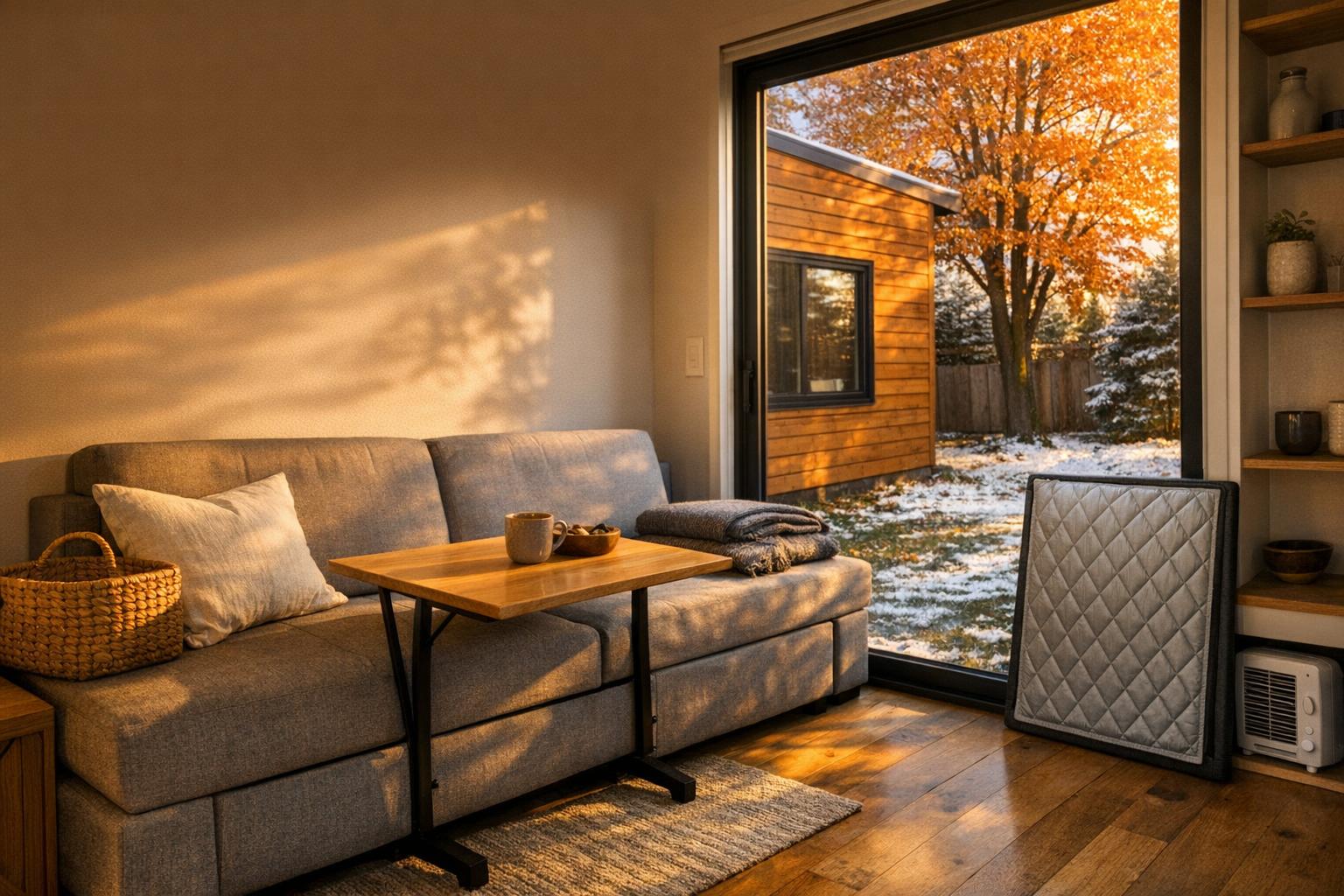
- insulated window inserts or DIY panels
- rugs over cold floors
Create a tiny-home airlock at the entrance if possible. Even a very small setup helps:
- wall hooks
- boot tray
- narrow bench
- quick-dry rack
This catches snow, slush, and cold air before it spreads through the whole home. In some homes, safe heated rugs or zoned electric heaters may help, but always follow product safety instructions. More on this at Green Building Canada, ADU Start’s winter-proof tiny home guide, and their Canadian winterization checklist.
Spring and fall strategies
Shoulder seasons are often moisture seasons in the Canadian climate.
- ventilation fans
- cracked-window air exchange where practical
- breathable storage bins for winter textiles
- washable mats and boot trays
- checks for damp corners and condensation
This is also the best time to declutter and swap out bulky winter items. Seasonal decor can shift too, but keep it light and washable. Helpful reads include Green Building Canada and ADU Start on air quality in tiny homes.
Summer strategies
A tiny home can overheat quickly because of its small interior volume and direct sun.
- reflective shades
- cross-ventilation through windows or skylights
- portable fans
- dehumidifiers in humid regions
- lightweight, breathable bedding and slipcovers
Layout matters in summer. Avoid blocking airflow with oversized furniture, packed corners, or heavy drapery. A clearer floor plan often feels cooler. See Tiny Home Tours, ADU Start’s passive cooling guide, and their solar shading guide.
Cold snaps, heat waves, and emergency readiness
Climate resilience is part of year-round living.
Keep a compact emergency kit with:
- mylar blankets
- flashlight
- backup batteries
- water
- simple first-aid items
Mini-HVAC zoning also helps. Heat or cool only the occupied area when possible. In a tiny home, targeted comfort is often more efficient than trying to treat every corner the same way. More ideas are available from Green Building Canada and ADU Start’s disaster-proofing guide.
Materials and Seasonal Decor That Work Hard in Small Canadian Spaces
Fabrics that support comfort
In the Canadian climate, fabrics need to be comfortable, breathable, and easy to maintain.
Good winter textiles
- wool
- flannel
- heavier woven cotton blends
Good summer textiles
- linen
- cotton
- lighter weaves that dry quickly
Low-maintenance fabrics matter in tiny home furnishing because they sit close to cooking, moisture, pets, and outdoor gear. They get used hard and often. Choose washable options whenever possible. More on small-space materials and decor can be found at Homes & Gardens, Tiny Home Tours, Aussie Tiny Houses, and ADU Start’s sustainable flooring guide.
Colour palette strategy for all four seasons
For year-round living, start with a neutral base:
- warm white
- oatmeal
- taupe
- wood tones
- charcoal
- soft greige
Then add seasonal decor through accents.
- winter: deep red, forest green, rich textures
- spring: soft sage, pale blue, muted florals
- summer: airy white, sand, light blue, citrus accents
- fall: rust, amber, terracotta, plaid details
A steady base palette keeps the home calm even when the accents change.
Sustainable and Canadian-friendly sourcing ideas
Examples, not endorsements, can help when planning a budget:
- budget: IKEA Canada bamboo flooring, MEC wool throws
- mid-range: Structube modular pieces
- premium/local: Good Wood Tiny Homes in BC for hemp wood accents
Durable materials are worth more in a small home because every surface gets more use. Choose pieces that can handle moisture, temperature change, and daily wear in the Canadian climate. See Tiny Home Tours, ADU Start’s eco-friendly materials guide, and their reclaimed materials guide.
3 Tiny Home Layout Examples for Seasonal Furnishing Success
The best layout changes slightly by season without needing renovation.
1) Micro-cabin: 150 sq ft
Winter setup
- Murphy bed down at night, folded into sofa seating by day
- wall heater warming the main living zone
- thick rug and thermal curtains creating a cosy core
Summer setup
- bed folded away for desk, yoga, or open circulation space
- fan placed for cross-breeze
- lighter textiles and fewer floor layers
A strong before-and-after improvement here is replacing random baskets with pegboards and wall storage. That alone can reduce clutter fast. See ideas from Homes & Gardens, Tiny Home Tours, and ADU Start’s tiny home design guide.
2) Trailer tiny home: 250 sq ft
This layout works well with:
- loft bed over storage
- seasonal rug swaps to define seating and kitchen zones
- fold-down table that expands the kitchen only when needed
- under-bench storage for coats and sports gear
In snowy or muddy weather, keeping the main walkway clear matters even more. Clear paths reduce mess and make the home safer to use. Explore more at Tiny Home Tours and ADU Start’s tiny home on wheels comparison.
3) Compact studio: 300 sq ft
A compact studio can handle all four seasons with:
- a bench that acts as dining seating and a mudroom drop zone
- a mirror opposite the window to increase daylight
- rolling bins under the bed or sofa for off-season storage
- a summer layout that prioritises airflow and visual openness
This kind of layout proves that seasonal decor and storage strategy can change how large a space feels. See more from Homes & Gardens, Tiny Home Tours, and ADU Start’s tiny home studio guide.
Build a Seasonal Storage System You Can Actually Maintain
Storage in a tiny home should be based on rotation, not accumulation.
Use a quarterly system:
- keep current-season essentials easy to reach
- move off-season bulk into labelled bins
- review duplicates and remove what is not used
Best storage categories:
- vacuum bags for bulky but dry items like spare duvets
- breathable bins for items that should not trap moisture
- clear labelled containers for accessories and quick identification
Vacuum bags are useful for dry, bulky items. Breathable bins are safer when humidity is a concern or when storing natural fibres. In parts of the Canadian climate with damp basements, wet springs, or high summer humidity, moisture control matters as much as saving space.
For very tight homes, off-site storage can help. Rare-use items such as sports gear, holiday décor, backup tires, tools, or hobby equipment may be better in a small rental storage unit. That keeps the home focused on year-round living, not long-term overflow. For more storage strategies, see Extra Space Storage and ADU Start.
DIY Seasonal Furnishing Hacks for Tiny Homes
These DIY ideas are simple and beginner-friendly.
DIY 1: Insulating window panels
Purpose: reduce winter drafts and improve comfort without permanent renovation
Materials
- foam board
- scissors or utility knife
- fabric
- Velcro
Steps
- Measure the window opening.
- Cut the foam board to size.
- Wrap or cover it with fabric.
- Attach it with Velcro for removable winter use.
Time and cost
- about 1 hour
- about $20
This is one of the easiest seasonal furnishing hacks for the Canadian climate and can improve year-round living by making winter comfort easier to manage. See Green Building Canada and ADU Start’s winter-proof tiny home guide.
DIY 2: Fold-away wall table
Purpose: create a dining or work surface only when needed
Materials
- plywood
- hinges
- drill
- saw
- support legs or brackets
Steps
- Cut the tabletop.
- Mount it to the wall with hinges.
- Install foldable support.
- Sand and seal the surface.
Time and cost
- about 2 hours
- about $50
This is one of the best space-saving tips for tiny home furnishing because it gives you function without a permanent footprint.
DIY 3: Wall-mounted shoe drying rack
Purpose: manage boots and wet footwear in snowy or muddy seasons
Materials
- pegboard
- hooks
- mounting hardware
Steps
- Mount the pegboard near the entry.
- Add hooks or pegs.
- Place a drip tray below.
Time and cost
- about 30 minutes
- about $15
In the Canadian climate, this simple hack keeps wet gear contained and protects the rest of the home from slush and mud.
How to Budget for Tiny Home Furnishing Without Wasting Space or Money
Budget tier
Good starter items:
- nesting stools
- thermal curtains
- basic bins
- hooks and pegboards
Common Canadian sources:
- Walmart
- Canadian Tire
- Facebook Marketplace
These are affordable ways to improve tiny home furnishing and seasonal decor without making major changes.
Mid-range tier
Useful upgrades:
- storage ottomans
- better-quality pegboards
- modular benches
- improved rugs and textiles
Common sources:
- IKEA
- HomeSense
This tier often gives the best balance between quality and practical space-saving tips for year-round living.
Premium tier
Higher-cost options:
- custom Murphy beds
- built-in benches
- bespoke storage stairs
Possible sources:
- Tiny Life Homes in Ontario
- local Etsy upcyclers
- custom Canadian makers
These options suit homes where seasonal furnishing hacks need to be built into the layout itself.
Buying second-hand is also a strong strategy. Kijiji, Facebook Marketplace, and local Habitat ReStore-style shops can offer solid pieces that can be repainted, refinished, or repurposed. This works especially well for tiny home furnishing because many useful items are simple, compact, and flexible. It also supports sustainability and reduces waste. For more budget-conscious ideas, see Tiny Home Tours, Wild Abundance, and ADU Start’s budget tiny home tips.
Keep It Safe: Maintenance Tips for Tiny Homes in Every Season
Compact homes need more proactive care because moisture, heat, and clutter build up faster.
Moisture and mould prevention
To lower risk:
- use a dehumidifier where needed
- place silica packs in closed bins
- air out textiles regularly
- check window edges and corners for condensation
Small homes can develop mould faster if airflow is poor, especially in a damp Canadian climate. Helpful resources include Green Building Canada and ADU Start’s air quality guide.
Safe heating and electrical use
Use safe systems and keep furnishing choices in mind.
- choose UL-certified products
- do not overload circuits
- avoid risky extension-cord setups for heaters
- keep heat sources clear of fabrics and convertible furniture
This matters even more in tiny home furnishing because fold-down items, curtains, and movable pieces can end up too close to heat if the space is not checked often. Read more at Green Building Canada and ADU Start’s tiny home safety guide.
Simple maintenance schedule
Monthly
- check vents
- inspect the entry area for moisture damage
- wash and rotate textiles
Quarterly
- deep clean storage zones
- inspect weather sealing
- rotate seasonal gear
This routine supports smoother year-round living and helps small problems stay small.
Your 2026 Seasonal Styling Calendar for Year-Round Living
A simple calendar makes seasonal furnishing hacks easier to keep up.
Jan–Mar
- add insulation layers
- use thicker rugs
- check drafts
- maintain boot and drying systems
These months are about warmth, protection, and managing winter mess in the Canadian climate.
Apr–Jun
- ventilate more often
- swap heavy bedding for lighter linens
- store winter gear in breathable bins
- clean moisture-prone zones
This is a good time to lighten seasonal decor and reset for spring.
Jul–Sep
- install reflective shades
- maximise cross-breeze
- reduce textile weight
- begin planning the fall reset by late August
These space-saving tips help tiny home furnishing stay open and cool through summer.
Oct–Dec
- return thermal layers
- prep the mudroom zone
- rotate in winter textiles
- review the emergency kit
This reset supports cold-weather year-round living before winter fully arrives.
A printable checklist, packing list, and storage labels would make this schedule even easier to follow.
Frequently Asked Questions
How much do basic insulation hacks cost in 2026?
Many basic seasonal furnishing hacks, such as window film and thermal curtains, cost about $20 to $100. Costs vary by size and quality. It is also smart to check for current federal, provincial, or local energy-efficiency updates that may help with weather-related upgrades in the Canadian climate. See Green Building Canada and ADU Start’s energy-efficiency guide.
How do I prevent mould during damp spring weather?
Use fans, keep airflow moving, choose breathable storage, and never trap damp textiles in sealed bins. Check corners, windows, and entry zones often. These habits make year-round living safer and easier in a damp Canadian climate. More help: Green Building Canada and ADU Start on air quality.
What’s the best way to maximise a tiny home under 200 sq ft?
Rely on vertical storage, multi-use furniture, and clear surfaces. Limit decorative-only items. Use walls, under-bed space, and fold-away features wherever possible. These are some of the most effective space-saving tips for tiny home furnishing. See Extra Space Storage and ADU Start’s tiny home design guide.
Can seasonal decor work in a very small home without creating clutter?
Yes. The best seasonal decor swaps are usually textile-based or replace items you already use, such as cushion covers, throws, runners, or wall prints. In a tiny home, seasonal decor should swap in, not pile on.
What about pests and tiny home regulations?
Seal gaps, elevate storage where possible, and keep food and textiles organised. Also check provincial and municipal rules that apply to tiny homes, trailers, or RV-style dwellings. Good planning supports safer year-round living in the Canadian climate.
Final Thoughts: Seasonal Furnishing Hacks Make Year-Round Living Easier
The best seasonal furnishing hacks are not about buying more. They are about choosing flexible furniture, smarter storage, climate-aware textiles, and low-bulk seasonal decor.
Strong tiny home furnishing in Canada starts with planning for the Canadian climate before each season arrives.
When your space can shift with changing weather, year-round living becomes simpler, tidier, and more comfortable. Good space-saving tips help every square foot work harder, and the right routines keep a tiny home feeling calm in every season.
Leave a Reply