

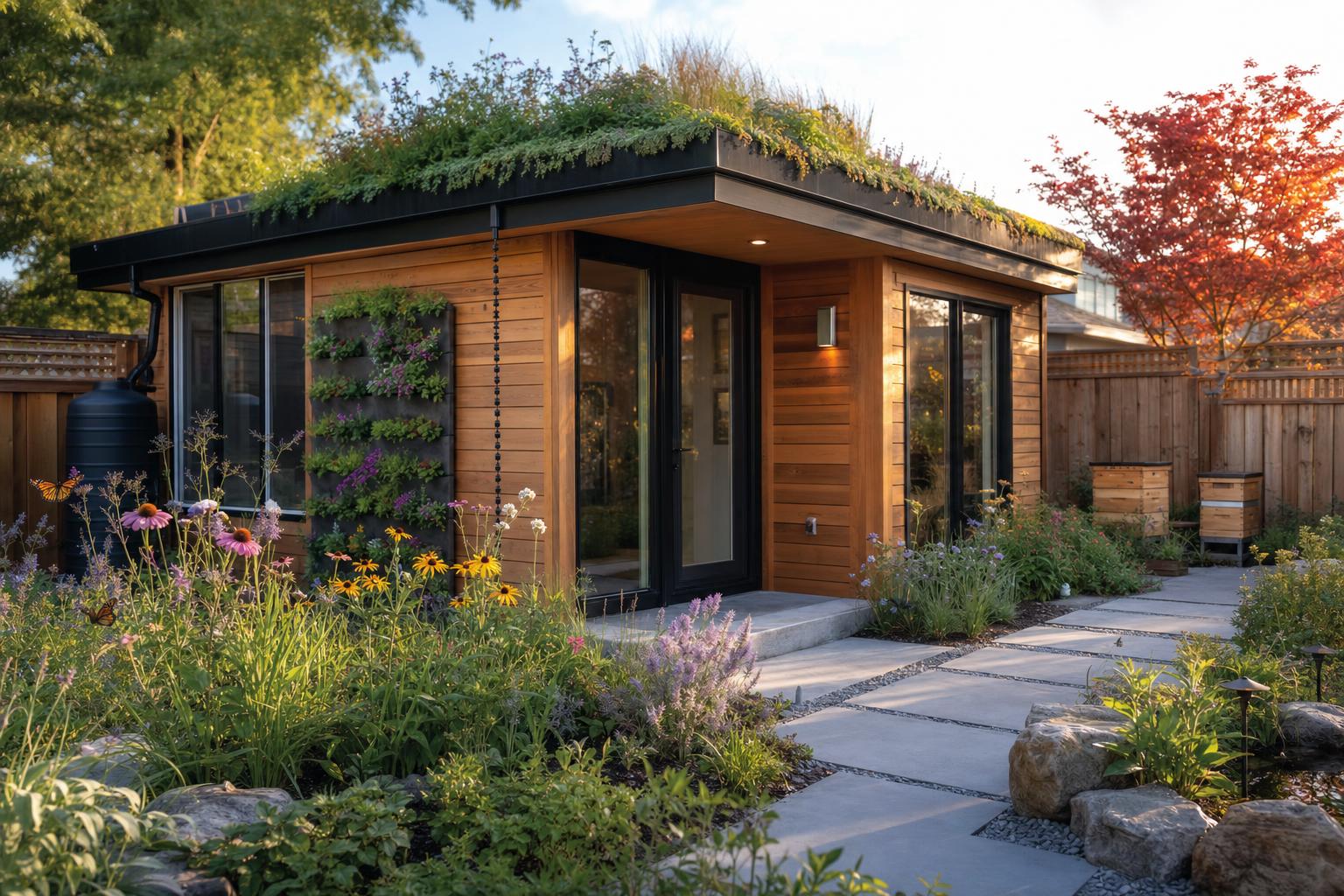
Pollinator-Friendly ADU Design in 2026: Smarter Small-Space Habitat Planning for Canadian Yards
Estimated reading time: 14 minutes
Key Takeaways
- Pollinator-friendly ADU design means shaping both the dwelling and the landscape to provide nectar, pollen, shelter, host plants, water, and pesticide-safe conditions.
- As more backyard suites, laneway homes, and garden suites move forward in Canada, small housing projects increasingly shape urban habitat.
- Good design starts with practical groundwork: sunlight mapping, wind checks, soil testing, drainage planning, and municipal rule review.
- Bloom succession, layered planting, reduced hardscape, and native or regionally adapted plants are the core design moves that improve biodiversity.
- Tiny home landscaping can still support meaningful habitat through containers, trellises, narrow borders, rain capture, and multi-use planting.
- It is better to talk about improved livability, stronger curb appeal, and better marketability than to promise a fixed resale increase.
Table of Contents
- Why pollinator-friendly ADU design matters in 2026
- Quick benefits summary for homeowners
- Planning checklist before any design or planting
- Design principles for pollinator-friendly ADU design
- Tiny home landscaping
- Plant palettes and planting plans for major Canadian regions
- What 2025 gardening taught homeowners for 2026
- Biodiversity boosters beyond flowers
- Pesticide avoidance and integrated pest management
- Step-by-step installation guide
- 12-month maintenance calendar and low-effort strategies
- Compliance, permitting, incentives, and resources for Canadian ADUs
- Costs, phased budgeting, and value proposition
- Case studies and mini-portraits
- Pollinator-friendly ADU design in 2026 is a chance to restore habitat, not just decorate a building
- Frequently Asked Questions
Why pollinator-friendly ADU design matters in 2026
Pollinator-friendly ADU design matters more in 2026 because small housing projects now shape more of our yards, side lots, and laneways.
In simple terms, it means planning an accessory dwelling unit and its outdoor space so the site provides nectar, pollen, shelter, nesting habitat, larval host plants, water, and safe pesticide-free conditions for pollinators while still being functional, attractive, and code-compliant.
This matters because building often disturbs soil, removes plants, and replaces habitat with walls, paving, and narrow access paths. As more Canadian ADUs move ahead, and as more pre-approved design programs appear, homeowners have a real chance to build smarter from the start.
This guide combines ecological health, practical planning, and curb appeal into one clear framework. In 2026, a pollinator-friendly approach is not just a style choice. It is part of resilient, lower-impact property design and everyday land stewardship. As Green Roots puts it, pollinator gardens are more than a trend; they are an essential part of sustainable land stewardship.
The opportunity is bigger than decoration. A well-planned ADU landscape can support biodiversity, soften stormwater impacts, improve comfort, and make a compact dwelling feel intentional.
Quick benefits summary for homeowners
Before getting into design details, here is what pollinator-friendly tiny home landscaping can do.
- Biodiversity gains
More bees, butterflies, hoverflies, birds, and beneficial insects can use the site when planting includes varied heights, forms, and bloom times. Structural diversity is strongly supported in guidance from Pollinator Gardens. - Pollinator support
Flowers from early spring to fall reduce food gaps. Not all pollinators are active at the same time, so season-long forage matters. - Stormwater benefits
Deeper-rooted planting and less exposed soil can slow runoff and improve water infiltration compared with large paved areas or thin lawn. Broader habitat-minded landscape thinking is reflected by Ducks Unlimited Canada and by practical ADU guidance on rain garden integration for ADUs. - Microclimate benefits
Shrubs, vines, and layered beds can cool hot edges around walls, paths, and patios. That can make small spaces more comfortable. - Property appeal
A well-planned flowering landscape can make a compact dwelling feel welcoming, higher-quality, and more marketable, especially when paired with smart access and screening. See ideas from landscaping ideas for ADUs in Canada. - Low-maintenance potential
Once established, native and regionally adapted plants often need less mowing, fertilizer, and intervention than lawn-heavy yards. This is a major theme in native plant landscaping for ADUs.
A careful note on value: it is safer to talk about better homeowner experience, stronger visual appeal, and improved marketability than to promise a precise resale increase without local evidence.
Planning checklist before any design or planting
This is the do-this-before-buying-plants stage of pollinator-friendly ADU design.
Map sunlight
Watch the site in the morning, at midday, and in late afternoon. Note where the sun lasts longest and where fences or walls create shade.
- Full sun: about 6 or more hours of direct light
- Part sun: about 3 to 6 hours
Bees often prefer warm, sunny spaces for foraging and nesting, so this one step shapes almost everything that follows. Guidance on season-long bloom planning is well aligned with resources from Ontario Bee.
Identify wind patterns
Small side yards and gaps between buildings can behave like wind tunnels. Strong wind dries soil, stresses plants, and makes pollinator feeding harder.
Useful buffers include:
- shrubs
- slatted fences
- trellises with climbers
- screens with gaps rather than solid walls
The aim is to soften wind, not completely trap it.
Test the soil
Soil matters just as much as flowers.
- Sandy soil drains quickly
- Clay soil holds water and compacts easily
- Loam is more balanced
Test drainage by filling a small hole with water and timing how fast it drains. If possible, check pH too. Healthy soil supports stronger plants and helps ground-nesting insects.
Check water access
Ask practical questions early:
- Is there a hose bib nearby?
- Can a rain barrel work here?
- Will watering be manual?
- Are containers the main growing space?
Your watering plan should guide bed size, plant density, and pot choice. For more on this, see rainwater harvesting for tiny homes.
Assess existing habitat
Look beyond the ADU footprint. Nearby trees, ravines, meadows, parks, hedgerows, and neighbour gardens can increase pollinator visits. A small garden works better when it connects to surrounding habitat.
Measure space realistically
Mark these first:
- utility access
- walking routes
- emergency egress windows or doors
- garbage and recycling storage
- privacy screening
- snow storage
- drainage paths
Only after that should planting space be assigned.
Review municipal rules
With Canadian ADUs, local rules often affect:
- setbacks
- lot coverage
- height
- access routes
- drainage
- parking
- servicing
- tree protection
- permeable area rules
Pre-approved ADU plans can simplify the building side, but they do not remove the need for site-specific review. St. Catharines’ Additional Dwelling Units page is a good example: detached pre-approved ADU designs still require property-specific review for layout, parking, setbacks, and related conditions. Broader regulatory context is also covered in this Canadian ADU regulations guide.
Design principles for pollinator-friendly ADU design
This is the core framework that makes a landscape both ecologically useful and visually clear.
Design for bloom succession
Bloom succession means something is flowering from very early spring to late fall. This is one of the most important goals in a pollinator garden.
Why it matters:
- different pollinators emerge at different times
- spring bees need early forage
- late-season insects need food before winter
- a one-season garden creates long gaps
Ontario Bee strongly supports continuous bloom through the growing season.
Use layered planting
A layered planting includes:
- groundcovers
- perennials
- grasses
- shrubs
- small trees
- climbers
This works better than a single flat bed of annuals because it creates more food sources, shelter, and microclimate variation. Layering is also one of the easiest ways to improve site biodiversity, which is reinforced in resources from Pollinator Gardens.
Prioritize native and regionally adapted species
Native plants often support local insects better because they evolved together. They can provide stronger pollen, nectar, and host relationships.
That said, not every useful plant must be native. Some non-invasive, non-native plants can extend bloom time or perform well in containers. The key is to avoid invasive species and avoid decorative plants with very low habitat value.
Include both nectar plants and host plants
This step is often missed.
- Nectar plants feed adult pollinators
- Host plants support egg-laying and larval feeding
A true habitat needs both. Without host plants, many insects can visit but not complete their life cycle.
Reduce hardscape dominance
Too much paving heats the site, increases runoff, and shrinks habitat. Use only the hard surfaces you need, and choose permeable options where practical. More on that balance can be found in ADU outdoor design in Canada.
Create pesticide-free or pesticide-minimized zones
Insecticides can directly harm pollinators. Herbicides can remove food plants and reduce habitat. Pollinator-friendly design should avoid routine spraying.
Design for visibility and beauty
Pollinator-friendly does not mean messy.
Use:
- repeated plant groupings
- neat edging
- clear paths
- simple shapes
- consistent mulch choices
These moves make ecological planting look intentional and attractive. This stewardship approach is reflected by both Green Roots and Pollinator Gardens.
Tiny home landscaping
Tiny home landscaping needs precision, not lower ecological ambition. A small footprint can still provide food, shelter, comfort, and beauty when each square metre does more than one job.
Container planting
Large containers are usually better than small pots because they:
- hold moisture longer
- support stronger roots
- stay cooler in summer
- need less frequent watering
A useful pollinator container often includes:
- a spiller to soften the edge
- a filler for volume
- an upright bloomer for visibility
- one host or habitat-supporting plant where possible
Use peat-reduced or more sustainable mixes where available, along with compost and mineral material for drainage. For compact-space growing ideas, see urban gardening tips.
Vertical gardens and trellises
Walls, fences, and narrow side yards can support more planting without blocking circulation.
Good options include:
- trellises with vines
- narrow raised beds
- wall planters
- fence-mounted supports
Be cautious with very shallow wall pockets. They dry out quickly and usually need drip irrigation or drought-tolerant plant choices.
Balcony or deck pollinator zones
If an ADU has a deck or upper platform, group pots together so pollinators see one concentrated forage patch instead of scattered singles. Practical outdoor layout ideas can also be paired with rooftop deck design tips.
Green roofs
Flat or low-slope ADU roofs may provide habitat when ground space is tight. But green roofs need professional review for:
- structural load
- waterproofing
- growing medium depth
- wind exposure
- safe access
Think of a green roof as a premium small-site option, not a default feature. St. Catharines materials note green-roof potential on some detached ADU concepts, and more context is available in green roofs for tiny homes in Canada.
Rain capture and passive watering
Useful strategies include:
- rain barrels where allowed
- drip irrigation for beds and pots
- code-appropriate downspout redirection
- rain gardens where suitable
Functional multi-use design
One planted strip can do several jobs at once:
- screen a window
- cool a wall
- soften the view
- feed pollinators
- catch some runoff
That stacking of functions is ideal for compact ADU sites. It also fits the integrated thinking seen in sustainable ADU models from Brauer Homes and in small-space ADU landscaping guidance.
Plant palettes and planting plans for major Canadian regions
For Canadian ADUs, plant choice must always be checked locally because native range and nursery stock vary. Still, a regional framework is very helpful. On small sites, repeating 3 to 5 dependable species usually looks better and performs better than collecting many unrelated plants.
BC Coastal
Focus on long bloom season, wet winters, and summer drought resilience.
Early spring forage
- Red-flowering currant
- Oregon grape
Mid-summer peak bloom
- Yarrow
- Self-heal
- Nodding onion
Late-season support
- Douglas aster
- Goldenrod species
Host plants / larval support
- Native violets where suited
- Willows where space allows
Shrubs / small woody plants
- Oceanspray
- Snowberry
Grasses / sedges / ground layer
- Tufted hair grass
- Native sedges
Prairies
Focus on wind tolerance, drought resilience, deep roots, and meadow-style planting.
Early spring forage
- Prairie crocus
- Golden alexanders
Mid-summer peak bloom
- Purple coneflower
- Blanketflower
- Wild bergamot
- Prairie blazing star
Late-season support
- Smooth aster
- Goldenrod species
Host plants / larval support
- Milkweed species where appropriate
- Native legumes
Shrubs / small woody plants
- Wolf willow
- Shrubby cinquefoil
Grasses / sedges / ground layer
- Little bluestem
- Blue grama
- Prairie dropseed
Ontario / Quebec
Focus on four-season structure, early forage, strong summer nectar, and fall asters and goldenrods.
Early spring forage
- Serviceberry
- Wild columbine
- Willow species where space allows
Mid-summer peak bloom
- Wild bergamot
- Black-eyed Susan
- Anise hyssop
- Coneflower
Late-season support
- New England aster
- Goldenrod species
Host plants / larval support
- Milkweed species
- Native violets
- Pussy willow or other local host plants
Shrubs / small woody plants
- Ninebark
- Dogwood species
- New Jersey tea
Grasses / sedges / ground layer
- Little bluestem
- Prairie dropseed
- Pennsylvania sedge
Atlantic Canada
Focus on cool-climate toughness, wind exposure in some areas, and woodland-meadow transitions.
Early spring forage
- Serviceberry
- Wild strawberry
- Early willow species
Mid-summer peak bloom
- Bee balm
- Yarrow
- Joe-Pye weed in suitable moisture
- Black-eyed Susan
Late-season support
- Asters
- Goldenrods
- Boneset in moist sites
Host plants / larval support
- Milkweed where suited
- Native violets
- Regionally appropriate shrubs
Shrubs / small woody plants
- Bayberry in coastal zones
- Dogwoods
- Viburnums where regionally suitable
Grasses / sedges / ground layer
- Native sedges
- Switchgrass in suitable sites
- Low groundcovers for path edges
These examples reflect region-specific pollinator planting practice, but local validation is still essential. A smart final step is confirming availability and suitability with local nurseries, conservation groups, or native plant specialists. Helpful references include Pollinator Gardens, Green Roots, and native plant landscaping for ADUs.
What 2025 gardening taught homeowners for 2026
2025 gardening showed that resilience works better than short-term display. In 2026, the strongest pollinator-friendly landscapes build on lessons that were already working, rather than chasing a sudden reset.
Key lessons that carry forward:
- smaller lawn areas
- native meadow pockets
- pollinator corridors between front and back gardens
- drought-aware planting
- less pesticide use
- stronger focus on ecosystem resilience
The practical lesson is straightforward: choose fewer, tougher, longer-performing plants and build a season-long system instead of a one-time spring show.
What to avoid in 2026:
- annual-only beds with no host plants
- sterile cultivars with weak pollen or nectar value
- oversized lawns around compact dwellings
- gravel yards with little ecological function
This shift fits the stewardship framing of Green Roots, aligns with bloom succession guidance from Ontario Bee, and supports practical small-space strategy from ADU landscaping for small spaces.
Biodiversity boosters beyond flowers
Flowers matter, but planting alone is not enough. Habitat complexity is what really improves biodiversity.
Nesting habitat
Many native bees nest in bare or lightly covered ground, not in bee hotels. If safe and practical, leave a few patches of sunny, well-drained, undisturbed soil.
Bee hotels and insect hotels
These can support cavity-nesting species, but only if they are:
- sized correctly
- kept dry
- cleaned or replaced properly
- monitored for pests and disease
A neglected insect hotel can do more harm than good.
Larval host plants
Host plants are not optional extras. They are central to habitat design because larvae and caterpillars often require specific species to survive.
Water sources
Simple works well:
- shallow dish
- stones for landing
- regular fresh water
- no stagnant water
Small recirculating features can work too if maintained.
Hedgerows and connectivity
Link the ADU garden to existing trees, fences, shrubs, and nearby planting. Habitat connection helps pollinators move through both the property and the wider neighbourhood. See shared ADU backyards and green space and wildlife corridor ADU design.
Deadwood, leaf litter, and winter cover
Many insects overwinter in stems, leaves, and tucked-away woody debris. Leave some standing stems and some leaf litter through winter in lower-visibility areas.
Optional wildlife supports
Bird or bat boxes can support broader habitat goals, but the main focus should remain on pollinators and beneficial insects.
These wider habitat features reflect conservation-minded design and support connectivity ideas promoted by Ducks Unlimited Canada, Pollinator Gardens, and related small-site habitat thinking like ADUs for birdwatchers.
Pesticide avoidance and integrated pest management
Integrated pest management means preventing problems first through good plant choice, healthy soil, air flow, sanitation, and regular observation. If trouble still appears, use the least harmful control only when needed.
For pollinator-friendly ADU design, that means:
- choose the right plant for the right place
- avoid routine preventive insecticide spraying
- accept minor leaf damage when plants are otherwise healthy
- hand-pick pests first when outbreaks are small
- prune out small problem areas
- never spray open flowers
- read labels carefully for pollinator warnings
Overmanaged “perfect” landscaping often works against biodiversity. A few chewed leaves are usually a fair trade for a functioning yard.
Reduced-pesticide and pesticide-free zones are common parts of pollinator guidance from Ontario Bee and Pollinator Gardens.
Step-by-step installation guide
Here is a simple sequence a homeowner can follow.
Step 1: Finalize layout
Mark:
- doors
- paths
- utility access
- drainage routes
- privacy zones
- storage areas
Do this before buying materials.
Step 2: Remove or reduce unnecessary lawn and hardscape
Low-labour methods include:
- sheet mulching
- staged bed expansion
- converting only part of the lawn each season
Step 3: Improve soil
Add compost where needed. Avoid over-tilling because it can damage soil structure. Good soil supports better roots, moisture balance, and plant strength.
Step 4: Install irrigation or water capture
Choose what matches your budget and site:
- drip irrigation for beds
- drip lines for containers
- rain barrels where permitted
- a realistic hand-watering plan
Step 5: Plant by structure first
Install in this order:
- trees or large shrubs
- medium shrubs and major perennials
- groundcovers and bulbs
This keeps spacing clear and reduces overcrowding.
Step 6: Mulch appropriately
Mulch holds moisture and suppresses weeds, but do not pile it against crowns and do not cover every inch of possible nesting soil.
Step 7: Add habitat features
Good small-site additions include:
- shallow water dish
- bare soil patch
- stones or logs
- managed bee hotel
- simple signage if desired
Step 8: Monitor establishment
During the first season:
- water regularly
- watch which areas dry fastest
- deadhead selectively
- replace failed plants only after understanding why they failed
Low-cost path
- phased beds
- mulch paths
- grouped containers
- hand watering
Premium path
- custom drip system
- native meadow conversion
- rain garden
- designed permeable hardscape
- green roof where feasible
This kind of integrated exterior planning fits the sustainable ADU approach seen in Brauer Homes and discussions around detached ADU options in St. Catharines.
12-month maintenance calendar and low-effort strategies
A pollinator-friendly yard does not need constant fussing. It needs light, timely care.
January–February
- check snow load on shrubs
- protect containers from freeze-thaw damage
- leave stems standing where possible
- note where meltwater gathers
March–April
- delay major cleanup until weather is consistently mild
- check stems and leaf litter for overwintering insects
- top-dress beds and containers with compost
- divide crowded plants if needed
- plant early-season bloomers
May–June
- monitor moisture closely in new beds and pots
- weed early before seed set
- learn to distinguish volunteer seedlings from invasive weeds
- watch for pest outbreaks before they spread
July–August
- water deeply during dry periods
- deadhead selectively to extend bloom
- leave some flowers for seed set
- take photos to track pollinator activity
September–October
- add fall bloomers
- plant bulbs where suitable
- reduce cleanup
- leave seedheads if they still suit the space visually
November–December
- protect pots
- shut down and store irrigation if needed
- review which species performed best
- plan adjustments for next year
What to prune and what to leave
Leave
- hollow stems
- sturdy seedheads
- some leaf litter
Prune
- unsafe growth
- diseased material
- anything blocking doors, paths, or egress
Low-effort maintenance principles
- plant densely enough to suppress weeds
- repeat durable species
- reduce lawn edges
- automate watering in small spaces where possible
Simple biodiversity monitoring
- take a photo from the same angle each month
- note bloom weeks
- count pollinator sightings
- use apps such as iNaturalist for simple records
Detailed seasonal calendars were a gap in the source material, so this is a practical homeowner-ready tool guided by bloom succession principles and informed by resources such as Ontario Bee and ADU maintenance checklist guidance.
Compliance, permitting, incentives, and resources for Canadian ADUs
Canadian ADUs are shaped by local rules, not one national standard. Before finalizing landscape and drainage plans, check municipal requirements carefully.
Common issues include:
- zoning differences by city
- setbacks
- lot coverage
- servicing
- access paths
- parking
- tree protection
- stormwater management
- whether landscape changes affect permit drawings
St. Catharines offers a practical example. The city has pre-approved detached ADU designs built to comply with the Ontario Building Code, but homeowners still need site-specific review. The city has also offered grants of up to $80,000 for exterior units through its Community Improvement Plan. Because 2025 funding ran out, homeowners should verify current 2026 program status rather than assume funding remains available. See the city’s Additional Dwelling Units page.
At a broader level, Housing Accelerator Fund and missing-middle policies are helping more municipalities expand ADU options, but incentives and requirements remain local.
Sustainable ADU models also show how ecological landscaping can align with energy-conscious building approaches, including lower-impact and fossil-fuel-free design thinking. One example is Brauer Homes, and related planning ideas can be explored through solar-ready ADU design guidance.
Costs, phased budgeting, and value proposition
Costs vary a lot, so it is more useful to think in tiers than in fixed national averages.
Small footprint or container-first approach
Typical costs may cover:
- containers
- soil mix
- a few shrubs and perennials
- mulch
- hand-watering tools
This is often the easiest entry point for tiny home landscaping.
Medium approach
Typical costs may include:
- several in-ground beds
- more plant material
- mulch
- drip irrigation
- modest hardscape changes
Premium approach
This may include:
- custom design
- extensive planting
- irrigation system
- privacy screening
- rain garden
- green roof
- more complex access work
Main cost variables include:
- demolition or site prep
- plant size and quality
- irrigation
- narrow backyard access
- soil improvement
- structural needs for green roofs
The value proposition is best framed in practical terms:
- better livability
- stronger visual quality
- a more appealing rental ADU
- lower maintenance over time if lawn is reduced
- better support for local biodiversity
Helpful metrics to track:
- number of blooming months
- pollinator sightings
- planted area versus hardscape
- lawn reduction percentage
Grant programs like those seen in St. Catharines can help in some locations, but they are examples rather than universal offsets. Broader incentive context is discussed in ADU grants and municipal incentives in Canada.
Case studies and mini-portraits
These short examples are illustrative composites based on common pollinator-friendly and Canadian ADU design approaches. They show realistic outcomes without inventing hard data.
Case study 1: Tiny home landscaping retrofit
A compact rear yard had too much gravel, a narrow strip of lawn, and no shade or flower continuity. The redesign used:
- three large containers near the entry
- one layered side border with grasses, perennials, and a shrub
- a shallow pollinator water dish
- a small seating space edged by planting
Outcomes were modest but useful:
- bloom continuity stretched from spring into fall
- mowing dropped sharply
- bees and butterflies became regular visitors
- the yard felt softer and more finished
This reflects practical pollinator garden principles used in Canadian residential projects, including ideas seen at Pollinator Gardens and in pollinator garden ADU guidance.
Case study 2: New Canadian ADU build with ecological features
A new detached ADU was planned with the landscape from day one. The site included:
- a native border along the access path
- a permeable walking surface
- a rain barrel
- a flat roof designed to remain green-roof-ready
- planting linked visually and ecologically to the main house garden
The main lesson was that code-aware planning early on made it easier to preserve space for habitat, drainage, and circulation.
This matches the broader idea that sustainable ADU design should include the exterior environment, not only the building shell, as seen in Brauer Homes and related thinking around green roofs for tiny homes.
Case study 3: Biodiversity-focused family backyard
A family property with a main home and ADU used a pollinator corridor to connect front and back gardens. The plan added:
- shrubs along the fence line
- host plants near a sunny border
- reduced lawn between buildings
- late-season asters and goldenrods
- leaf-litter zones in tucked-away corners
The result was not just prettier planting. It was better habitat function, with a longer bloom season and more regular sightings of native bees and hoverflies. This kind of layered, connected planting is consistent with guidance from Pollinator Gardens and wildlife-friendly landscaping for tiny homes.
Pollinator-friendly ADU design in 2026 is a chance to restore habitat, not just decorate a building
Pollinator-friendly ADU design helps homeowners turn small-space development into something that gives back.
The formula is straightforward:
- assess the site carefully
- design for bloom succession and layered planting
- choose regionally appropriate species
- add nesting, water, and host features
- avoid pesticides
- maintain the space lightly but intentionally
Even very small tiny home landscaping projects can improve biodiversity when each part of the yard is planned to do more than one job. That matters even more as more Canadian ADUs are built in 2026 and homeowners look for ways to make compact housing more resilient, more beautiful, and more useful for the living systems around it.
The best pollinator-friendly ADU landscapes do not merely soften a building. They restore ecological function to the everyday spaces where people actually live.
Frequently Asked Questions
What is pollinator-friendly ADU design?
It is the planning of an accessory dwelling unit and its surrounding outdoor space so the site supports pollinators with nectar, pollen, host plants, shelter, nesting opportunities, water, and safer low- or no-pesticide conditions.
Can a very small ADU yard still help pollinators?
Yes. Even a narrow side yard, entry border, balcony, or grouped containers can help if the planting is layered, blooms across multiple seasons, and includes habitat features beyond flowers alone.
Are native plants always required?
No, but native plants are often the strongest foundation because they support local insects more effectively. Non-invasive, regionally adapted non-natives can still have value, especially for extending bloom time or working in containers.
What is the biggest mistake homeowners make?
A common mistake is focusing only on flowers and ignoring structure, host plants, nesting habitat, water, drainage, and long-term maintenance. Another is paving too much of the site too early.
Do pollinator gardens look messy?
They do not have to. Repetition, edging, clear paths, simple bed shapes, and consistent mulch can make habitat-focused planting look neat and intentional.
Should I install a bee hotel?
Only if you are prepared to size it correctly, keep it dry, monitor it, and clean or replace materials properly. Many native bees actually prefer undisturbed ground nesting areas.
How do I know if my ADU landscaping plan is compliant?
Check local zoning, setbacks, drainage rules, tree protection requirements, access standards, and any permit-related site conditions. A pre-approved ADU plan does not eliminate site-specific review.
Is pollinator-friendly landscaping expensive?
It can be done at different budget levels. A container-first or phased approach is often affordable, while features like irrigation systems, rain gardens, and green roofs raise the budget.
What is the easiest low-maintenance strategy?
Use fewer, tougher plants; repeat them in groups; reduce lawn; mulch appropriately; and automate watering where possible. Dense planting also helps suppress weeds over time.
Leave a Reply