

Estimated reading time: 12 minutes
Key Takeaways
- Remote healthcare ADUs are compact, modular healthcare spaces that can function as mobile units, semi-permanent clinics, or extensions to existing health sites in northern Canada.
- They are not replacements for hospitals, nursing stations, or regional health centres, but they can add exam space, diagnostics, telehealth access, outreach capacity, and surge support.
- In 2026, the strongest case for these ADU solutions is improved accessibility, cultural safety, and service reach for communities facing long travel times, severe weather, and limited local care.
- To work well in northern Canada, units must be designed for cold climates, permafrost, transport constraints, power resilience, and digital connectivity.
- The most effective deployments are likely to be community-led, telehealth-enabled, and integrated into wider regional healthcare systems.
Table of contents
- Introduction — What remote healthcare ADUs are and why they matter now
- Why this matters in 2026 — The state of remote healthcare in northern Canada
- What is an ADU, and how do ADU solutions translate to healthcare?
- Mobile unit typologies for remote northern care delivery
- Design considerations for remote healthcare ADUs in northern Canada
- Accessibility and culturally appropriate care
- Operations, staffing, and service models
- Logistics and transport strategies for northern deployment
- Funding, procurement, and regulatory considerations
- Sustainability and environmental impact
- Case studies and pilot concepts
- Barriers, risks, and mitigation strategies
- Implementation roadmap for 2026–2028
- Recommendations and policy asks
- Resources, templates, and next steps
- FAQ
Introduction — What remote healthcare ADUs are and why they matter now
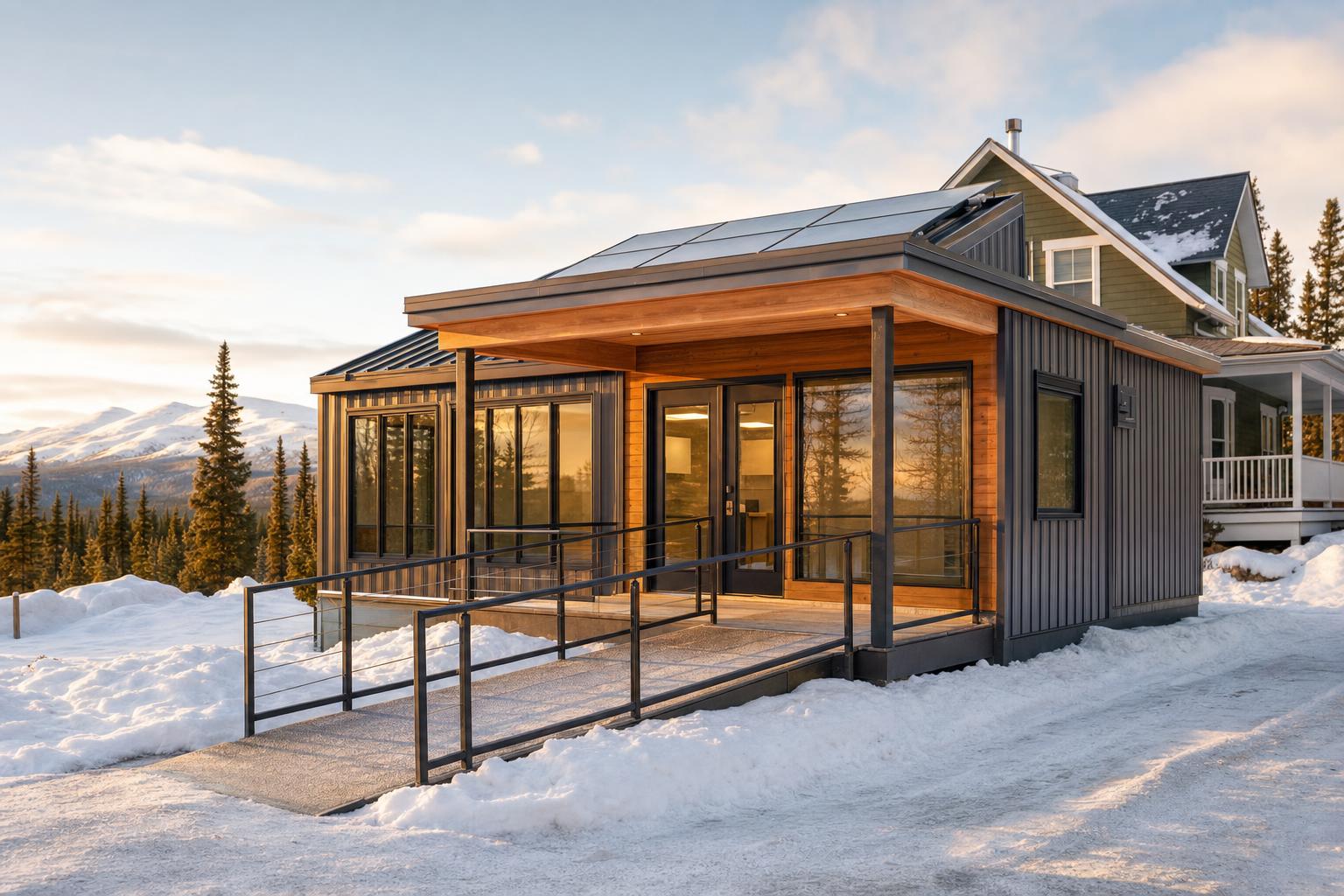
Remote healthcare ADUs are small, modular, accessory-dwelling-unit-style structures adapted into healthcare spaces. In practice, they can work as mobile units or semi-permanent clinics that bring remote healthcare closer to people in northern Canada. For a related example of compact, specialized healthcare infrastructure, see Tiny Home Clinics.
The idea is simple: take the strengths of compact modular buildings and apply them to care delivery.
That means using:
- smaller footprints
- prefabricated construction
- faster deployment
- easier transport
- flexible layouts
- better accessibility planning
These ADU solutions matter now because access gaps remain wide in many northern and remote communities. In 2026, the pressure is still clear: people need better local access to check-ups, diagnostics, mental health supports, maternal care, chronic disease management, and telehealth-linked specialist services.
The broader remote-and-mobile housing playbook is also covered in Portable Homes and Moving Tiny Home in Canada.
This article explains:
- why access gaps persist
- how remote healthcare ADUs can be designed for mobility and cold climates
- what makes these units effective in accessibility, operations, logistics, and funding
- what an implementation roadmap for 2026–2028 can look like
Why this matters in 2026 — The state of remote healthcare in northern Canada
The healthcare access landscape
Northern Canada includes remote parts of Yukon, Northwest Territories, Nunavut, northern British Columbia, Alberta, Saskatchewan, Manitoba, Ontario, Quebec, and Labrador.
Many communities are:
- small
- far apart
- Indigenous-led
- under 1,000 residents
- sometimes under 300 residents
Some are fly-in only. Others depend on winter roads, barges, or long-distance travel to larger centres. That makes routine healthcare access hard.
The result is practical and serious:
- routine diagnostics may be delayed
- non-urgent care can be postponed
- follow-up visits may be missed
- specialist access may require costly travel
- weather can interrupt care plans
This is not an isolated problem. It is a structural remote healthcare and accessibility issue across northern Canada.
Why 2026 is a moment of opportunity
There is growing momentum behind hybrid care models that combine in-person service, remote diagnostics, and telehealth.
Recent examples show the direction clearly:
- Cat Lake First Nation is testing 73Health remote diagnostic technology for real-time auscultation and vital signs monitoring.
- The Canadian Space Agency has supported companies developing remote care technologies for space missions that can also help isolated communities on Earth.
- Virtual ER programs in rural and remote Canada are helping maintain emergency access during physician shortages.
These developments strengthen the case for remote healthcare ADUs. If communities have small physical hubs for diagnostics, telehealth, outreach, and rotating care teams, remote care becomes more useful and more reliable.
Similar system-level thinking appears in ADUs for Healthcare and Home Health Care ADUs.
The regional challenges any solution must address
Any healthcare model in northern Canada must deal with:
- extreme cold
- high winds
- heavy snow
- long winters
- temperatures below -40°C
- permafrost and discontinuous permafrost
- seasonal transport windows
- chronic workforce shortages
- heavy reliance on locum staff
These realities make large permanent builds harder, slower, and more expensive. They also make flexibility valuable.
That is why remote healthcare ADUs and other mobile units stand out. Modular infrastructure can be moved, adapted, expanded, or rotated more easily than full institutional facilities.
For more on cold-weather building needs, see Cold Climate Tiny Home Construction, Designing Cold Climate Homes in Northern Canada 2026, and Climate-Responsive Tiny Home Design.
What is an ADU, and how do ADU solutions translate to healthcare?
Define ADU clearly for non-expert readers
An ADU is an Accessory Dwelling Unit, meaning a small, self-contained building that normally provides living or functional space on a property.
In housing, ADUs are often:
- backyard suites
- laneway homes
- modular backyard buildings
- compact secondary structures
Here, the article uses the logic of ADUs rather than the housing use itself. That logic includes:
- compact size
- prefabrication
- efficient footprint
- transportability
Those traits make ADU solutions useful for healthcare too. Related background: Accessory Dwelling Units, Types of ADUs, and ADU Glossary.
Explain the healthcare translation
For healthcare, ADU solutions can become:
- stand-alone small clinics
- diagnostic pods
- counselling rooms
- maternal health spaces
- extensions to existing health centres
Why the model works:
- compact buildings lower cost and reduce site disruption
- prefabrication shortens construction time
- modular design supports transport and reconfiguration
- smaller units are easier to deploy into remote areas than full institutional buildings
Remote healthcare ADUs can be:
- fixed
- semi-permanent
- transport-ready
That flexibility is one of their biggest strengths in remote healthcare.
ADU model categories to explain
Fixed modular clinic ADU
- prefabricated and shipped to site
- placed on piles or pads
- best for long-term use in one community
Transportable ADU
- built on a chassis or skid
- suitable for truck, ice road, barge, or aircraft transport depending on size
- best for rotating among communities
Accessory ADU to an existing clinic or nursing station
- adds exam rooms, mental health rooms, diagnostic bays, or surge space
- best where a core health site already exists but needs more capacity
Transition to mobile care design
Once ADU solutions are designed around transport limits, utility flexibility, and secure medical equipment mounting, they start to function as healthcare mobile units rather than simple buildings.
If transportability is central, also see Tiny Home Mobility in 2026 and Zero-Emission Tiny Home Transport.
Mobile unit typologies for remote northern care delivery
Road-transportable trailer clinics
These mobile units are truck-towed clinical trailers or trailer-like modular health units.
Best uses:
- primary care visits
- chronic disease checks
- dental or vision outreach
- ultrasound, ECG, and basic lab testing
Strengths:
- flexible routing for communities with road or winter road access
- easier maintenance and retrofit work than highly specialized air modules
Limits:
- not suitable for roadless communities
- need towing equipment, storage, maintenance, and winterization
For many parts of northern Canada, this may be the most practical first model.
Airliftable modules
These are compact modules built to fit aircraft weight and size limits used in remote regions.
Best uses:
- fly-in communities
- emergency deployment
- temporary replacement when a facility is damaged or overloaded
Trade-offs:
- strongest reach into isolated communities
- highest transport cost per movement
- strict design pressure to reduce weight without losing medical function
Technical needs include:
- foldable parts
- secure equipment mounting
- quick-connect utilities
- strong packaging and loading plans
Airliftable remote healthcare ADUs are harder to design, but they can reach places other mobile units cannot.
Sea- and ice-capable units
These are containerized or modular clinical units made for barge, ship, or seasonal marine transport.
Likely uses:
- coastal communities
- island settlements
- seasonal resupply routes
Strengths:
- can move larger and heavier clinical payloads than aircraft
- can line up with existing summer resupply logistics
Constraints:
- narrow seasonal windows
- need unloading plans and suitable landing or transfer methods
Hybrid hub-and-spoke models
This is likely the most realistic large-scale approach.
In a hub-and-spoke model:
- one larger semi-permanent ADU clinic or expanded health centre acts as the hub
- smaller mobile units visit nearby communities on planned routes
- telehealth links the hub and units to regional hospitals and specialists
This model aligns well with Indigenous-led virtual health approaches. Whitecap Dakota First Nation’s virtual health hub shows how coordinated, community-focused digital care can support many communities rather than one site alone.
Another strong reference point is ADU Community Hubs and Community Services.
Design considerations for remote healthcare ADUs in northern Canada
Cold-climate building envelope
Remote healthcare ADUs in northern Canada need strong thermal performance.
Key design points:
- walls and roofs should use high insulation values, often about R-40 to R-60 depending on assembly
- windows should be triple-pane and low-emissivity
- thermal bridging should be minimized with continuous insulation and careful joints
- airtight construction reduces drafts, heat loss, and condensation
- vestibules and airlocks help both thermal control and infection control
Why this matters:
- poor envelopes increase fuel use
- operating costs rise
- failure risk grows during extreme weather
Design tip
Good ADU solutions start with the building envelope. If the shell fails, every heating and power system works harder.
Foundations and permafrost mitigation
Foundation choice depends on whether the clinic is semi-permanent or fully mobile.
For semi-permanent units:
- screw piles or helical piles reduce ground disturbance
- raised structures allow airflow below the building
- adjustable steel supports help manage shifting terrain
For mobile units:
- skid-mounted bases can sit on granular pads
- setup must allow safe levelling and clinical stability
Conventional shallow foundations can increase thaw and instability in permafrost conditions. That makes them risky in many northern settings.
See also Tiny Home Foundation Options and Climate Resilient ADUs.
Energy systems and power resilience
The right rule is simple: be ultra-efficient first, then add generation.
Useful systems may include:
- high-efficiency electric heat pumps where feasible
- hybrid heating where electric-only systems do not work well
- HRV or ERV systems for fresh air and heat recovery
- roof or rack-mounted solar PV where suitable
- small wind turbines only where wind is strong and maintenance is realistic
- battery banks for critical loads
- backup diesel or propane generators with smart controls
- real-time energy monitoring
Critical loads often include:
- vaccine or medication refrigeration
- IT systems
- diagnostics
- lights
- communications
Illustrative example for a 35–45 m² mobile clinic:
- 6–8 kW solar array
- 20–40 kWh lithium-ion battery storage
- 12–20 kW backup generator
- possible annual renewable contribution of 40–70% depending on season and location
These numbers are examples, not universal design rules.
Water, wastewater, and medical waste
Medical function depends on utility planning, not only on the building shell.
Possible water and waste options:
- connection to community water systems where available
- onboard water storage with filtration and UV treatment where needed
- greywater reuse only where rules allow
- wastewater through municipal links, septic, holding tanks, or packaged treatment systems
- sealed sharps and biohazard containers with pickup tied to medical supply routes
Without a realistic utility plan, a clinic may be well-built but not workable.
For water-system background, see Rainwater Harvesting for Tiny Homes and Tiny Home Utilities Canada.
Durability and rapid deployment features
Practical ADU solutions should include:
- hospital-grade cleanable surfaces
- impact-resistant finishes
- non-slip flooring for snow and slush
- standardized module sizes
- plug-and-play power, water, and data connections
- fold-out ramps and stairs
- integrated IT racks and telehealth equipment
- colour-coded setup points to reduce errors
Accessibility and culturally appropriate care
Physical accessibility requirements
Accessibility means people with mobility, sensory, cognitive, and age-related needs can use the clinic safely and with dignity.
Mobile clinics should meet or exceed relevant accessibility requirements such as CSA B651 and provincial or territorial code rules where they apply.
Important features include:
- low-slope or powered ramps
- no-step thresholds
- door widths of at least 915 mm for mobility aids
- accessible washrooms with grab bars and turning space
- reachable counters and controls
- safe lighting
- clear path widths
- tactile and high-contrast signage
Northern conditions add extra demands:
- ramps must stay safe in snow and ice
- entry surfaces should resist slipping
- freeze-thaw cycles must be considered in every detail
Accessibility is not a bonus feature. It affects whether people can actually use remote healthcare ADUs.
For deeper background, see Accessible Tiny Homes and ADUs, Universal Design for Tiny Homes, and Accessibility in Tiny Homes.
Digital accessibility and telehealth functionality
Digital accessibility means a clinic still works when bandwidth is weak, users have limited digital skills, or networks are unreliable.
That requires:
- low-bandwidth telemedicine platforms
- store-and-forward diagnostics when live video fails
- private telehealth booths or bays
- dual connectivity, such as satellite plus cellular where possible
- offline data capture with later sync to electronic health records
In remote healthcare, specialist access often depends as much on workflow and connectivity as on clinician travel.
The Canadian Space Agency’s remote healthcare challenge supports technologies aimed at remote and bandwidth-constrained settings, which makes this direction especially relevant for northern Canada.
Cultural safety and community-centred design
Culturally safe design reflects local language, symbols, governance, care preferences, and trust-building practices. It does not impose an outside model.
Helpful design choices include:
- seating layouts for elders, family members, interpreters, and caregivers
- signage in local Indigenous languages where possible
- discreet access for sensitive services
- calming colours
- natural light
- trauma-informed interior layouts
- local art or visual identity if invited by the community
- community-led choices on services and schedules
Community voices
“A mobile clinic that rolls in without our input can feel like just another temporary program. We need to see our language, our symbols, our staff inside. That’s when people trust it.”
Accessibility and cultural safety belong together. If a space is physically usable but socially untrusted, it still fails.
For more on Indigenous-led approaches, see Indigenous-led Tiny Home Communities, Indigenous-led Housing Innovation, and Indigenous Building ADU Canada.
Operations, staffing, and service models
What services mobile units can realistically provide
Mobile units can support:
- primary care check-ups
- minor acute care
- maternal and child health visits
- vaccinations and public health outreach
- chronic disease monitoring such as diabetes and hypertension
- point-of-care testing
- ECG
- ultrasound
- basic diagnostics
- mental health and addictions counselling where space allows
- visiting specialist outreach with telehealth support
The exact service scope depends on:
- staffing
- equipment
- local protocols
- transport reliability
Remote healthcare ADUs work best when their service list matches real local needs, not a generic menu.
Staffing models that fit remote contexts
Useful staffing models may include:
- rotating physicians
- nurse practitioners
- nurses
- midwives
- allied health teams
- local paraprofessionals
- community health representatives
- Indigenous midwives
- paramedics
- peer workers
- remote physician or specialist supervision through telehealth
Local staffing matters because it:
- improves continuity
- builds trust
- reduces dependence on short-term staff
- supports retention
- improves accessibility and cultural safety
These clinics can also act as training spaces for local workers and youth career pathways.
Related workforce-housing ideas include Renting ADU to Healthcare Workers and ADUs for Healthcare Workers.
Scheduling and community coordination
Predictable schedules help build trust.
Good practice includes:
- recurring monthly or biweekly visits
- community advisory circles
- coordination with existing telehealth services
- route planning around school calendars, local events, weather windows, and seasonal travel
- outreach in local languages where possible
A clinic that arrives at reliable times is easier to use and easier to staff.
Logistics and transport strategies for northern deployment
Seasonal transport planning
Transport should shape the design from the start.
Planning needs may include:
- ice-road windows for larger units
- barge schedules for coastal or lake communities
- air cargo limits for fly-in communities
- splitting a clinic into sub-modules when payload limits require it
The chosen transport mode changes:
- dimensions
- materials
- structure
- capital cost
This is why transport is a design issue, not only a shipping issue.
Roadworthiness and shipping constraints
Mobile units must comply with transport rules on:
- width
- height
- axle loads
- tie-downs
- route clearances
Planning must also consider:
- snow conditions
- turning radius
- bridge limits
- ice-road restrictions
- securing medical equipment to avoid damage or calibration problems
Site preparation essentials
Planning checklist
- geotechnical review for frost, drainage, and bearing conditions
- gravel pad or pile foundation based on permanence
- safe access for trucks or unloading equipment
- utility stub-outs where available
- drainage and snow management
- ramp, stair, and lighting placement for accessibility
Good site prep lowers setup delays and safety risks.
Emergency and surge use cases
These units can also support:
- wildfire response
- flood displacement
- outbreak testing and vaccination
- temporary replacement if a fixed clinic is damaged or closed
That surge role is one of the strongest arguments for modular mobile units and remote healthcare ADUs.
Related planning for disasters and temporary care appears in Temporary ADUs for Emergency Housing, Emergency Tiny Home Shelters, and Disaster Recovery ADUs.
Funding, procurement, and regulatory considerations
Potential funding sources
Funding can come from several layers.
Federal funding
- Indigenous Services Canada health infrastructure and innovation programs
- Infrastructure Canada streams relevant to northern facilities
- ISED-related innovation and connectivity programs
- Canadian Space Agency spin-off pathways tied to remote healthcare technologies
Provincial or territorial funding
- northern health infrastructure programs
- rural access initiatives
- digital health and telehealth support streams
Indigenous-led and regional authority funding
- Indigenous health authorities
- tribal councils
- regional health partnerships
- community-owned service models
Philanthropy and public-private partnerships
- foundation grants
- corporate partnerships
- social finance for pilots
Philanthropic support and regional partnerships have already helped enable pilots such as Cat Lake’s remote diagnostic initiative.
Regulatory and compliance issues
Deployment must align with:
- building codes
- health facility standards
- accessibility standards
- infection prevention requirements
- ventilation requirements
- device and software regulation
- professional licensing
- telehealth practice rules
If a unit uses equipment such as X-ray, shielding and added facility requirements may apply.
Health Canada device compliance also matters for diagnostics and AI-supported tools used in mobile units.
Procurement strategy advice
Strong procurement often includes:
- pre-qualifying modular builders with northern experience
- using standardized base designs with community-specific customization
- requiring local employment and training commitments
- supporting Indigenous-owned firms where possible
- comparing lifecycle cost, not just purchase price
Lifecycle cost should include:
- transport
- energy use
- fuel
- maintenance
- replacement parts
- staffing support
- downtime risk
ADU solutions that look cheap at purchase can become costly if they are hard to service.
For building and procurement context, see Prefab ADU vs. Custom Build and Prefab House Revolution.
Sustainability and environmental impact
Operational sustainability
Compact remote healthcare ADUs can reduce operational emissions when they use:
- strong building envelopes
- efficient ventilation
- partial renewable power
- reduced diesel dependence
They also have a smaller construction footprint than many larger permanent facilities.
Materials and lifecycle planning
Better ADU solutions should consider:
- low-carbon materials where practical
- sustainably harvested wood where suitable
- design for disassembly
- design for reuse
- future repurposing if community health needs change
Protecting fragile ecosystems
In northern Canada, siting must reduce:
- permafrost thaw
- habitat disturbance
- damage to sensitive terrain
- harm to cultural sites
Raised or minimally invasive foundations can help preserve ground conditions. Smaller mobile units may also reduce long-term site disruption compared with larger builds.
For adjacent sustainability ideas, see Eco-Friendly Building Materials, Zero-Waste Design, and Upcycling in Canadian ADUs.
Case studies and pilot concepts
Canadian examples that signal what is possible
Virtual ER programs in rural Canada show that remote physician support can keep local emergency access functioning when staffing is thin. That does not replace in-person care, but it proves that hybrid remote healthcare systems can work.
Whitecap Dakota First Nation’s virtual health hub shows how a coordinated, Indigenous-led model can support care delivery across communities. This is a strong reference point for hub-and-spoke planning.
Cat Lake First Nation’s work with 73Health shows how remote diagnostics can reduce travel burden and improve early assessment. That makes a clear case for giving mobile units better diagnostic tools.
Canadian Space Agency-funded remote healthcare technologies show that harsh, bandwidth-limited settings are now an active design target. That supports the technical case for remote healthcare ADUs in northern Canada.
A drone delivery pilot in northern B.C. points to another useful layer: supply movement. Drone links could support mobile units through faster lab transport, medication delivery, or urgent small payloads.
Few full remote healthcare ADUs are operating at scale yet. But these adjacent examples validate the core building blocks: telehealth, remote diagnostics, Indigenous-led coordination, and new logistics tools.
Hypothetical pilot concept — “Northern Care Loop”
Here is one practical scenario.
A trailer-based 40 m² remote healthcare ADU serves 4–5 road-accessible First Nations communities in northern Saskatchewan or Manitoba.
The unit includes:
- two exam rooms
- one counselling room
- mini lab
- secure medication storage
- telehealth bay with satellite backup
Accessibility features include:
- powered ramp
- non-slip snow-resistant entry
- dual-language signage
- private telehealth room
Indicative costs:
- CAD $600,000–$900,000 capital per fully equipped unit
- CAD $350,000–$650,000 annual operating cost
- CAD $150–$350 per visit depending on volume and travel distance
Indicative timeline:
- 9–12 months for design and procurement
- 6–9 months for fabrication and commissioning
- 18–24 months for initial pilot operations
This kind of pilot helps test ADU solutions before wider rollout.
For more on modular build timing and budgets, see How Much Does an ADU Cost to Build in Canada in 2025 and Understanding Hidden Costs in ADU Construction.
Outcomes to measure in pilots
Useful metrics include:
- avoided medical travel
- visits per 1,000 residents
- after-hours or outreach coverage gained
- chronic disease control indicators
- vaccination uptake
- patient satisfaction
- cultural safety ratings
- operational uptime
- cost per visit compared with baseline
These measures show whether remote healthcare and accessibility are truly improving.
Barriers, risks, and mitigation strategies
Key barriers
Logistical barriers
- weather delays
- shipping damage
- fuel constraints
- maintenance challenges
Cultural barriers
- mistrust if the model is imposed from outside
Technical barriers
- connectivity failure
- equipment malfunction in extreme cold
Policy barriers
- federal, provincial, territorial, and Indigenous governance misalignment
- slow approvals
These risks are real for remote healthcare ADUs and all mobile units in northern Canada.
Practical mitigation strategies
Strong mitigation includes:
- backup power
- dual connectivity
- spare parts plans
- local technician training
- local operator training
- Indigenous-led governance from the beginning
- phased pilots with changes based on feedback
- standardized but customizable ADU solutions
The strongest protection is long-term local partnership. A one-off deployment rarely creates lasting accessibility or trust.
Implementation roadmap for 2026–2028
Phase 1 — Co-design and feasibility (0–9 months)
Steps:
- identify priority communities through Indigenous-led engagement
- assess health needs and service gaps
- review transport modes, site feasibility, and utility needs
- confirm governance, ownership, and funding approach
- choose the right remote healthcare ADU type
KPIs:
- number of communities engaged
- consent and leadership support
- concept approval
- budget readiness
Phase 2 — Prototype and pilot deployment (9–24 months)
Steps:
- procure 1–3 prototype mobile units
- install telehealth and diagnostics
- train local and rotating staff
- launch pilots in road, fly-in, and coastal settings
KPIs:
- visits per unit per month
- reduction in travel costs and trips
- uptime
- patient satisfaction
- accessibility compliance and usability feedback
Phase 3 — Scale-up and system integration (24–36+ months)
Steps:
- refine floor plans and operations based on pilot data
- integrate units with regional staffing systems and digital health platforms
- expand the fleet where the model proves effective
KPIs:
- number of communities served
- health outcomes
- cost per visit versus baseline
- local workforce participation
Recommendations and policy asks
- For governments and funders: create dedicated funding streams for remote healthcare ADUs and mobile units; align infrastructure, telehealth, and accessibility rules; invest in digital connectivity and reliable power across northern Canada.
- For Indigenous and community leaders: lead planning and governance; define language, cultural, and service priorities; explore ownership or co-ownership models.
- For builders, architects, NGOs, and technology partners: develop standardized northern-ready ADU solutions; co-design for accessibility and cultural safety; build local training and maintenance into every project.
Resources, templates, and next steps
Practical checklist for communities
- priority health services needed
- population served and travel patterns
- site conditions and transport windows
- staffing model
- language and cultural requirements
- utility and connectivity realities
- accessibility requirements
- maintenance plan
Suggested downloadable assets to mention
- one-page site prep checklist
- mobile ADU planning worksheet
- funding source list
- sample service schedule template
- floor plan and equipment checklist
Organizations / partner categories to contact
- regional Indigenous health authorities
- provincial or territorial northern health branches
- modular builders with cold-climate experience
- telehealth platform partners
- logistics and medevac coordinators
Remote healthcare ADUs offer a practical way to strengthen remote healthcare in northern Canada by combining modular building, telehealth, and community-led service delivery.
The best models treat these spaces as part of a wider ecosystem that includes local staff, digital care, transport planning, cultural governance, mobile units, ADU solutions, and real accessibility.
FAQ
Are remote healthcare ADUs meant to replace hospitals or nursing stations?
No. Remote healthcare ADUs support remote healthcare by adding outreach, surge capacity, diagnostics, and local access. They work best as part of a wider health system.
How do mobile units work with telehealth?
Mobile units provide the physical space, power, privacy, and tools that make virtual care clinically useful. They also improve accessibility by giving patients a local place to connect.
For infrastructure support, see Best Internet for Tiny Homes in Canada and Universal Wi‑Fi for Tiny Home Communities.
Are ADU solutions affordable?
Often, yes. ADU solutions are usually faster and less capital-intensive than full traditional builds, especially when avoided medical travel is included in the comparison across northern Canada.
Can they handle harsh winters?
Yes, if remote healthcare ADUs are designed for northern Canada with strong envelopes, backup systems, winter-safe entries, and good maintenance planning.
Related winter-readiness reads include Canadian Tiny Home Winterization Checklist and How to Build a Winter-Proof Tiny Home.
How do we ensure accessibility and cultural safety?
Build both in from the start. That means universal design, local language, local governance, trauma-informed layouts, and service planning shaped by the community.
Leave a Reply