

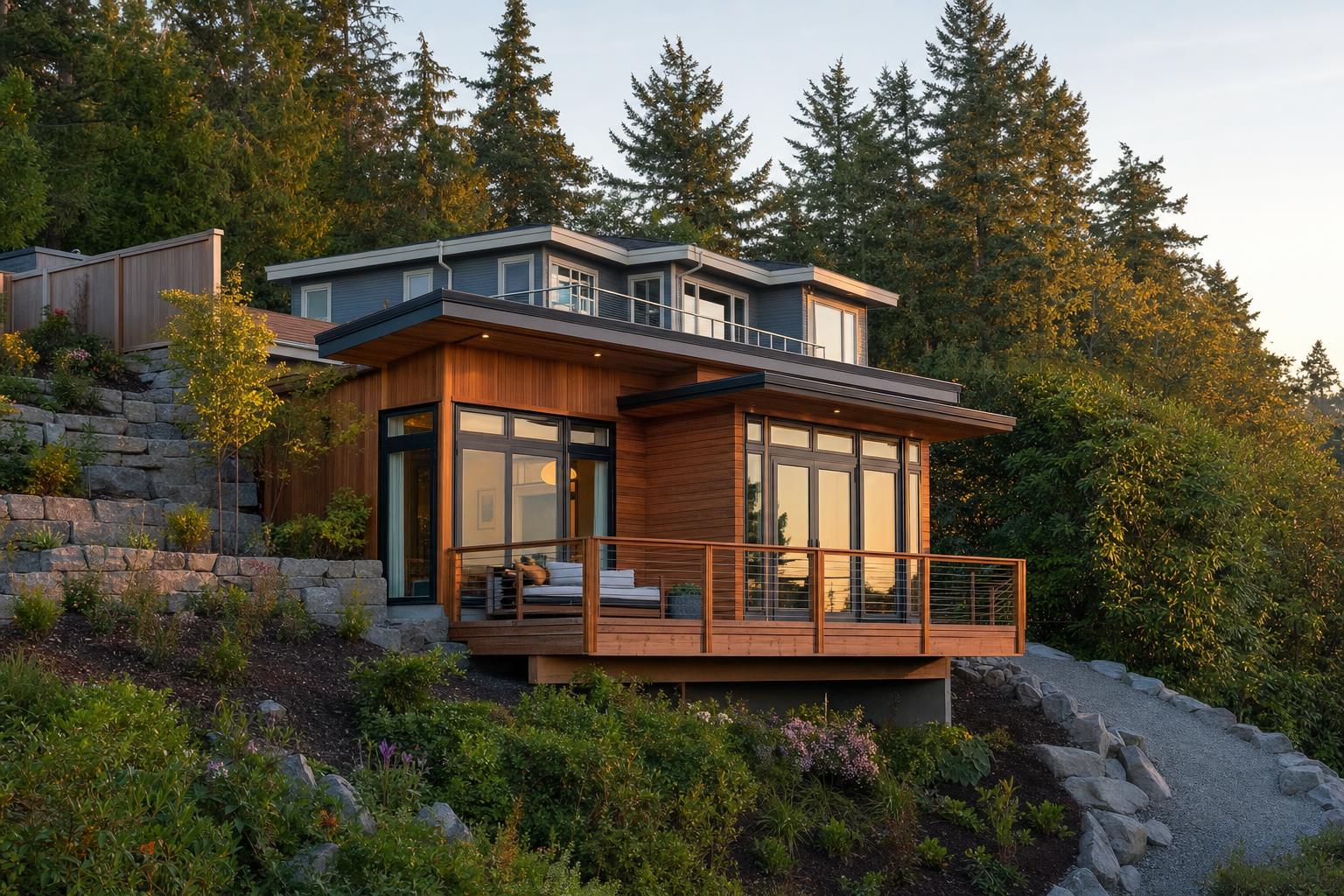
ADU Sloped Lots in Canada: 2026 Guide to Feasibility, Permits, Engineering, and Design
Estimated reading time: 14 minutes
Key Takeaways
- ADU sloped lots can turn difficult land into useful housing for family, privacy, rental income, and better site planning, with benefits similar to those discussed in secondary unit benefits, backyard homes, and multigenerational living with ADUs.
- A hillside accessory dwelling unit is different from a flat-lot ADU because slope changes how drainage, foundations, access, retaining walls, utilities, and even height measurement work.
- Before paying for full plans, start with a site review, a municipal pre-check, and a geotechnical scoping conversation.
- Canadian terrain permits often involve more than standard zoning and building review, especially on lots with grading, drainage, tree, hazard, shoreline, or septic issues.
- Early engineering for slopes can prevent costly redesigns, permit delays, and long-term drainage or stability problems.
- Smart small space design helps compact hillside homes feel larger, function better, and stay comfortable through Canadian winters.
Table of contents
- Is an ADU on Your Sloped Lot Feasible?
- Canadian Terrain Permits: What Homeowners Need to Know in 2026
- Engineering for Slopes: Foundations, Stability, and Drainage
- Site Design Strategies for a Hillside Accessory Dwelling Unit
- Smart Small Space Design for Compact Hillside ADUs
- Cost Considerations for ADU Sloped Lots in Canada
- Typical Timeline for Building on Sloped Terrain
- Who to Hire for ADU Sloped Lots
- Real-World Hillside ADU Patterns Across Canada
- Downloadable Checklists for Canadian Terrain Permits and Design Planning
- Frequently Asked Questions About ADU Sloped Lots
- Long-Term Risks and Maintenance for Hillside ADUs
- Next Steps for Building on Challenging Terrain in 2026
ADU sloped lots can turn hard-to-use land into useful housing. They can create space for family, add rental income, protect privacy, and even preserve better views when the home is placed well on the site. That opportunity is one reason many owners explore ADUs after learning about secondary unit benefits in Canada, how backyard homes can add value, and the advantages of multigenerational living with ADUs.
A hillside accessory dwelling unit is an accessory dwelling unit built on land with clear grade change. That slope affects drainage, foundations, access, retaining walls, and sometimes even how height and setbacks are measured. That is the big difference from a flat-lot ADU. On uneven ground, you usually need more site review, more consultant input, and more careful municipal approval. Related topics often include foundation options, utility connections, and ADU architecture and design.
In this 2026 guide, you will learn how to judge if your lot is feasible, what Canadian terrain permits often include, why engineering for slopes matters, and how smart small space design helps compact hillside homes work better.
Before spending money on full drawings, the best next step is simple: start with a site review, a municipal pre-check, and a geotechnical scoping conversation.
Additional background sources include ADU site plan requirements, guidance on ADU plans for sloped lots, and Ecohome’s complete guide to ADUs in Canada.
Is an ADU on Your Sloped Lot Feasible?
With ADU sloped lots, the first question is not “what floor plan do I want?” It is “what can this land safely and legally support?” That is why many owners begin with an ADU legal clinic or by reviewing tiny-home-friendly municipalities.
Feasibility depends on two things:
- physical limits of the site
- local rules and permit limits
Start with this homeowner self-check.
Site checklist for a hillside accessory dwelling unit
- Slope angle and total grade change
A gentle slope may allow a slab or simple stepped footing. A steeper slope may need piers, piles, or stronger retaining work. - Size of the flattest buildable area
You need enough room not only for the unit, but also for setbacks, working space, and safe construction. - Construction access
Can trucks, mini-excavators, and concrete delivery reach the site? Tight side yards or steep rear access can change cost fast. - Safe walking access
A path that feels fine in summer may be risky in rain, snow, or ice. This is especially important when considering climate-adaptive decks and access routes. - Utility routes
Check water, sewer, stormwater, hydro, gas, and communications early. If the ADU sits lower than the main house, servicing can get harder. Review utility hookup basics and this tiny home utilities guide. - Trees, roots, and easements
Mature trees may limit excavation. Easements can block where you build. Local tree preservation laws may also apply. - Setbacks, lot coverage, and height
Uneven grade can affect how some municipalities measure height and usable build area. - Soil clues
Watch for fill, clay, exposed rock, seepage, soft ground, or old drainage trouble. - Views and privacy
Sloped sites can offer better light and outlook, but window placement matters. See more on privacy in small homes.
What these checks mean in plain language
Slope affects foundation choice. Utilities affect service cost. Trees affect both permits and digging limits. Wet ground means drainage design cannot wait until later.
Some warning signs mean you should bring in a professional early:
- steep side slope or sudden break in grade
- lot near a ravine, escarpment, creek, shoreline, or mapped hazard area
- ADU planned below the main house or sewer level
- retaining walls, deep cuts, or tall foundation walls expected
- unclear drainage or difficult access
Good-fit patterns for ADU sloped lots
Some site types work especially well:
- Split-level unit tucked into the slope
This can reduce excavation and keep the building lower on the site. - Stilt- or pier-supported backyard unit
This can reduce cut-and-fill and protect natural drainage. - Walkout lower-level conversion
Where slope creates a separate entrance, the lower level can become a natural secondary suite. See basement ADU conversion options.
If the lot looks physically possible, the next step is permits and approvals. Additional sources: SitePlanCreator, Gather ADU, Ecohome, and a visual example on Instagram.
Canadian Terrain Permits: What Homeowners Need to Know in 2026
There is no single Canada-wide permit path for a sloped ADU. Rules change by province, municipality, planning department, and site condition. A helpful starting point is this Canadian ADU regulations guide and this BC ADU permitting guide.
In practical terms, Canadian terrain permits means the mix of approvals your sloped-site project may need. That can include zoning review, building permit review, and extra technical approvals tied to grading, drainage, trees, hazards, shoreline rules, or septic.
Common permit requirements
A hillside accessory dwelling unit may need some or all of the following:
- zoning review for ADU use, density, setbacks, lot coverage, height, and parking
- building permit drawings and structural details
- septic or wastewater approval if there is no municipal sewer
- tree protection or tree removal permit
- erosion and sediment control plan
- grading or drainage permit where required
- ravine, shoreline, floodplain, or environmental approvals
- geotechnical report for slope stability or foundation review
- retaining wall permit or engineered sign-off if walls exceed local limits
Why sloped lots trigger more review
- grade changes can alter height calculations
- drainage can affect neighbouring properties
- excavation can weaken the slope
- steep access can affect fire and emergency access
- retaining walls and cut slopes may need separate design review
Province and municipal patterns in 2026
Keep these points high level. Local bylaws still control.
- BC and Metro Vancouver
More focus on geotechnical stability, drainage, tight sites, and tree retention. - Ontario, Toronto, and cottage country
Urban lots can be zoning-heavy. Cottage and escarpment areas may add septic, shoreline, or conservation review. - Alberta and Calgary
Grading, runoff, and frost-depth concerns often matter, even when zoning is simpler. - Quebec and Montreal
Rules vary by arrondissement and municipality. Retaining walls, drainage, heritage, and flood constraints may all matter. - Atlantic provinces
Zoning layers may be simpler in some places, but septic, drainage, erosion, and coastal conditions can stretch the timeline.
Typical permit hurdles in 2026
- no contour survey
- no finished-floor elevations
- vague drainage notes
- retaining wall scope not defined
- legal access not shown
- grade-caused setback or height conflicts
- septic conflicts
- missing geotechnical or structural letters
Permit timeline ranges
These are common planning ranges, not guarantees:
- simple compliant site: 6 to 12 weeks
- moderate sloped site with studies: 2 to 4 months
- complex hillside site with multiple approvals or variances: 4 to 9+ months
Bring this Canadian terrain permits checklist to your first planning meeting. Most importantly, ask planning staff which reports are mandatory before you pay for a full permit set.
Supporting sources: SitePlanCreator, Gather ADU, and Ecohome.
Engineering for Slopes: Foundations, Stability, and Drainage
On sloped sites, technical design is not just a preference issue. It is about life safety, long-term durability, and getting the project approved. Related reading includes tiny home foundation options and climate-resilient ADU design.
A geotechnical investigation helps answer key questions about the ground. It can:
- identify soil layers
- estimate bearing capacity
- check groundwater conditions
- assess slope stability
- recommend foundation and drainage approaches
Core geotechnical tools explained simply
- Soil borings or test pits
These show what the ground is made of. - Slope stability analysis
This checks whether the slope is likely to stay stable before and after building. - Liquefaction or settlement review
This looks at whether soils could lose strength or compress too much. - Frost-depth review
This helps set foundation depth for Canadian winters.
Structural options for ADU sloped lots
Different slopes call for different systems.
- Pile or caisson foundations
These transfer building loads deeper into the ground and can reduce large excavation. - Stilts or piers
These can preserve natural grade and reduce site disturbance. - Stepped foundations
These follow the land in sections instead of forcing one flat level. - Retaining walls
These create buildable pads but must include reinforcement and drainage. - Terracing
This can help with access, outdoor use, and slope control at the same time.
Slope stabilization methods
- retaining walls with proper drainage behind them
- soil nails or anchors on difficult engineered cuts
- vegetation and bioengineering to reduce surface erosion
- layered roots and planting to hold topsoil
Drainage design for hillside accessory dwelling units
Drainage is one of the biggest issues on sloped sites.
A strong drainage plan should deal with:
- surface runoff moving away from the building
- uphill water intercepted by swales or drains
- seepage collected by French drains or subsurface systems
- drainage behind retaining walls
- erosion and sediment control during construction
If water is not managed well, the result can be wet basements, icy paths, soil erosion, neighbour disputes, or wall failure.
Utilities and access
- sewer lines may need an ejector pump if the ADU is lower than the connection point
- water and utility trenches must consider frost depth and grade
- driveways and walkways must stay safe in winter
- emergency access needs to be checked early
What to ask your engineer
Use this checklist when discussing engineering for slopes:
- Have you designed sloped-site ADUs before?
- Will your drawings and reports be permit-ready?
- Will you coordinate with the designer and drainage consultant?
- Do we need geotechnical only, or geotech plus structural plus civil?
- Will your report include construction limits and inspection needs?
What a strong geotechnical report usually includes
- site description
- field methods
- soil and groundwater findings
- bearing recommendations
- settlement notes
- slope stability comments
- foundation recommendations
- drainage recommendations
- construction limits
- inspection and testing requirements
For ADU sloped lots, this early engineering work often prevents much bigger problems later. Supporting references: Gather ADU and Ecohome.
Site Design Strategies for a Hillside Accessory Dwelling Unit
The best hillside design works with the land. It does not try to force the whole site flat. For ideas, see landscaping ideas for ADUs and outdoor design strategies.
Common plan types
- Detached ADU on the most stable area
Good when privacy, outdoor space, and yard layout matter. - Attached ADU or addition
Useful when it helps share structure or simplify service connections. - Basement or lower-level ADU
A smart choice when slope already creates a walkout. - Split-level, bump-out, or terraced layout
These forms step with the slope and often reduce excavation.
How to choose the right type
- Detached units can organize the yard better and improve separation.
- Attached or lower-level units often make utilities easier.
- Stepped designs can protect views and lower excavation volume.
Orientation and passive design for Canada
A hillside accessory dwelling unit should also respond to climate.
- aim for south-facing glazing where practical to capture winter sun
- limit heat loss with careful north-side window planning
- include shading for summer
- check wind exposure on open or elevated sites
- plan for snow shedding, snow storage, and meltwater routes
Access and circulation
Good circulation matters more on sloped ground.
- use stairs with landings
- use switchback paths to reduce steepness
- add retaining terraces for safer movement
- confirm parking and drop-off early
- check garage access grades and turning space if relevant
Landscaping for stability and privacy
Landscaping is part of site performance, not just appearance.
- native plants often handle local weather better
- terraced beds can slow runoff
- permeable paving can reduce stormwater pressure
- fences and screen planting can reduce overlooking between the main home and ADU
Good site design usually lowers maintenance and reduces stress on the engineering later. Supporting sources: Gather ADU and a visual example on Instagram.
Smart Small Space Design for Compact Hillside ADUs
Smart small space design matters even more on sloped sites. Compact homes on hills often deal with level changes, tighter entries, and awkward wall conditions. See small homes and compact living and ideas for tiny home storage.
Interior ideas that save space
- fold-out tables
- convertible seating
- built-in storage under stairs
- storage in knee walls
- entry storage for boots and coats
- Murphy beds
- guest room and office combinations
- tall shelving to use wall height
- pocket or sliding doors to reduce door swing problems
Layout ideas for hillside units
- place living areas where views and daylight are best
- keep storage, utility, and service spaces on darker or uphill sides
- use small split levels to define zones without making the footprint larger
- place windows to capture views while protecting privacy
Mechanical and energy choices for Canadian winters
Small homes still need strong performance. Explore energy efficiency in tiny homes and whether a heat pump for a tiny home makes sense.
- heat pumps can provide efficient heating and cooling
- compact HVAC systems save room
- heat-recovery ventilation helps indoor air quality
- strong insulation and air sealing improve comfort
- solar or other on-site renewables may work if roof orientation and budget allow
Accessibility and universal design
- use gentle ramps where grade allows
- consider platform lifts where stairs cannot be avoided
- use low or flush thresholds
- plan wider doors and more accessible bathrooms where possible
Mini-checklist for smart small space design
- Can storage fit into every dead zone?
- Is the entry protected from snow and mud?
- Are routes through the home simple and safe?
- Can one room do more than one job?
For ADU sloped lots, small design moves often make a big difference in comfort. Source: Ecohome.
Cost Considerations for ADU Sloped Lots in Canada
With ADU sloped lots, costs are higher because you are building the site and the structure at the same time. Review ADU build costs in Canada and these hidden ADU construction costs.
Main cost drivers
- survey and topographic mapping
- geotechnical report and engineering fees
- excavation and soil haul-off
- retaining walls and stabilization
- specialized foundations
- drainage systems
- utility trenching and pumps
- limited site access
- extra contractor coordination
- winter construction measures if work overlaps cold weather
What changes the budget
- province and municipality
- labour market
- slope severity
- soil type
- rock, clay, or groundwater
- access difficulty
- permit variances or extra studies
Planning ranges only
Exact prices vary widely, but cautious early planning often looks like this:
- modest hillside ADUs may start in the mid-six figures
- technically complex slopes can rise well above flat-lot builds once retaining, drainage, and engineering are added
These are planning ranges only, not quotes.
Better budgeting habits
- create a separate contingency for site work
- price excavation, foundation, retaining, and drainage as separate line items
- do not treat geotechnical and engineering as optional
- budget for redesign if permit or engineering feedback changes the plan
Financing and incentives
Municipal, provincial, lender, and utility programs can change often. Verify any 2026 rebate, grant, or financing support before relying on it in your budget. Sources: RenoQuotes on garden suite costs and ADU mortgage options in Canada.
Typical Timeline for Building on Sloped Terrain
Sloped projects take longer because there are more moving parts. See ADU construction delay solutions and digital permitting trends.
Typical project phases
- feasibility and site review: 2 to 6 weeks
- concept design and consultant scoping: 3 to 8 weeks
- survey, geotech, and engineering: 3 to 10 weeks
- permit drawings and submission: 4 to 12 weeks
- municipal review and revisions: 1 to 6+ months
- construction: 4 to 10+ months
- final inspection and occupancy: 1 to 4 weeks
Why hillside projects slow down
- field work must be booked
- foundation and drainage findings may force redesign
- retaining walls may need extra review
- specialty trades may be harder to schedule
- bad weather can delay access and excavation
Ways to reduce delays
- order survey and geotechnical work early
- hold a pre-application meeting
- identify hard site limits before fixing the layout
- keep the engineer involved during concept design
- avoid changing grading or foundation strategy after permit submission
A common surprise for homeowners is this: the biggest delays are often not the building frame. They are site and approval issues.
Sources: SitePlanCreator and Gather ADU.
Who to Hire for ADU Sloped Lots
A coordinated team helps stop conflict between layout, drainage, retaining walls, and servicing. You may want to review the special skills needed to build an ADU and whether to hire an architect for your ADU.
Key roles
- architect or designer
Handles layout, code strategy, and permit drawings. - geotechnical engineer
Reviews soil, groundwater, slope, and foundation needs. - structural engineer
Designs framing, retaining, and foundations. - civil or drainage engineer
Plans grading, runoff, and servicing. - permit expediter
Helpful in municipalities with complex reviews. - landscape designer or landscape architect
Helps with pathways, stabilization, terraces, and planting. - specialty contractors
May include excavation, piles, retaining walls, drainage, and access work.
Questions to ask
- How many ADU sloped lots or hillside accessory dwelling unit projects have you done?
- Have you worked in this municipality before?
- Who coordinates drainage, retaining, and foundation scope?
- What reports do you usually submit for hillside jobs?
- What is the biggest permit risk on my lot?
- How do you protect slopes and access during winter or rain?
Contract and insurance points
- define who manages cross-discipline coordination
- require permit-ready deliverables
- include revision support
- confirm professional liability and builder’s risk coverage
- ask about warranties for drainage, retaining, and foundation work
- clarify erosion control and site safety duties
For sloped work, good coordination is often as important as good design. Supporting sources: SitePlanCreator and Gather ADU.
Real-World Hillside ADU Patterns Across Canada
These are representative Canadian project patterns based on the available source set. They are not fully documented case files.
Metro Vancouver split-level ADU
- Site challenge: compact lot with noticeable grade change
- Chosen strategy: small unit stepped into the slope with a retaining terrace at the entry and a lower-level walkout
- Likely tradeoff: more detailed structural and drainage coordination
- Key takeaway: matching the building to the slope can reduce excavation and improve daily use
Ontario rear-lot garden suite
- Site challenge: detached backyard unit on a sloped rear yard below the main house
- Chosen strategy: raised floor, strong drainage plan, and early utility routing review
- Likely tradeoff: possible pump or more complex servicing
- Key takeaway: solve drainage and services before design development moves too far
Atlantic Canada pile-supported ADU
- Site challenge: steeper or coastal lot with sensitive drainage paths
- Chosen strategy: pile or pier foundation to reduce grading and disturbance
- Likely tradeoff: less under-building storage and more exposed structural elements
- Key takeaway: low-disturbance foundations can be a smart answer on difficult terrain
Across these examples, one lesson keeps repeating: good engineering for slopes starts by respecting the site instead of fighting it.
Sources: Gather ADU, Instagram, and Ecohome.
Downloadable Checklists for Canadian Terrain Permits and Design Planning
Use this printable Canadian terrain permits checklist before detailed design is finalized. Helpful starting points include the ADU legal clinic and this list of tiny-home-friendly municipalities.
Permit checklist
- current survey or topographic plan
- site plan with contours and finished-floor elevations
- zoning confirmation
- setback, height, and lot coverage review
- tree report if needed
- geotechnical report if required
- structural and foundation drawings
- drainage, grading, and erosion control plan
- septic or wastewater approval if relevant
- retaining wall details
- parking, access, and fire route confirmation
- energy compliance documents
- shoreline, ravine, flood, or environmental approvals where needed
Engineering for slopes consultant checklist
- site investigation and slope assessment
- soil and groundwater review
- bearing and foundation recommendation
- retaining wall criteria
- drainage and erosion control strategy
- construction sequencing notes
- inspection and testing requirements
Smart small space design quick tips
- prioritize daylight and views
- build storage into dead zones
- protect the entry from snow and mud
- choose durable finishes
- reduce hallway space
- make one room flexible where possible
One-page permit submission template
- property and legal description
- owner and applicant contact details
- proposed ADU type and size
- list of reports included
- zoning confirmation
- any variance requests
- utility, drainage, and access notes
- environmental or tree notes
- revision history
Homeowners should bring this package to a municipal planning office before full design is locked in.
Sources: SitePlanCreator, Gather ADU, and Ecohome.
Frequently Asked Questions About ADU Sloped Lots
Do I need a geotechnical report?
Often, yes. If the site is steep, near a hazard area, has uncertain soils, or needs retaining walls, many municipalities want geotechnical input before approving the work. See also climate-resilient ADUs in Canada and related land-use context such as land-lease communities.
Can I build on a 30% slope?
Sometimes. But a 30% slope usually means more technical review, more cost, and more permit risk. The site must be shown to work safely and legally.
How long do permits take?
Simple sites may move faster. Sloped lots often take longer because they may need studies, revisions, and added approvals.
What about septic and stormwater?
These are major issues on hillside sites. Some projects need special wastewater planning, drainage redesign, or pumps if the ADU sits below the main connection point. See tiny home wastewater solutions.
How do I handle snow loads and winter access?
Use local code snow load values, choose roof forms that shed snow safely, protect entries, and make sure paths, stairs, and driveways stay usable in ice and snow. Review this Canadian snow load requirements guide.
Do retaining walls always need permits?
Not always, but rules vary by municipality and wall height. Check early, because retaining wall scope can affect both cost and timing.
Always confirm local bylaws, code interpretation, conservation rules, and permit requirements before finalizing plans.
Sources: SitePlanCreator, Gather ADU, and Ecohome.
Long-Term Risks and Maintenance for Hillside ADUs
A sloped-site ADU is not just a building. It is a full site system. Helpful references include an ADU maintenance checklist and guidance on water leak detection.
Ongoing maintenance
- inspect drains, swales, and downspouts often
- check retaining walls for cracks, bulging, movement, or blocked drains
- maintain vegetation to reduce erosion
- watch how water moves after major storms
- clear stairs, ramps, and driveways quickly in winter
Insurance and liability
Tell your insurer about:
- retaining structures
- steep access routes
- drainage systems
- slope-related engineering work
Poor disclosure can affect claims or coverage.
Resale and value
A well-designed and properly permitted hillside accessory dwelling unit can add flexibility and value. But poor drainage, undocumented retaining work, or unresolved slope issues can make buyers nervous. See more on ADU resale and property value.
Keep your records
Store these documents in one place:
- permits
- engineering reports
- inspection reports
- contractor records
- maintenance notes
That paperwork helps with resale, insurance, and future repairs.
Sources: SitePlanCreator and Gather ADU.
Next Steps for Building on Challenging Terrain in 2026
ADU sloped lots can work very well, but only when feasibility, permits, drainage, access, structure, and design are handled together. A successful hillside accessory dwelling unit usually starts with careful site review, clear Canadian terrain permits planning, early engineering for slopes, and practical smart small space design. For next-step support, review digital permitting for ADUs, the ADU legal clinic, and Canadian ADU architecture and design.
The first three steps are:
- get or update a survey and topographic plan
- request a municipal pre-check using a Canadian terrain permits checklist
- book a geotechnical scoping conversation to see if extra engineering for slopes is needed
Bring your checklist package to planning staff before detailed design is finalized, and ask exactly which reports are mandatory.
This guide is current to 2026. Local rules can change, so always confirm requirements with your municipality before starting design or construction.
Final sources: SitePlanCreator and Gather ADU.
Leave a Reply