

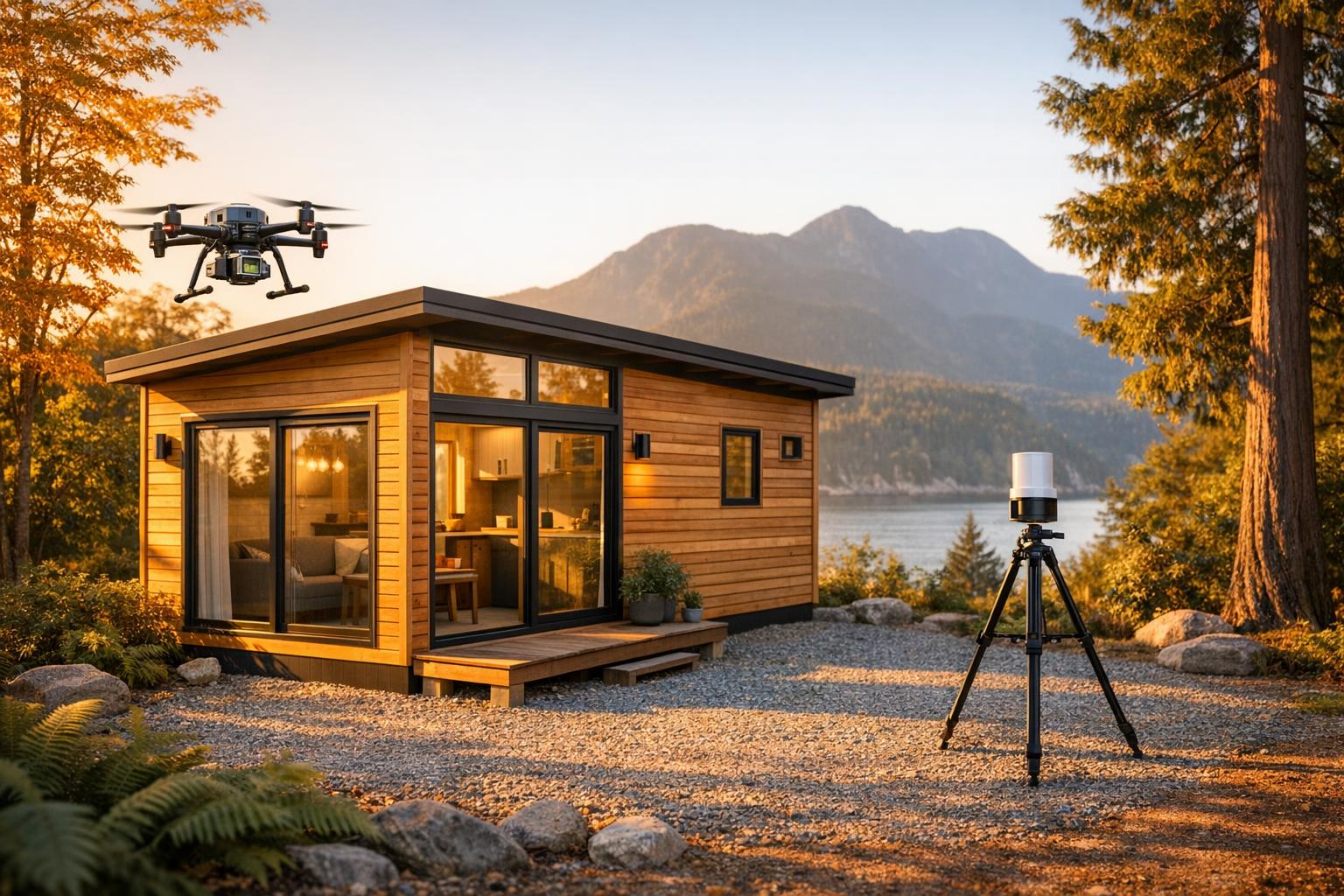
Remote Sensing for IoT Tiny Homes and Canadian ADUs
Estimated reading time: 12 minutes
Key Takeaways
- You will learn how remote sensing helps track water, indoor conditions, energy monitoring, and security risks in tiny homes and Canadian ADUs.
- You will see what a 2026 IoT tiny homes setup looks like, from sensors and local hubs to dashboards and mobile alerts.
- You will get a simple rollout path: audit first, test a low-cost pilot next, then scale to full automation.
- Three practical next steps:
- Audit for leaks, freeze points, and energy waste.
- Pilot one low-cost device, such as a smart water meter or leak sensor.
- Check current 2026 support programs through NRCan and local sources.
- For foundational context, review remote sensing fundamentals and use an ADU maintenance checklist to prioritize risk areas.
Table of contents
- Remote Sensing for IoT Tiny Homes and Canadian ADUs
- Key Takeaways
- Why Remote Sensing Matters for Tiny Homes and Canadian ADUs
- What IoT Tiny Homes Looks Like in 2026
- Core Sensor Types and What They Monitor
- Remote Sensing Technologies and Data Processing
- Security
- Energy Monitoring
- Water Management and Sensing
- Design and Installation Advice for Tiny Homes and Canadian ADUs
- Cost, ROI and Product Selection
- Canadian ADUs — Regulatory, Incentives and Compliance in Canada
- Case Studies and Practical Examples
- Maintenance, Privacy and Lifecycle
- 30-60-90 Day Implementation Roadmap
- Resources and Tools
- Frequently Asked Questions
Remote sensing gives tiny-home owners a way to know what is happening inside a space without being there in person. In IoT tiny homes, that usually means local sensors inside the home collect data on things like heat, water, motion, power use, or air quality, then send it to an app, hub, or dashboard.
For Canadian ADUs, this matters because small spaces can go from minor issue
to major damage
very fast. A slow leak, frozen pipe, overheating battery, or forced entry can affect the whole unit in hours, not days.
This guide explains how remote sensing works for maintenance, security, energy monitoring, and water management in compact homes. It also covers 2026 setup options, sensor types, connectivity, privacy, costs, and practical installation advice for Canadian ADUs. For background, see NRCan’s overview of remote sensing fundamentals, its explanation of what remote sensing is, plus context on smart home technology for ADUs and smart water management for Canadian ADUs.
Why Remote Sensing Matters for Tiny Homes and Canadian ADUs
Remote sensing means collecting information without direct contact at the time of measurement. In big systems, that can mean satellites or aircraft. In homes, it means sensors that detect movement, temperature, moisture, power draw, smoke, or water flow without someone standing there watching.
That matters more in tiny homes and Canadian ADUs because every system is close together. One leak can damage flooring, insulation, wiring, and indoor air quality fast. One cold snap can freeze a pipe hidden in a tight wall cavity. One overloaded circuit can affect the whole unit.
The main benefits are clear:
- Safety: smoke, CO, leak, and intrusion alerts
- Efficiency: live energy monitoring, smarter heating control, better solar and battery use
- Preventative maintenance: early warning for humidity, freeze risk, mold conditions, and settling
There is also a strong Canadian climate angle. Detached backyard units, rural sites, and seasonally empty spaces need early alerts in winter. Temperature sensors and thermal checks can also help spot heat loss around doors, windows, and pipe routes.
Canadian ADUs are real dwellings with rules to follow. Sensors can support resilience and safer operation, but they do not replace permits, inspections, or code-required systems. For broader context, review what remote sensing means, why tiny homes are not RVs, climate planning for climate-resilient ADUs, and an ADU maintenance checklist.
What IoT Tiny Homes Looks Like in 2026
IoT tiny homes use connected sensors, controls, and software to monitor conditions and trigger actions. A leak can shut off a valve. A break-in can trigger lights and alerts. A power spike can shift loads or warn the owner.
A common 2026 setup looks like this:
- Sensors: gather data from the home
- Local hub: collects data and runs automations
- Cloud access: gives remote dashboards, history, and backup alerts
- Edge AI or TinyML: makes fast local decisions without waiting for the internet
Connectivity depends on the site:
- Wi-Fi: common and easy in urban Canadian ADUs
- LoRaWAN: good for long range and low power in rural or off-grid homes
- NB-IoT, LTE-M, or cellular backup: useful where internet is weak
- Ethernet: best for fixed hubs and some cameras
Power use matters more in compact homes, especially off-grid ones. Low-power radios, rechargeable packs, and solar trickle charging help reduce maintenance. In 2026, edge-first design is becoming the smart default. Critical actions like leak shutoff or freeze alerts should still work when internet service drops.
See more on utility planning in this tiny home utilities guide, smart upkeep for smart home maintenance in tiny homes, and legal dwelling context at tiny homes are not RVs.
Core Sensor Types and What They Monitor
Below is a simple view of the main remote sensing tools used in IoT tiny homes and Canadian ADUs.
| Sensor type | What it measures | Best use case |
|---|---|---|
| CT clamp / power monitor | Current, watts, kWh | Energy monitoring and finding heavy loads |
| Smart water meter / flow meter | Water flow and usage patterns | Leak detection and water tracking |
| Leak puck sensor | Water presence on floor | Under sinks, heaters, washers |
| Door/window contact | Open or closed state | Perimeter security |
| Motion / PIR / mmWave | Occupancy or movement | Interior security and automation |
| Temp/humidity sensor | Indoor climate | Comfort, condensation, mold risk |
| Freeze sensor | Low pipe-zone temperature | Burst-pipe prevention |
| CO / smoke detector | Safety hazards | Life safety |
| Tank level sensor | Liquid level | Rainwater and non-potable storage |
| Tilt / vibration sensor | Movement or tampering | Trailers, sheds, battery banks |
Energy Monitoring Sensors
Energy monitoring often starts with CT clamps, which clip around conductors to estimate current without cutting the wire. Whole-home monitors show total use. Per-circuit monitors show which device causes spikes.
Smart meters, solar inverter data, and battery state-of-charge sensors add more detail, such as imported power, exported solar, voltage, and battery level. This helps with phantom loads, heat pump demand, battery sizing, and load shifting. Explore related guides on how much solar an ADU may need, net-zero tiny home appliances, and tiny home energy storage in Canada.
Water Monitoring Sensors
Flow meters and smart water meters track ongoing water use and can flag leaks when flow continues at the wrong time. Leak puck sensors detect water on the floor. Pressure sensors can show supply issues. Ultrasonic level sensors help track rainwater tanks.
In Canadian ADUs, winter placement matters most: under sinks, near utility walls, and beside exposed pipe runs. See examples in guides to rainwater harvesting for tiny homes, greywater recycling for ADUs, and water rights for rural ADUs.
Security Sensors
Security systems often combine motion sensors, door contacts, edge cameras, thermal cameras, tamper sensors, and phone-based geofencing. Detached Canadian ADUs benefit from perimeter alerts and local sirens because they may sit apart from the main house.
Useful background includes smart home security for tiny homes and tiny home safety in Canada. If a provided URL is malformed or unavailable, confirm the final page before publishing.
Environmental and Maintenance Sensors
Temperature, humidity, freeze, CO, CO2, smoke, and structural movement sensors help catch hidden problems early. This is especially useful in permanent small dwellings facing winter stress and tight building assemblies.
For more detail, review tiny home air quality in Canada, air quality sensors for tiny homes, and an ADU maintenance checklist.
Remote Sensing Technologies and Data Processing
Remote sensing includes both large-scale tools, like satellites, and small local tools, like sensors in a home. For IoT tiny homes, the practical focus is local sensing inside or just outside the building.
Common examples include:
- Infrared sensing: reads surface temperature without touching it
- PIR or mmWave motion sensing: detects presence or movement
- Ultrasonic sensing: measures distance, often for tank levels
The next layer is edge computing. This means data is processed on the hub or device, not always sent to the cloud. That gives four big benefits:
- faster alerts
- better privacy
- lower internet use
- lower power demand
TinyML is a simple form of machine learning on low-power devices. It can learn what normal
looks like, then flag unusual water flow at night or unexpected occupancy when a unit should be empty.
The data path is usually simple: sensor reading, rule check, dashboard update, then alert by app, text, email, or local siren. Many users build this with Home Assistant or a commercial platform. Open protocols matter because they make future upgrades easier.
For background reading, see NRCan on fundamentals of remote sensing, what remote sensing is, and this primer on smart home technology for ADUs.
Security
Security in smart compact homes has two parts: physical security and cyber security.
Physical Security
A layered setup works best:
- Outer perimeter: gate, path lighting, exterior motion sensing
- Entry points: door and window contact sensors
- Inside the unit: motion or occupancy sensing
- High-value equipment: vibration or tamper sensors on batteries, utility boxes, hubs, or sheds
For IoT tiny homes, cameras with on-device analytics are a strong choice. They can tell the difference between a person, vehicle, or false event without sending all footage to the cloud. Thermal or low-light cameras also help in detached Canadian ADUs during long winter nights.
Further reading: smart home security for tiny homes, FireSmart upgrades for tiny homes, and wildfire-resistant tiny homes in Canada.
Cyber Security
Connected sensors need basic protection too.
- Secure boot: device starts only trusted software
- OTA updates: patch known flaws
- End-to-end encryption: protects data in transit
- Network segmentation: keep IoT devices on a separate network
- VPN access: safer than opening a dashboard to the internet
- Zero-trust thinking: do not assume any device is safe by default
This matters because a weak device can expose private footage or open the door to other attacks on the home network.
Camera Privacy and Legal Awareness
Use short retention times, avoid recording more than needed, and mask neighbouring areas when possible. Know who can see recordings and where they are stored.
Simple Incident Response Playbook
- Intrusion: trigger lights or siren, verify with local analytics, then notify authorities if needed
- Fire, smoke, or CO: send urgent alerts, shut down equipment only if safely designed, evacuate
- Major leak: trigger shutoff valve, isolate affected systems if designed to do so
- Internet failure: keep core automations local and use cellular backup for critical alerts when possible
For privacy context, see the relevant federal legal reference, plus practical planning resources on tiny home emergency preparedness and flood-resistant ADU design.
Energy Monitoring
Energy monitoring means measuring how much electricity a home uses, when it uses it, and which devices create peaks. In remote sensing systems, that data helps tiny homes run more safely and cheaply.
Tiny homes and ADUs benefit a lot because a few devices can dominate the whole load. A heat pump, water heater, cooktop, or EV charger can change the full power profile.
Key energy monitoring metrics
| Metric | What it means | Why it matters |
|---|---|---|
| kWh/day | Total daily electricity use | Shows overall efficiency |
| Peak load kW | Highest short-term draw | Helps avoid overloads |
| Load profile | When energy is used | Helps shift demand |
| Self-consumption | Solar used on site | Improves solar value |
| Battery state of charge | Stored energy level | Helps backup planning |
A practical method is to start with baseline days. Then compare occupied and vacant periods. Look for overnight phantom loads. Separate heating, hot water, cooking, and EV charging where possible.
Useful actions include:
- shifting loads to off-peak times
- scheduling EV charging
- pre-heating or pre-cooling with a heat pump
- improving solar and battery timing
- joining demand response where available
Illustrative targets for some tiny homes may be around 5–10 kWh/day, with some off-grid homes aiming for under 8 kWh/day, peak load under 2 kW, and self-consumption above 80%. These are examples, not fixed standards.
A practical ROI example: a monitor costing about $500 may help unlock around $300/year in savings through schedule changes and waste reduction. Results depend on occupancy, heating source, and local rates.
Useful references include energy efficiency for tiny homes in Canada, how much solar an ADU may need, and solar and smart grid planning for ADUs.
Water Management and Sensing
Water events are one of the biggest risks in compact dwellings. A small leak can soak the whole floor assembly or utility chase fast. That risk is higher in detached units, vacant units, and winter conditions.
A good remote sensing layout places devices at the most likely failure points:
- under sinks
- behind toilets
- beside washing machines
- near water heaters
- inside utility closets
- at floor low points
- near pumps and manifolds
Each device has a job:
- Leak sensors: detect water presence
- Flow meters: detect abnormal continuous use
- Pressure sensors: show supply or pump problems
- Remote shutoff valves: turn an alert into action
Freeze protection matters just as much. Put freeze sensors on vulnerable plumbing lines, exterior wall runs, crawlspaces, and mechanical spaces. If the system supports it, alerts can trigger backup heat or heat tape.
See more in guides to water leak detection for ADUs, greywater solutions for tiny homes, and solar water heating for tiny homes.
For rainwater and greywater systems, ultrasonic tank sensors help prevent overflow and dry-run pump damage. Any non-potable reuse setup must follow local bylaws and approvals. Review legal dwelling context at tiny homes are not RVs and planning advice on rainwater harvesting in Canadian tiny homes.
Design and Installation Advice for Tiny Homes and Canadian ADUs
Good design starts with risk, not convenience. Put sensors where failure would hurt most.
Placement basics
- Install leak sensors where water will collect first
- Put temperature and humidity sensors away from direct drafts unless that spot is the problem you want to track
- Add door and window sensors to all main access points
- Put panel monitors and CT clamps only where they can be installed safely
Wired vs battery
- Wired: best reliability, lower maintenance, ideal for permanent Canadian ADUs
- Battery: easier for retrofits and hard-to-reach spots, but needs a replacement plan
Cold-climate details
- Choose devices rated for low temperatures
- Use lithium batteries where supported
- Use weather-rated enclosures outdoors or in semi-conditioned spaces
- Avoid moisture buildup inside housings
System integration
Tie environmental sensors to heat pumps, HRVs, ERVs, dehumidifiers, or fans where possible. In a small home, humidity and ventilation problems show up fast.
Electrical panel work, valve replacement, and code-sensitive installations should be done by qualified professionals. Helpful references include heat pumps for tiny homes, the tiny home utilities guide, and permanent-dwelling context for tiny homes.
Cost, ROI and Product Selection
A smart setup does not need to start big.
| Budget range | What you get | Who it suits |
|---|---|---|
| $200–$500 | Basic leak sensor, simple monitor, app alerts | Pilot users |
| $800–$1,500 | Added hub, door contacts, more sensors | Most owners starting out |
| $2,000–$5,000 | Full IoT tiny homes system with cameras, energy monitoring, shutoff valve, automations | High-risk or high-value setups |
Recurring cloud fees may start around $10/month, though local-first systems can cut that down.
A useful buying checklist:
- open protocols like Zigbee, Thread, Z-Wave, LoRaWAN, or MQTT
- local control options
- low power use
- OTA updates
- data export
- cold-weather rating
- suitable certifications
- clear privacy settings
A phased plan usually works best: start with three sensors tied to your top risk, test reliability, then expand. An energy monitor may pay back in 1–2 years if it helps reduce waste by around 20% or avoids oversizing equipment.
See budgeting context in guides to tiny home financing in Canada and ADU build costs in Canada.
Canadian ADUs — Regulatory, Incentives and Compliance in Canada
Canadian ADUs and tiny homes used as permanent dwellings must follow local zoning, building, and safety rules. They are not automatically treated as RVs. Remote sensing can support safer operation, but it does not replace code-required devices, permits, or inspections.
Sensors can help with:
- smoke and CO awareness
- humidity and ventilation tracking
- post-upgrade energy monitoring
- freeze-risk detection in detached units
Local bylaws can also affect where ADUs are allowed, how water and wastewater systems work, and whether non-potable water reuse is allowed. Tiny-home projects in Canada can face land-use and bylaw hurdles, so early checks matter.
Incentives may exist for efficiency upgrades, electrification, or smart controls, but 2026 programs should always be verified through NRCan, CMHC, utilities, and municipalities.
Start with tiny homes are not RVs, then review a Canadian ADU regulations guide and available ADU grants and municipal incentives.
Case Studies and Practical Examples
1. Smart leak prevention in a cold-climate ADU
An illustrative BC backyard ADU sat empty during a winter trip. A freeze sensor flagged a fast temperature drop near an exterior plumbing run. At the same time, a flow monitor detected abnormal water movement. The system sent an alert and closed a remote shutoff valve.
The result was likely averted burst-pipe damage and a repair bill that could have reached five figures.
See related winter and flood planning advice at winter-proofing a tiny home in Canada and flood-resistant ADU design.
2. Energy monitoring cuts off-grid costs
In an illustrative Ontario off-grid tiny home, several weeks of energy monitoring showed lower real demand than first expected. After changing appliance timing and reducing standby loads, the owners could size the solar and battery system smaller than planned, lowering capital cost.
Related reading: off-grid living in Canadian tiny homes and how much solar an ADU may need.
3. Security for a detached ADU
In an illustrative Alberta setup, edge thermal cameras, door contacts, and occupancy-aware alerts flagged suspicious night activity near a detached unit. The system sent a timely alert without requiring full-time cloud video streaming.
See more on smart home security for tiny homes and smart home technology for ADUs.
Maintenance, Privacy and Lifecycle
Remote sensing systems need upkeep.
Maintenance schedule
- quarterly firmware checks
- annual battery review or replacement
- seasonal testing before winter
- camera cleaning and recalibration when needed
Privacy basics
- keep routine footage only as long as needed, often under 30 days
- prefer local analytics and local storage
- check whether data is shared or used for training
- use strong passwords and MFA
Lifecycle planning
Track device age, support windows, and end-of-life dates. Replace unsupported devices before they become security risks. For resale or tenant turnover, reset devices and transfer ownership safely.
Relevant resources include the federal legal reference, advice on ADU resale and Canadian property value, and an ADU maintenance checklist.
30-60-90 Day Implementation Roadmap
First 30 days: audit and define priorities
Walk through the home and list your top three risks:
- leak or freeze
- break-in or vacancy
- energy waste or overload
Also note internet quality, power limits, and whether the unit is rented, owner-occupied, off-grid, or seasonal.
By 60 days: pilot one or two systems
Start small:
- one leak sensor plus one energy monitor
- or one camera plus one door contact set
Build a simple dashboard and test alerts in real conditions.
By 90 days: expand and automate
If the pilot works, add more sensors, automations, shutoff valves, and backup communications. Review permits and local programs for larger upgrades. Document maintenance and privacy settings.
Helpful planning links: smart home maintenance for tiny homes and an ADU maintenance checklist.
The best rule is simple: measure first, automate second.
Resources and Tools
Useful references for remote sensing and Canadian ADUs include:
- NRCan remote sensing basics:
- Permanent-dwelling and compliance context:
- Smart home and monitoring context:
- Broader Canadian policy context:
- Tiny House Alliance Canada resource mention:
Current 2026 details should also be checked with NRCan, CMHC, utilities, and municipalities.
Frequently Asked Questions
How reliable are sensors in Canadian winters?
Reliability depends on temperature rating, battery chemistry, enclosure quality, and placement. Devices rated for sub-zero use, lithium batteries, and weather-resistant housings usually perform better. See winter-proofing a tiny home in Canada.
Are there privacy risks with remote sensing in a tiny home or ADU?
Yes. Cloud-first systems can collect more data than needed. Local processing, short retention periods, strong passwords, and MFA lower that risk. Review privacy in tiny home design in Canada.
What does a basic IoT tiny homes setup cost in 2026?
A starter setup is often about $200 to $500. A more complete system with security, leak protection, and energy monitoring can range from $2,000 to $5,000. See tiny home financing in Canada.
What connectivity is best for off-grid sites?
LoRaWAN or other low-power radio options are often better than Wi-Fi-only designs. Cellular backup is useful when internet service is unreliable. See Wi-Fi options for tiny homes in Canada and utility hookup guidance for tiny homes.
Do smart sensors help with Canadian ADUs code compliance?
They help support safer operation and better records, but they do not replace permits, inspections, or required code equipment. Review why tiny homes are not RVs and this Canadian ADU regulations guide.
How accurate is leak detection?
The best accuracy comes from combining methods. A floor leak puck alone is useful, but flow monitoring plus leak sensors and pressure context usually gives fewer false alarms and earlier warning. See water leak detection for ADUs.
Can energy monitoring really reduce bills?
Yes, but mostly through action. Savings come from changing schedules, finding phantom loads, tuning heat pumps, and improving solar or battery use. Explore energy efficiency for tiny homes in Canada and net-zero tiny home appliances.
What is the best security setup for a detached ADU?
A layered setup works best: door and window contacts, motion sensing, a local siren, an edge camera, and failover alerts if internet service drops. See smart home security for tiny homes and tiny home safety in Canada.
Remote sensing works best when it starts with one clear problem: water risk, security, or energy monitoring. For Canadian ADUs and tiny homes, the smartest path is to audit first, test a small setup, and expand only after the data proves what matters most.
Leave a Reply