

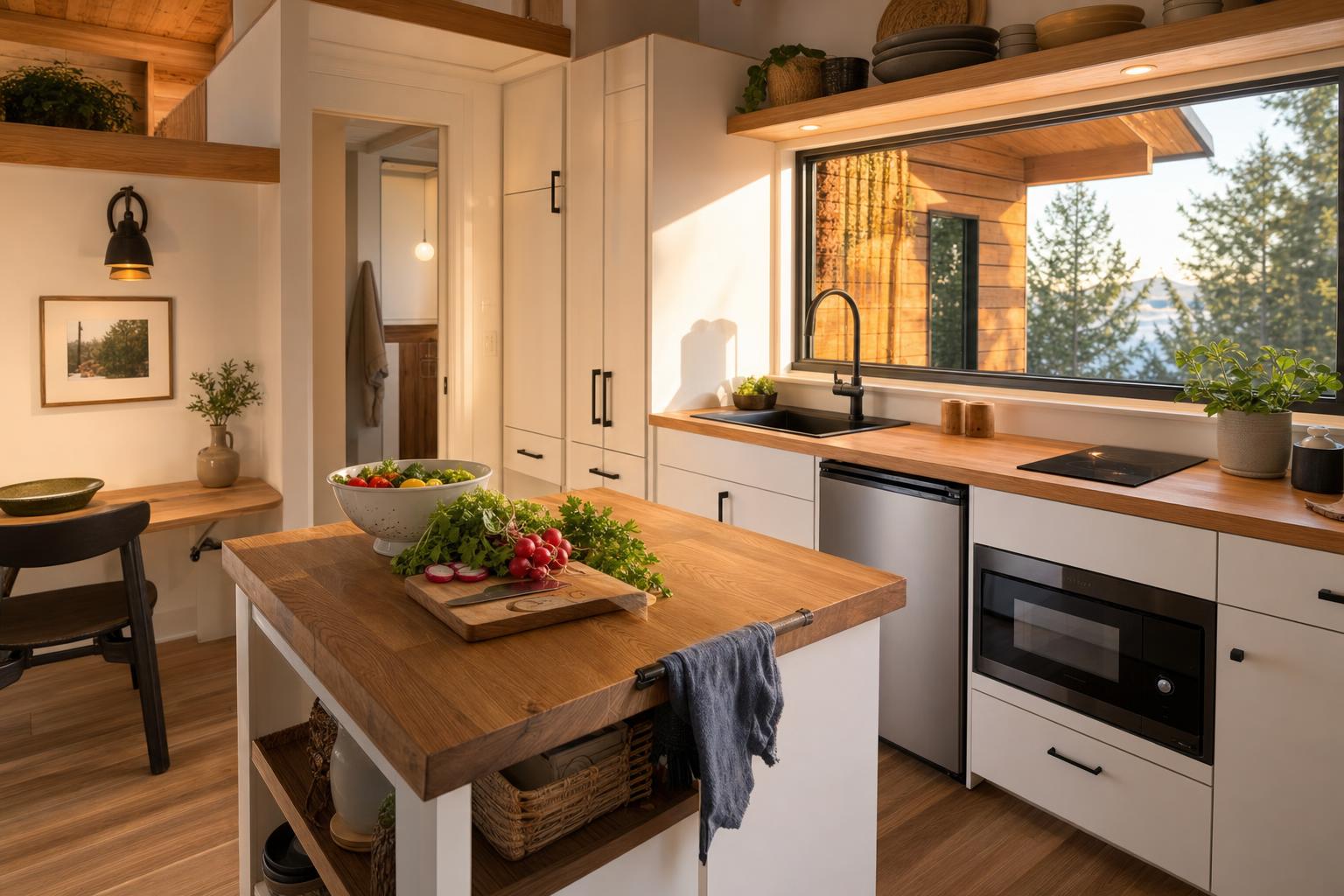
Tiny Home Kitchen Ideas for Canada: Compact Appliances, Space-Saving Design, and Meal Prep That Actually Works
Estimated reading time: 12 minutes
Key Takeaways
- A great tiny home kitchen is not about buying the smallest thing possible. It is about choosing compact appliances that match your cooking habits, power limits, and storage plan, then building a simple meal prep system around them.
- The best compact appliances are multifunction models that save room without making cooking harder.
- The biggest space-saving wins often come from layout, vertical storage, and cutting duplicate tools with better storage solutions.
- The best meal prep approach is small-batch cooking with overlapping ingredients and clearly labeled portions.
- Good Canadian cooking in a small kitchen means leaning on seasonal produce, freezer use, soups, stews, grains, and simple hearty meals, supported by ideas from urban gardening tips and a winter gardening tiny homes guide.
- Measure everything before buying, including door swing, vent clearance, and walkway space.
Table of contents
- Key Takeaways
- Introduction
- Why a Tiny Home Kitchen Needs a Different Strategy in Canada
- How to Choose the Best Compact Appliances for a Tiny Home Kitchen
- Space-Saving Layout and Storage Ideas That Actually Work
- Smart Meal Prep Systems for Tiny Home Living
- Canadian Cooking in a Tiny Home Kitchen
- 7-Day Sample Meal Prep Plan for a Tiny Home Kitchen
- Installation, Electrical Planning, Ventilation, and Safety
- Budgeting and Where Canadians Can Shop
- Common Mistakes to Avoid in a Tiny Home Kitchen
- Conclusion
- Frequently Asked Questions
Introduction
A tiny home kitchen can work beautifully in Canada when it is planned with care. In a small space, the right compact appliances, smart meal prep habits, and true space-saving design matter more than square footage. Learn more in this guide to tiny home kitchen design in Canada.
This guide is for Canadians living in tiny homes, ADUs, cabins, or very small homes who want a kitchen that feels practical every day. A tiny home kitchen is a kitchen built for limited space, where each appliance, cabinet, and work surface needs to do more than one job.
That matters even more in Canada in 2026, where housing costs keep pushing interest in smaller living, winters change how people cook and store food, and energy costs can shape buying choices. For broader context, see this tiny home living guide, mini home compact living guide, and compact living smart storage design guide.
You will find:
- A practical compact appliances shortlist
- Space-saving layout and storage ideas
- A realistic weekly meal prep system
- A shopping, installation, and safety checklist
One important note: the available preliminary research showed a major gap in Canadian-specific search results. That means this article avoids unsupported claims about regulations, rebates, exact pricing, and local market data.
Before you buy, verify current local rules, retailer inventory, service coverage, and incentive programs in your province or municipality.
Why a Tiny Home Kitchen Needs a Different Strategy in Canada
A tiny home kitchen has different limits than a full-size kitchen. The footprint is smaller. Storage is tighter. Power may be more limited. Ventilation matters more because steam, grease, and odours spread fast in a compact home. That is why air quality in tiny homes and an air quality sensor for tiny homes are worth understanding early.
Canadian cooking also changes the picture. Winter often means pantry meals, freezer meals, soups, stews, oats, legumes, and warm breakfasts. Summer can bring lighter meals with berries, herbs, greens, zucchini, and simple grilled or roasted foods.
Common Canadian-friendly staples like salmon, lentils, oats, root vegetables, potatoes, and maple-based sauces work well in small kitchens because they store well and fit simple cooking methods. Seasonal living habits also connect well with seasonal furnishing hacks and this urban homesteading tiny homes guide.
When shopping for compact appliances in Canada, think beyond size alone:
- Is the item easy to get from a Canadian retailer?
- Can it be delivered to a rural or remote address?
- Is there local warranty or repair support?
- Will it keep energy use reasonable?
Before you shop, confirm:
- Amperage
- Outlet type
- Appliance clearances
- Ventilation method
- Space for doors, drawers, and lids to open fully
Current search results do not provide reliable Canadian-specific data on ADU trends, kitchen footprints, energy rebates, or provincial code differences, so the safest advice is practical and verification-based.
Check local municipal and provincial rules before making major decisions, and review resources like the Canadian ADU regulations guide and Canadian tiny home winterization checklist.
How to Choose the Best Compact Appliances for a Tiny Home Kitchen
Compact appliances are smaller-footprint or multifunction machines that give normal cooking performance while using less floor, counter, or cabinet space.
The best choice is the one that fits your real life:
- How you cook
- Your electrical capacity
- The physical dimensions of the space
- Cleaning and maintenance needs
Compact refrigerator
In a tiny home kitchen, the fridge has to balance storage with layout. That is where tiny home storage solutions become part of appliance planning.
What to look for:
- Capacity that matches your household size
- Adjustable shelves for leftovers and tall bottles
- A separate freezer if you freeze soups, berries, bread, or batch meals
- Reversible doors for layout flexibility
- Quiet operation for open-plan living
Trade-offs matter. A fridge that is too small can mean constant shopping and nowhere to store leftovers. A fridge that is too large can eat into prep space and make the room feel crowded.
For a space-saving setup, flexible fridge/freezer compartments can be useful if your needs change by season. In winter, more freezer room may help. In summer, more fresh produce space may be better. See seasonal tiny home living in Canada.
Cooktop options
For many tiny home kitchen setups, the main choice is between induction and propane. This often depends on your broader energy setup, such as a solar-ready ADU design guide for Canada or solar-powered heating for tiny homes.
Induction
- Fast and efficient
- Easy to wipe clean
- Good for many indoor setups
- Needs enough electrical capacity
- Works best with induction-ready cookware
Propane
- Useful for off-grid or flexible homes
- Can appeal where electrical supply is limited
- Needs stronger attention to ventilation and fuel safety
What to compare:
- Number of burners
- Wattage or fuel demand
- Built-in or countertop format
- Surface size for your real pots and pans
For Canadian cooking, simmer control matters. Soups, chowders, oatmeal, lentils, barley, beans, chili, and stews all depend on steady low heat. That is especially true for off-grid living in Canadian tiny homes.
Oven alternatives
Many small homes do better with an oven substitute than a full traditional range, especially in a thoughtfully planned tiny home kitchen.
Common options:
- Compact wall oven
- Toaster oven
- Convection microwave
- Combination microwave-convection unit
For space-saving and meal prep, multifunction units often make the most sense. One appliance that can bake, roast, reheat, and crisp usually beats two or three single-purpose machines. See net-zero tiny home appliances.
Look for:
- Interior size that fits a casserole or small tray
- Reliable temperature control
- Easy-to-clean interior
- Proper venting and clearance
Multi-cooker or pressure cooker
This is often one of the best compact appliances for a tiny home kitchen, particularly if you want fewer pots and easier batch cooking. It earns its place in many tiny home kitchen design plans.
Why it earns its place:
- Cooks beans, grains, soups, stews, yogurt, shredded meat, and one-pot meals
- Reduces stovetop crowding
- Supports efficient meal prep
- Uses one insert instead of several pots
Great Canadian uses include:
- Lentils
- Split pea soup
- Chili
- Barley
- Steel-cut oats
- Chicken thighs
- Stew bases
Air fryer
An air fryer can be very useful, but it is not essential for every home. In some tiny home kitchen layouts, it is a hero. In others, it becomes clutter.
Pros:
- Fast cooking
- Good for reheating leftovers
- Great for crisping
- Handy for potatoes, salmon, vegetables, and frozen foods
Cons:
- Takes counter or cabinet space
- Basket shape can limit batch size
- Can overlap with a good convection oven
If your household depends on quick weeknight meals, it may be worth it. If you already have a strong convection unit, it may be optional.
Dishwasher, washer/dryer combo, and extras
A slim dishwasher can be a big quality-of-life upgrade if you cook often. It can also reduce sink pile-up in a very small kitchen. If your space overlaps with utility planning, review tiny home laundry in Canada.
A washer/dryer combo only makes sense if your kitchen-adjacent utility area shares the same tight planning rules. Do not let non-kitchen appliances take over the core cooking zone.
Ventilation and range hood
Ventilation is not optional in a tiny home kitchen. Moisture, grease, smoke, and odours move fast in a small enclosed space. Read about air quality in tiny homes and tiny home air quality in Canada.
Check:
- Venting method
- Noise level
- Required clearances
- Filter type and cleaning needs
Good ventilation matters even more if you fry fish, sear meat, cook with oil often, or make soups and stews regularly.
Features to prioritize
- Multifunction cooking modes
- Easy-clean surfaces
- Reversible or shallow-swing doors
- Built-in or stackable compatibility
- Low-noise operation
- Energy-efficient or ENERGY STAR options where available
Used or refurbished buying checklist
If you buy on a budget, inspect carefully:
- Door seals
- Rust
- Water damage
- Uneven heating
- Loud fan noise
- Missing trays or racks
- Warranty status
- Replacement part availability in Canada
If you compare brands or models, verify 2026 stock with Canadian retailers such as Best Buy Canada, Home Depot Canada, Canadian Tire, local appliance dealers, or trusted regional sellers. Current research does not include verified Canadian availability or pricing, so buying criteria matter more than exact model claims. You may also want background on the market from prebuilt tiny homes in Canada 2025 and where to buy a tiny home in Canada.
Space-Saving Layout and Storage Ideas That Actually Work
The best space-saving ideas make your kitchen easier to use, not just smaller to look at. Explore more through tiny home storage solutions and this modular furniture guide.
Best layouts for a tiny home kitchen
Single-wall kitchen
All cabinets and compact appliances sit along one wall. This works well in the smallest homes, but it needs excellent vertical storage and smart zones.
Galley kitchen
Two parallel runs create an efficient cooking path. This can feel very functional, but aisle width matters. If the walkway is too tight, doors and drawers will clash.
L-shape kitchen with fold-down extension
This gives better prep flow and can add temporary counter space when needed. It works well when you want more room without a permanent island.
Single-wall plus movable island or cart
A rolling cart adds flexible prep and storage. It is useful when permanent counters are limited and floor space can change through the day.
The best layout is the one that protects circulation.
It is better to have fewer cabinets and a clear path than more storage and no room to move.
This principle is central to compact living smart storage design.
Vertical storage
Vertical storage is often the biggest space-saving gain in a tiny home kitchen. See more in tiny home furniture in Canada.
Useful ideas:
- Open shelves for daily dishes
- Pegboards for pans and tools
- Wall rails for utensils and spice cups
- Magnetic knife strips
- Hanging baskets for produce
Use open storage for items you reach for often. Store low-use items behind doors or in bins so the space does not feel messy.
Hidden and multi-functional storage
These ideas help keep counters clear:
- Toe-kick drawers
- Pull-out pantry towers
- Behind-door organizers
- Pull-out cutting boards
- Appliance garages for compact appliances
- Drop-leaf tables
- Bench seating with storage inside
The goal is simple: save your main counter for prep, plating, and cleanup. See smart furniture in Canada for ADUs.
Containers and food storage systems
Meal prep works better when storage is consistent. That is one reason tiny home storage solutions matter so much.
Use:
- Stackable square or rectangular containers
- One or two main sizes only
- Interchangeable lids
- Flat freezer bags when suitable
- Vacuum sealing if you freeze often
Round containers waste shelf space. Too many shapes waste time.
Tools that earn their space
Every item in a tiny home kitchen should be used weekly or do more than one job.
Smart picks:
- Nesting cookware
- Collapsible colander
- Compact dish rack
- Mixing bowls with lids
- One chef’s knife instead of many specialty knives
- Slim utensil organizers
Before-you-buy measurement checklist
Measure more than the appliance footprint.
Check:
- Width, depth, and height
- Door swing
- Drawer pull clearance
- Vent gaps
- Counter overhang
- Walkway width
- Window placement
- Outlet location
- Plumbing and drain access if needed
Many space-saving mistakes happen because people measure where an appliance sits, but not how it operates. Accessibility planning can also help, especially with this accessible tiny home guide for Canada.
Smart Meal Prep Systems for Tiny Home Living
Meal prep in a tiny home kitchen means preparing ingredients, components, or full meals in small batches that fit your fridge, freezer, and cooking tools. Good systems start with tiny home storage solutions.
Meal prep principles for small kitchens
Keep these rules in mind:
- Batch-cook smart, not huge
- Use the same ingredients across several meals
- Focus on one-pot and one-pan meals
- Freeze extra portions early
- Choose recipes with low cleanup
That keeps meal prep realistic and prevents fridge overload. It also supports zero-waste tiny home living.
The ideal weekly prep rhythm
A simple rhythm works best:
Weekend
- One main batch-cook session
Midweek
- One short refresh session
Optional extra
- One quick prep for breakfasts or snacks
What to prep:
- One protein
- One grain or starch
- Washed and chopped vegetables
- One sauce or dressing
- One breakfast item
This works in a small kitchen because it stops overcrowding, reduces cooking fatigue, and helps your compact appliances do more with less effort.
Appliance-driven meal prep workflows
In a tiny home kitchen, it helps to use compact appliances in parallel. See examples within this tiny home kitchen design guide.
Examples:
- A multi-cooker makes chili while a toaster oven roasts root vegetables.
- An induction burner reheats soup while an air fryer crisps potatoes or salmon cakes.
- A convection microwave bakes a small tray while the fridge holds portioned lunches.
This prevents bottlenecks and keeps cooking smooth.
Portioning, storage, and food safety
For better meal prep and space-saving storage:
- Use smaller, flatter containers
- Label each dish with name and date
- Use FIFO: first in, first out
- Freeze extra portions before the fridge gets packed
- Keep one visible “eat first” zone
Overbuying food creates clutter fast in a small kitchen. That is another reason to focus on smart storage solutions.
Small-kitchen meal templates
Simple templates make planning easier.
Breakfast
- Oats with fruit
- Egg muffins
- Yogurt with berries
Lunch
- Grain bowl
- Soup
- Wrap
Dinner
- Sheet-pan meal
- Stew
- Curry
- Pasta
- Skillet meal
Snacks
- Yogurt cups
- Roasted chickpeas
- Cut vegetables
- Cheese
- Muffins
For Canadian cooking, good ingredients include oats, berries, lentils, root vegetables, salmon, potatoes, and maple-mustard dressing. See urban gardening tips and the winter gardening tiny homes guide.
Best tiny-kitchen meal prep tools
Useful tools include:
- Digital food scale
- Immersion blender
- Compact cutting board
- Sink-fit cutting board if possible
- Microplane
- Small food processor if you use it often
- Labels or masking tape
Only keep tools that save time, reduce dishes, or replace other gadgets.
Canadian Cooking in a Tiny Home Kitchen
Canadian cooking in a small home works best when it follows the seasons and uses ingredients that store well, cook simply, and fit your climate. For the broader lifestyle context, see this tiny home living guide.
Seasonal ingredient strategy
Winter
- Root vegetables
- Cabbage
- Squash
- Dried legumes
- Oats
- Frozen berries
Spring
- Hardy greens
- Herbs
- Early vegetables
Summer
- Berries
- Tomatoes
- Zucchini
- Fresh herbs
Fall
- Apples
- Mushrooms
- Squash
- Potatoes
- Carrots
Seasonal buying often means better flavour, lower cost, and easier meal prep. See urban gardening tips.
Regional meal inspiration
These are ideas, not strict rules.
West Coast
- Salmon
- Greens
- Grain bowls
- Chowders
Prairies
- Lentil dishes
- Hearty soups
- Roasted root vegetables
- Grain-based meals
Ontario and Quebec
- Maple-glazed vegetables or proteins
- Mushroom soups
- Bean dishes
Atlantic Canada
- Seafood chowders
- Fish cakes
- Potato-based meals
Preservation and storage for Canadians
Preserving food matters in long winters and small kitchens. See urban farming for tiny homes in Canada.
Useful methods:
- Freeze seasonal produce in flat packs
- Pickle onions, cucumbers, carrots, or cabbage
- Vacuum seal soups, sauces, berries, and cooked proteins
- Use cool storage areas when appropriate and food-safe
This stretches seasonal produce and improves freezer organization.
Budget grocery strategies
Smart shopping in a tiny home means matching food to storage. This same mindset supports affordable housing solutions through lower waste and simpler living.
Good options:
- Farmers’ markets for seasonal produce
- CSA boxes if you will use the contents
- Bulk co-ops for dry staples in modest amounts
- Frozen produce when fresh storage is tight
For perishables, shop small and often. For bulk goods, buy only what truly fits.
7-Day Sample Meal Prep Plan for a Tiny Home Kitchen
This sample tiny home kitchen plan uses compact appliances, supports space-saving storage, and fits practical Canadian cooking. It is based on the logic of tiny home kitchen design in Canada.
Prep day
Batch-cook:
- One pot of barley, rice, or quinoa
- One tray of roasted root vegetables
- One soup or stew
- One protein: baked salmon, chicken thighs, or marinated tofu
- One breakfast: overnight oats or egg muffins
- One sauce: maple-mustard dressing or yogurt herb sauce
Why this works:
- Minimal cookware
- Easy stackable storage
- Several meals from the same ingredients
Store sauces separately. Flatten freezer bags. Reheat only what you need.
Day 1
Breakfast: Overnight oats with berries
Lunch: Grain bowl with roasted vegetables and dressing
Dinner: Salmon with potatoes and greens
Snacks: Apple and cheese; roasted chickpeas
Compact appliances method: Fridge for prepped oats, toaster oven or air fryer for reheating salmon and potatoes
Vegetarian swap: Use baked tofu instead of salmon
Day 2
Breakfast: Egg muffins or yogurt
Lunch: Soup with toast
Dinner: Lentil chili
Snacks: Cut vegetables; muffin
Compact appliances method: Multi-cooker for chili, induction or toaster oven for reheating soup
Vegetarian swap: Lentil chili already fits
Day 3
Breakfast: Oatmeal with apple
Lunch: Leftover chili bowl with grain
Dinner: Fish cakes or chickpea patties with slaw
Snacks: Yogurt cup; berries
Compact appliances method: Air fryer for patties or fish cakes, induction burner for oatmeal
Vegetarian swap: Chickpea patties
Day 4
Breakfast: Smoothie
Lunch: Wrap with greens and cooked protein
Dinner: Sheet-pan sausage and vegetables
Snacks: Hard-boiled egg; carrot sticks
Compact appliances method: Convection microwave or toaster oven for sheet-pan dinner
Vegetarian swap: Tofu and vegetables instead of sausage
Day 5
Breakfast: Yogurt parfait
Lunch: Barley salad with herbs and root vegetables
Dinner: Quick chowder or creamy vegetable soup
Snacks: Cheese and crackers; fruit
Compact appliances method: Induction burner or multi-cooker for soup
Vegetarian swap: Creamy potato-corn chowder without seafood
Day 6
Breakfast: Toast with nut butter
Lunch: Leftovers plate
Dinner: One-pan pasta or skillet meal
Snacks: Roasted chickpeas; sliced cucumber
Compact appliances method: Induction cooktop or single skillet setup
Vegetarian swap: Use beans or mushrooms in the pasta
Day 7
Breakfast: Oats with maple and cinnamon
Lunch: Soup or freezer clean-out meal
Dinner: Use-what’s-left bowls with grain, vegetables, and sauce
Snacks: Muffin; yogurt
Compact appliances method: Fridge clean-out plus quick reheating in toaster oven, microwave, or induction pan
Vegetarian swap: Build bowls with tofu, beans, or lentils
Installation, Electrical Planning, Ventilation, and Safety
A tiny home kitchen needs safe planning before anything gets delivered. Start with the legal basics in this tiny home legal requirements Canada guide.
Pre-purchase checklist
Before buying compact appliances, confirm:
- Electrical capacity
- Outlet types
- Dedicated circuits if needed
- Venting method
- Exterior vent options where relevant
- Plumbing access for sink or dishwasher
- Level floor surface
- Local code compliance requirements
Do this before purchase, not after delivery. Review the Canadian ADU regulations guide and tiny home fire safety in Canada.
Why ventilation matters more in small homes
In a tiny home kitchen, steam, grease, smoke, and odours spread quickly. Without proper ventilation, the home can feel damp, smell stale, and need constant cleaning. See air quality in tiny homes.
This matters even more if you:
- Fry fish
- Sear meat
- Cook with oil often
- Make large pots of soup or pasta
Fire and fuel safety
Keep safety simple and visible:
- Keep a fire extinguisher nearby
- Maintain smoke and carbon monoxide alarms
- Use propane only with proper safety measures
- Keep clearances around heat-producing appliances
- Do not run several high-draw appliances on weak circuits at once
Current research does not provide verified Canadian code details or provincial electrical standards, so confirm all installation choices with local authorities, licensed electricians, or qualified installers. Additional reading: tiny home fire safety Canada and wildfire-resistant tiny homes Canada.
Budgeting and Where Canadians Can Shop
Budget tiers for compact appliances
Think in tiers, not exact prices.
Starter
- Buy essentials only
- Focus on one good cooktop, fridge, and one multifunction cooker
Mid-range
- Better durability
- One or two upgrades like a convection unit or slim dishwasher
Premium
- Built-in integration
- Quieter models
- Higher efficiency
- Better finish and fit
Where to buy in Canada
Canadians can look at:
- National big-box retailers
- Local appliance dealers
- Used or refurbished sellers
- Online marketplaces
- Community resale groups
Local dealer support can help with:
- Installation advice
- Warranty service
- Replacement parts
Rebates and incentives
Check for federal, provincial, utility, and retailer programs in 2026 before purchase. If an appliance is energy efficient or ENERGY STAR rated, verify whether any incentives apply first through resources like the ADU green upgrades financing guide.
Current research does not include reliable 2026 Canadian pricing, retailer benchmarks, or rebate details, so specific rebate amounts should not be assumed without fresh verification. Also review ADU grants in Canada and municipal incentives.
Common Mistakes to Avoid in a Tiny Home Kitchen
These errors cost space, money, and daily comfort.
- Buying oversized appliances: They may fit on paper but steal prep space. Better option: choose right-sized compact appliances based on workflow.
- Buying too many compact appliances: Too many gadgets create counter clutter. Better option: choose multifunction tools.
- Ignoring ventilation: Odours and moisture build up fast. Better option: plan hood and airflow early.
- Skipping circuit and clearance checks: This can lead to unsafe installs or returns. Better option: measure and confirm power needs first.
- Overstocking dry goods: Bulk food can choke a space-saving system. Better option: buy storage-friendly amounts.
- Keeping too many single-use tools: They fill drawers and rarely help. Better option: keep multi-use basics.
- Doing oversized meal prep: A packed fridge leads to waste. Better option: prep smaller batches more often.
- Forgetting landing space: Hot dishes, cutting boards, and dirty dishes need a place to go. Better option: plan one clear landing zone and one cleanup zone.
Conclusion
A strong tiny home kitchen is built on intention, not sacrifice. The best results come from fewer but better compact appliances, smarter space-saving design, a realistic meal prep routine, and Canadian cooking habits that match the seasons. See livability upgrades for a tiny home in Canada.
Start with the basics:
- Measure the space carefully
- List how you really cook
- Pick one or two high-impact appliance upgrades
- Set up a simple weekly meal prep rhythm
When each choice supports the next one, even a very small kitchen can feel calm, capable, and enjoyable every day.
Frequently Asked Questions
What is the best layout for a tiny home kitchen in Canada?
The best layout is the one that preserves movement, allows doors and drawers to open properly, and supports how you actually cook. Single-wall, galley, and L-shape layouts can all work well depending on your footprint and storage needs.
Which compact appliances are most worth buying first?
For most people, the best starting points are a right-sized fridge, an efficient cooktop, and one multifunction appliance such as a multi-cooker or convection unit. These usually give the biggest daily benefit without overcrowding the space.
Is an air fryer necessary in a tiny home kitchen?
No. It can be useful for fast meals and reheating, but it is not essential if you already have a good convection oven or microwave-convection combo. In a tiny kitchen, every appliance should justify its space.
How should I meal prep in a very small kitchen?
Use small-batch cooking, overlapping ingredients, flatter containers, and one main prep session plus a midweek refresh. The goal is to avoid filling the fridge with too much food at once.
What matters most before buying appliances?
Measure carefully and verify electrical capacity, outlet type, venting, clearances, and service access. In a tiny home, a product that technically fits can still fail if doors, drawers, or airflow do not work in practice.
Do Canadians need to plan differently for winter cooking?
Yes. Winter often means more soups, stews, pantry staples, freezer meals, and warm breakfasts. That makes freezer space, simmer performance, and storage systems especially important in Canadian tiny home kitchens.
Leave a Reply