

Estimated reading time: 12 minutes
Key Takeaways
- Privacy in tiny homes is not optional — it is essential for sleep, work, emotional regulation, and healthy relationships.
- In small homes and ADUs, privacy depends on a mix of layout, furniture, sound control, routines, and household agreements.
- A practical first step is to audit your home for private zones, shared zones, and transition zones.
- Low-cost changes like curtains, rugs, dividers, white noise, and clearer schedules can make a meaningful difference fast.
- Strong boundaries protect closeness. As noted in privacy design guidance for tiny homes and ADUs, the issue is both spatial and relational.
- If privacy problems keep harming sleep, work, or relationships, the setup may need more than minor fixes.
Table of contents
- Key Takeaways
- Understanding privacy in tiny homes and ADUs
- Why privacy matters in tiny homes
- Assess your tiny-home layout and privacy needs
- Design and physical solutions to create private zones
- Behavioral strategies to protect personal space and boundaries
- Communication frameworks for boundary-setting and conflict resolution
- Special situations and considerations
- Low-cost upgrades and DIY projects for immediate privacy gains
- When privacy needs exceed space — options and escalation
- Real-life examples and mini case studies (2026)
- Checklists and downloadable resources
- Conclusion and next steps
- Frequently Asked Questions
Understanding privacy in tiny homes and ADUs
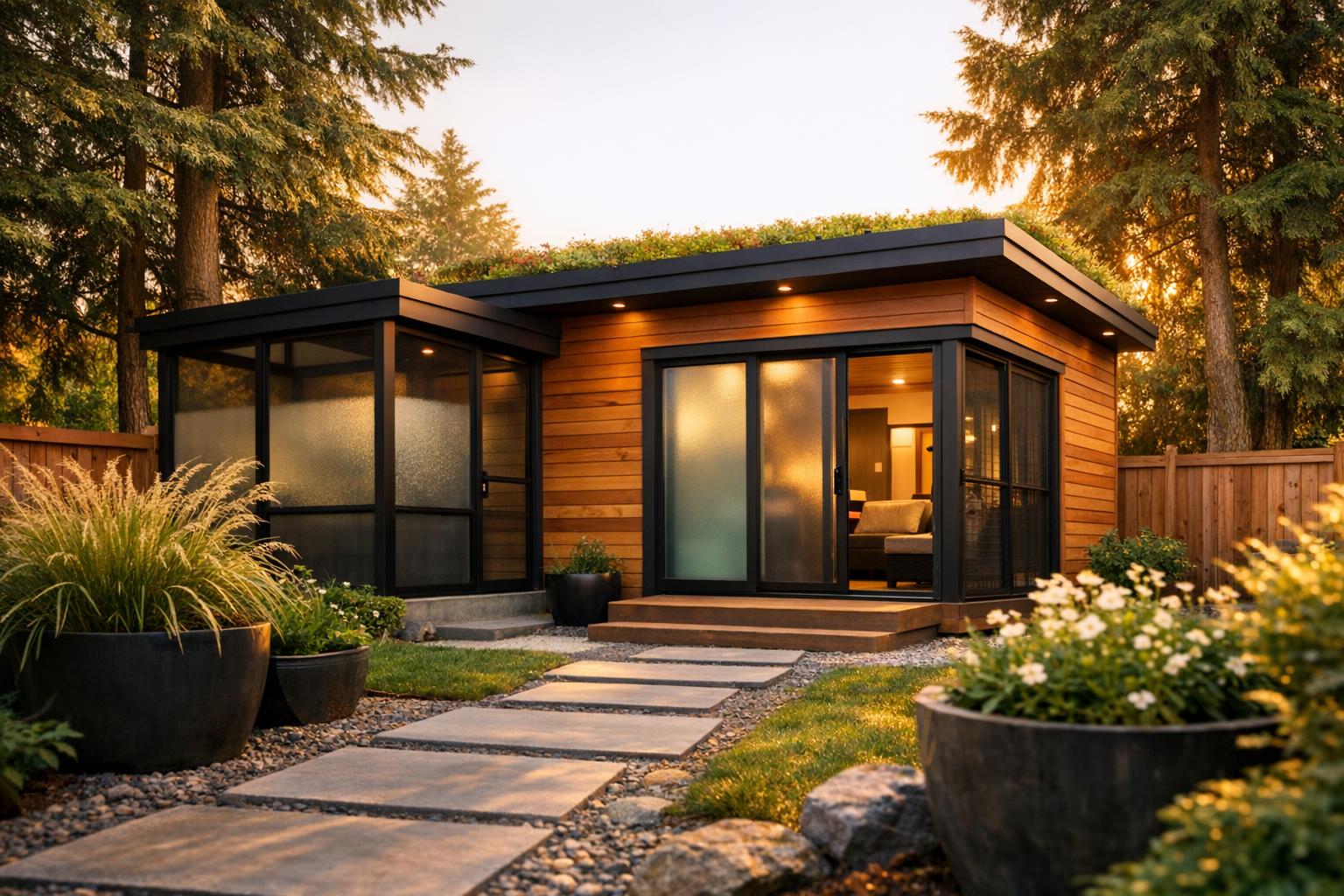
Privacy in tiny homes can be hard to protect, even when the people sharing the space care deeply about each other. In tiny homes and ADUs, limited square footage often means less privacy, less personal space, more noise, and fewer natural breaks between routines. That can put strain on relationships and make boundaries harder to keep.
For couples, families, multigenerational households, and roommates, this is not just a design problem. It is also a household systems problem. Privacy depends on layout, furniture, sound control, daily habits, and clear boundaries that everyone understands and respects, as explained in this guide to privacy in tiny-home design in Canada.
In this article, you will learn how to spot privacy pressure points in small homes, create more personal space with smart layout changes, set boundaries without harming relationships, and recognize when a setup no longer supports healthy living. For a related overview, see these tiny-home privacy strategies.
Privacy means being able to control access to your body, thoughts, conversations, work, sleep, and downtime. Personal space means the physical and emotional room you need to feel safe, calm, and in control. Boundaries are the shared rules that protect people’s time, space, energy, and routines, a distinction also reflected in the psychology of tiny homes and their impact.
One important note: the available research on this topic is still mostly U.S.-focused rather than Canadian-specific. Because of that, the most reliable advice is broad, practical guidance on privacy, design, and household boundaries rather than legal or code direction for any one province or city. For context, review this Canadian ADU regulations guide.
Why privacy matters in tiny homes
Privacy in tiny homes matters because closeness does not remove the need for space. In fact, the smaller the home, the more important privacy becomes, as noted in this guide to living in a tiny home.
In tiny homes, people hear each other more. They see each other more. They notice each other’s moods, habits, calls, alarms, mess, and routines all day long. In a larger home, people can cool off in separate rooms. In a small home, there may be nowhere to step back. That is one reason soundproofing for tiny-home privacy matters so much.
That changes how stress feels. Research and commentary on tiny homes and mental health in Canada suggest that small-space pressure can intensify emotional strain when people do not have enough control over their environment.
A small issue can become a big issue when there is no personal space. A loud phone call, bright light, late-night snack, or untidy counter can feel much more intense when everyone shares the same few feet. This is especially true where noise reduction in Canadian housing is limited by layout and materials.
Weak boundaries in small homes often lead to conflict around:
- noise
- sleep
- work calls
- study time
- guests
- parenting
- clutter
- bathroom timing
- kitchen access
- mess and cleaning
This does not mean anyone is selfish, distant, or unhappy. Needing privacy is normal. Wanting personal space does not mean you love your household less. In many cases, privacy actually supports closeness because people feel calmer, more rested, and less reactive, which aligns with the emotional benefits of ADUs in Canada.
Healthy relationships in tiny homes usually depend on two things:
- physical strategies that create some separation
- social agreements about how that separation is respected
That is especially true in 2026, when tiny homes and ADUs continue to appeal to people for affordability, flexibility, caregiving, and multigenerational living. Smaller footprints can work well, but only when privacy gets intentional planning, as discussed in the benefits of tiny-home living.
Assess your tiny-home layout and privacy needs
Before you buy dividers or make new rules, do a privacy audit. This helps you solve the real problem instead of copying a trend that does not fit your home. A good starting point is to review practical ideas for tiny-home design in Canada.
Start by mapping your tiny home or ADU into three zone types. This becomes easier when you understand the sweet spot for ADU size in Canada and how different dimensions affect function.
Private zones
These are places meant for:
- sleeping
- dressing
- decompressing
- personal calls
- prayer
- study
- focused work
- health routines
Shared zones
These are areas used by everyone, such as:
- kitchen
- dining nook
- bathroom
- entry
- main seating area
Transition zones
These are pass-through spaces, including:
- ladders
- loft access points
- hall paths
- fold-down bed areas
- storage walls
- entry routes
Many privacy problems happen when one area has too many jobs. Common examples include:
- living room and bedroom in one spot
- dining table and office at the same surface
- loft and storage mixed together
- ADU entry used as a family circulation route
When one space does everything, privacy breaks down fast. This issue is common in multifunctional loft design where sleeping, storage, and movement overlap too much.
Privacy-needs checklist
Ask these questions during your audit:
- Who works from home, studies, or takes calls?
- Who needs silence for sleep, health reasons, or caregiving?
- Do people wake up and go to bed at different times?
- Does anyone need sensory breaks or more alone time because of stress, age, personality, or neurodivergence?
- Are there children who need supervision but also age-appropriate privacy?
- Does anyone host visitors, receive deliveries, or meet clients?
- Are there routines that need dignity and discretion, such as medication, pumping, dressing, therapy calls, or prayer?
Common privacy hotspots in tiny homes
These areas often create tension:
- loft sleeping spaces with no sound separation
- bathrooms directly off shared living space
- beds visible from the front door
- kitchen noise during work calls
- open shelving that exposes personal items
- single-path circulation where one person must cross another person’s area
If you want a simple way to organize this, use a personal-space assessment worksheet. It can help you mark zones, list triggers, and see which problems come from layout and which come from habits. Pairing this with practical tiny-home storage solutions can reveal easy wins.
Design and physical solutions to create private zones
Privacy in tiny homes often improves when the home feels divided, even if the square footage stays the same. You do not always need full rooms. You need zones, a point emphasized in these privacy strategies for tiny homes.
A quick research note applies here too: available findings support general small-space ideas like lofts, partitions, sound control, and visual screening, but they do not provide Canadian code-specific guidance. So the ideas below focus on practical design principles rather than compliance claims. For broader context, see accessible design for tiny homes.
Use zoning instead of relying on one open room
Zoning means dividing a small home by function, sightline, sound level, and access. That works better in tiny homes than expecting one open room to serve everyone equally at all times. It is a core principle in thoughtful tiny-home design.
Vertical zoning
Vertical zoning uses height to separate functions. Examples include:
- lofts for sleeping or solo retreat
- under-loft areas for work or storage
- raised or lowered platforms that create a mental shift between uses
A loft can help privacy, but it is not right for everyone. People with mobility limits, older adults, and some caregiving situations may need ground-level options instead, which is one reason multifunctional loft design should be approached carefully.
Horizontal zoning
Horizontal zoning separates loud and quiet activities across the floor plan. For example:
- place sleep zones away from the kitchen
- keep entry traffic away from rest areas
- put work spots where interruptions are less likely
Zoning works best when it comes with rules. A work nook may be a quiet zone. A curtained bed area may need a knock-before-entering rule. A study corner may have limited storage access. These approaches fit well with multi-purpose ADU spaces in Canada.
Add flexible dividers
Dividers can create privacy, personal space, and stronger boundaries without full renovation.
- ceiling-mounted curtains
- sliding doors
- retractable partitions
- folding screens
- open-backed bookcases
- slatted wood dividers
- acoustic room dividers
Each option solves a different problem:
- Curtains: low-cost, fast visual separation
- Sliding doors: stronger visual privacy with less swing space
- Folding screens: easy for renters and easy to move
- Bookcases: divide space and add storage
- Slatted dividers: partial privacy while keeping light
- Acoustic dividers: better for calls, work, or study
Even when soundproofing is limited, visual separation can still lower stress. People often feel less exposed when they are not constantly in view. Small-space styling ideas from decorating a secondary suite in Canada can also help here.
Improve sound privacy
Sound is one of the biggest privacy stressors in shared small-space living. In many tiny homes, the problem is not total noise. It is speech and routine sounds that are too easy to hear and understand. This is why soundproofing tiny homes for privacy deserves attention.
Sound privacy means reducing intrusive noise and making speech less clear across zones. It does not mean turning your home into a recording studio. Practical guidance on noise reduction in housing supports this approach.
Practical ways to improve sound privacy include:
- rugs and rug pads to reduce footfall and echo
- curtains and fabric panels to absorb sound
- upholstered furniture to soften reverberation
- weatherstripping and door sweeps around doors
- white noise machines or fans near sleep and work areas
- soft-close hardware on drawers and cabinets
- wall-mounted acoustic panels where suitable
This helps relationships too. When fewer calls, videos, and conversations are overheard, there are fewer interruptions, less embarrassment, and fewer arguments about volume. More ideas can be found in acoustic design for Canadian tiny homes.
Create visual privacy
Visual privacy matters because people relax more when they are not always visible. Some innovative approaches even appear in discussions of smart glass for tiny homes.
Simple ways to improve it include:
- frosted or reeded glass
- window film
- privacy screens
- strategic plant placement
- bed canopies
- furniture arranged to block direct sightlines into sleep or dressing zones
If someone can rest, work, or change clothes without feeling watched, their personal space feels more real. Accessible planning ideas such as curbless-entry tiny-home design also show how comfort and dignity are tied to layout.
Use furniture to define personal zones
Furniture can create privacy and boundaries without construction. This is one of the most practical benefits of smart furniture for Canadian ADUs.
Helpful choices include:
- Murphy beds to free daytime space
- daybeds with surrounding shelving
- desks built into alcoves
- storage benches that form subtle room edges
- wardrobes used as partitions
- headboards with shelving
- nook seating for individual retreat
Furniture can “claim” space. A shelf behind a bed, a bench beside an entry, or a small desk in a corner tells everyone that the area has a purpose. More examples appear in this guide to tiny-home furniture in Canada.
ADU-specific ideas
ADUs often have special privacy needs because they sit close to a main home and may have shared paths. This is a recurring theme in discussions of ADU-friendly neighbourhoods in Canada.
Useful ADU ideas include:
- separate or semi-separate entrance paths
- a mini mudroom or entry divider so the whole unit is not visible at once
- an exterior seating nook for overflow alone time
- micro-alcoves for calls or work
- compact bathroom layouts with better acoustic buffering
These changes can support privacy in tiny homes and ADUs without relying on large additions. For more inspiration, see ADU architecture and Canadian design.
Behavioral strategies to protect personal space and boundaries
Design helps, but design alone is not enough. Even a well-planned small home can feel invasive if people do not share clear norms. That is a major lesson from discussions about community governance in tiny homes.
In tiny homes, one person’s behaviour quickly affects everyone else. A speaker call, bright light, late-night dishwashing, or cluttered table spreads fast in a small footprint. Household flow matters, which is also reflected in ideas around household harmony in tiny-home design.
That is why behavioural systems are often the fastest and cheapest way to improve privacy.
Set default household norms
Create shared rules for everyday life. Good norms may include:
- quiet hours
- headphone use during music, videos, and gaming
- knock and wait before entering sleeping or curtained zones
- rules for when lights can be turned on
- shared-surface tidying expectations
- guest notification requirements
- bathroom time limits during busy hours
These norms reduce daily friction because people do not have to negotiate every small moment.
Use shared scheduling
A shared digital calendar or whiteboard can protect personal space better than memory alone. This is especially useful in mixed-use homes that function as both residence and office, as seen in remote-work retreat ideas in Canada.
Track things like:
- work calls
- naps
- homework time
- school focus hours
- caregiving blocks
- exercise windows
- shower times
- kitchen use
Staggering routines can reduce overlap and conflict.
Create clear privacy signals
People often misunderstand alone-time needs unless they can see them.
Helpful signals include:
- wearing headphones
- turning on a small do-not-disturb light
- sitting in a designated nook
- closing a curtain
- taking a daily walk at the same time
Rituals make privacy needs routine instead of emotional. That keeps boundaries from sounding like rejection. Even environmental cues like lighting can help, as discussed in tiny-home light design.
Set technology-use norms
Devices create a lot of privacy stress in small homes. Set simple rules such as:
- headphone-first for videos and gaming
- vibration mode at night
- charging spots outside sleep zones
- consent-based rules for cameras, baby monitors, and smart devices
One ethical rule matters here: do not use surveillance technology to solve trust or boundaries problems unless everyone has informed consent and understands exactly what is being monitored. That principle is especially important when reviewing remote sensing basics or any other monitoring technology.
Communication frameworks for boundary-setting and conflict resolution
Privacy talks can get emotional fast. A request for space may sound like criticism. A request for quiet may sound like control. People also bring different ideas about noise, availability, sharing, and togetherness. That is why the human side of the psychology of tiny homes matters just as much as the floor plan.
Boundaries work best when they are discussed clearly and calmly.
A simple framework for hard conversations
Use this four-step structure:
- State the issue neutrally
- Describe the impact on you
- Make a specific request
- Invite collaboration
This keeps the conversation focused on behaviour, not blame. Similar neighbour-friendly communication logic appears in neighbour relations for tiny homes in Canada.
Examples:
- “I’ve noticed I’m getting overwhelmed when I don’t have quiet time after work. Can we set a 30-minute quiet window from 6:00 to 6:30?”
- “I need more privacy for calls during the day. Can we agree that the table is a work zone between 9 and 12?”
- “I feel stressed when guests arrive without notice because there’s no time to reset the space. Can we agree on a text heads-up rule?”
How to avoid escalation
When discussing privacy, personal space, and relationships, try to:
- talk about patterns, not personality
- avoid words like “always” and “never”
- focus on time, place, and behaviour
- stay specific
- solve one issue at a time
That makes it easier for boundaries to feel fair.
What to include in a written agreement
A roommate or family agreement can reduce confusion in tiny homes. It is not about distrust. It is about removing ambiguity. A useful starting point is this roommate and family agreement template.
Include:
- quiet hours
- sleeping arrangements
- work-from-home rules
- guest and overnight visitor policy
- cleaning and clutter expectations
- bathroom scheduling
- food and kitchen sharing
- storage allocation
- private call protocol
- conflict-resolution process
- review date
Written agreements support relationships because people know what to expect.
Regular check-ins
A short weekly or biweekly check-in can prevent resentment from building.
Keep it to 15 to 20 minutes and ask:
- What is working?
- What feels crowded or stressful?
- Have any schedules changed?
- Do any privacy rules need updating?
Regular check-ins protect relationships by catching friction early. Structured conversations like these are often encouraged through tiny-home community workshops in Canada.
Special situations and considerations
Some households have more complex privacy needs. These situations need extra care.
Multigenerational households
Privacy and boundaries can be harder in multigenerational living because of:
- caregiving demands
- different sleep schedules
- different cultural expectations around closeness
- medical needs
- mobility needs
Helpful strategies include:
- clear caregiving windows
- a reserved seat or rest area for elders
- sound buffering near sleep zones
- private storage for medication and personal items
- respectful privacy for health conversations and routines
Couples living in tiny homes
Couples often need both closeness and autonomy. In small spaces, that balance can disappear if every minute is shared. Relationship-friendly design themes also appear in child-free ADU design in Canada.
Helpful ideas:
- solo routines
- rotating use of prime spots like the best chair or desk nook
- permission to ask for alone time without drama
- separate hobby kits or mini zones
Healthy relationships often improve when each person has some independent time or space, even in a very small home.
Children in tiny homes or ADUs
Children need boundaries too. They may not get full adult privacy, but they still need dignity, predictability, and ownership. That is part of good kid-friendly ADU design in Canada.
Try:
- coloured cards or simple door tags
- bins or cubbies for personal items
- bedtime privacy screens
- rules about knocking
- rules about touching other people’s belongings
- simple volume expectations
Children also need to learn to respect other people’s personal space. Broader inclusive planning ideas, including accessible tiny-home design for children, can support that goal.
Temporary guests
Guests can disrupt privacy very quickly in tiny homes. That is why many households benefit from a specific plan for hosting guests in ADUs and tiny homes.
Set clear limits before hosting:
- maximum length of stay
- where the guest will sleep
- bathroom-use expectations
- required notice period
- times when hosting is not allowed because of work, school, or caregiving
Guest rules protect relationships just as much as physical space. More guest-planning ideas appear in this perfect guest house guide.
Low-cost upgrades and DIY projects for immediate privacy gains
You do not need a full remodel to improve privacy in tiny homes. Start with changes that match your budget and timeline. Cost-conscious planning is easier when you review budget tiny-home tips in Canada.
A privacy upgrade shopping list and budget planner can help you sort these by cost and urgency. Green-retrofit planning tools like the ADU green upgrades financing guide can also help frame spending choices.
Same-day fixes
These are easy, renter-friendly ways to create more privacy and personal space:
- add curtain tension rods
- rearrange furniture to block direct sightlines
- place a folding screen beside a bed or desk
- create a headphone basket and charging station
- assign each person one protected storage area
- add rugs and soft furnishings to reduce echo
Short-term upgrades within weeks
These take a bit more effort but can bring noticeable results in tiny homes:
- install door sweeps and weatherstripping
- add wall hooks for fabric dividers, coats, or hanging organizers
- apply frosted window film
- add a white noise machine
- build a simple desk nook or shelf partition
- improve lighting so each zone feels distinct
Long-term improvements
If privacy problems keep affecting boundaries and relationships, larger upgrades may be worth it:
- install sliding panels or pocket-style dividers
- move private storage out of communal pathways
- add better acoustic insulation during renovation
- create a semi-separated entry or mud zone
- build custom millwork that divides zones without wasting floor area
Long-term changes are often worthwhile when they reduce conflict every day. That cost-benefit question also comes up when comparing prefab ADUs vs. custom builds.
When privacy needs exceed space — options and escalation
Sometimes the issue is not poor planning. Sometimes the space is simply no longer a good fit. This can happen when the home is below the practical size sweet spot for an ADU for the number of people and routines involved.
Warning signs include:
- repeated arguments about the same problem
- chronic sleep disruption
- poor ability to work or study
- no place for private conversations
- feeling constantly on display
- growing resentment
- emotional withdrawal in relationships
If that is happening, try off-site privacy first. Flexible work and community-space options have become more relevant in broader remote-work trends.
Useful options include:
- coworking spaces
- libraries
- community centres
- parks
- time at family or friends’ homes
- scheduled solo errands or outings
Off-site privacy still counts as privacy. If your square footage is fixed, outside space may be part of the solution. Even public-space planning, such as urban pocket parks for tiny-home living, can play a role in daily decompression.
Then look at in-home changes:
- reassign zones
- rotate sleeping areas if possible
- reduce guest frequency
- remove underused furniture to open up dedicated personal space
If the strain continues, bigger changes may be needed:
- ADU remodel
- new occupancy arrangement
- move to a different setup
Recognizing a space mismatch is not failure. Sometimes the healthiest decision is to change the arrangement before health or relationships get worse. Long-view planning for this appears in futureproofing tiny homes in Canada.
Real-life examples and mini case studies (2026)
These are illustrative examples, not verified reporting, but they show how privacy in tiny homes can improve with practical changes.
Case study 1: Two roommates sharing a tiny home
One roommate starts work very early. The other takes late-night calls. Their main issues are noise, lights, kitchen overlap, and surprise guests.
They put these boundaries in place:
- quiet-hours agreement
- white noise near the sleep area
- dining table reserved as a work zone in the morning
- guest notification rule
- bookshelf divider to create visual separation
The result was fewer arguments, more predictable routines, and stronger roommate relationships. Similar setups are explored in tiny-home co-living in Canada.
Case study 2: Multigenerational family in an ADU
A family shares an ADU with grandparents. The grandparents need rest and medication privacy. The parents work hybrid schedules. The child needs homework space.
Their fixes include:
- dedicated elder rest zone
- curtained study nook
- family scheduling board
- private medication storage
- evening quiet routine
The result is better respect for personal space and less daily stress across generations. This mirrors themes in multigenerational living in tiny homes.
Case study 3: Young couple in a tiny home
A couple loves living small but feels emotionally crowded. They are together all the time and start reacting to clutter, noise, and interruptions more strongly.
They try:
- one weekly solo block for each partner
- outdoor nook for one partner’s calls
- do-not-disturb signal during decompression time
- storage reorganization to reduce clutter pressure
The result is healthier boundaries and more enjoyable quality time together.
Checklists and downloadable resources
The best privacy plans are specific to the household. Tools help turn general advice into action. That is exactly where these tiny-home privacy resources and strategies become useful.
Useful resources include:
- Personal-Space Assessment Worksheet
Helps identify private zones, shared zones, noise triggers, and schedule conflicts.
- Roommate/Family Agreement Template
Covers guest policy, quiet hours, work zones, storage, cleaning, and conflict resolution.
- Privacy Upgrade Shopping List and Budget Planner
Sorts purchases into immediate, short-term, and long-term categories.
- 5-Step Privacy Checklist for Tiny Homes
Step 1: assess needs
Step 2: map zones
Step 3: add dividers and sound control
Step 4: set household rules
Step 5: review and adjust monthly
Conclusion and next steps
Privacy in tiny homes is possible, but it usually takes a mix of physical design choices, daily systems, and clear boundaries. That core principle is also central to privacy-focused tiny-home and ADU design.
The core idea is simple:
- privacy supports closeness
- personal space reduces overwhelm
- boundaries protect relationships
- small changes can make a big difference
If you want to improve privacy in tiny homes, start with this sequence:
- assess the current layout
- choose one quick physical upgrade
- hold one household conversation
- write down three to five basic boundary rules
- review what changed after two weeks
Tiny homes can feel calm, respectful, and workable when privacy is treated as a real need instead of an optional luxury. Whether you live with a partner, children, parents, or roommates, better privacy often starts with one honest conversation and one practical change. That emotional payoff is part of the broader emotional benefits of ADUs.
Frequently Asked Questions
How do you create privacy in a tiny home without renovating?
You can improve privacy with curtains, folding screens, rugs, white noise, furniture placement, and clearer household rules. In many cases, these changes work surprisingly well because they reduce both visual exposure and day-to-day friction.
Why do tiny homes feel stressful even when people get along?
Small spaces increase exposure to noise, light, clutter, interruptions, and each other’s routines. Even strong relationships can feel strained when there are no natural breaks between activity and rest.
What are the biggest privacy problems in ADUs?
Common issues include shared paths to the unit, beds visible from the entry, weak sound separation, limited room for private calls, and layouts where one person must pass through another person’s zone.
Can boundaries improve relationships in tiny homes?
Yes. Clear boundaries often reduce resentment, misunderstandings, and emotional overload. Privacy does not weaken closeness — it usually supports it.
When is a tiny-home setup no longer working?
If there are repeated conflicts, chronic sleep problems, work disruption, growing resentment, or no way to have private conversations, the issue may be more than habits or furniture. At that point, the setup may need major changes or a different living arrangement.
Leave a Reply