

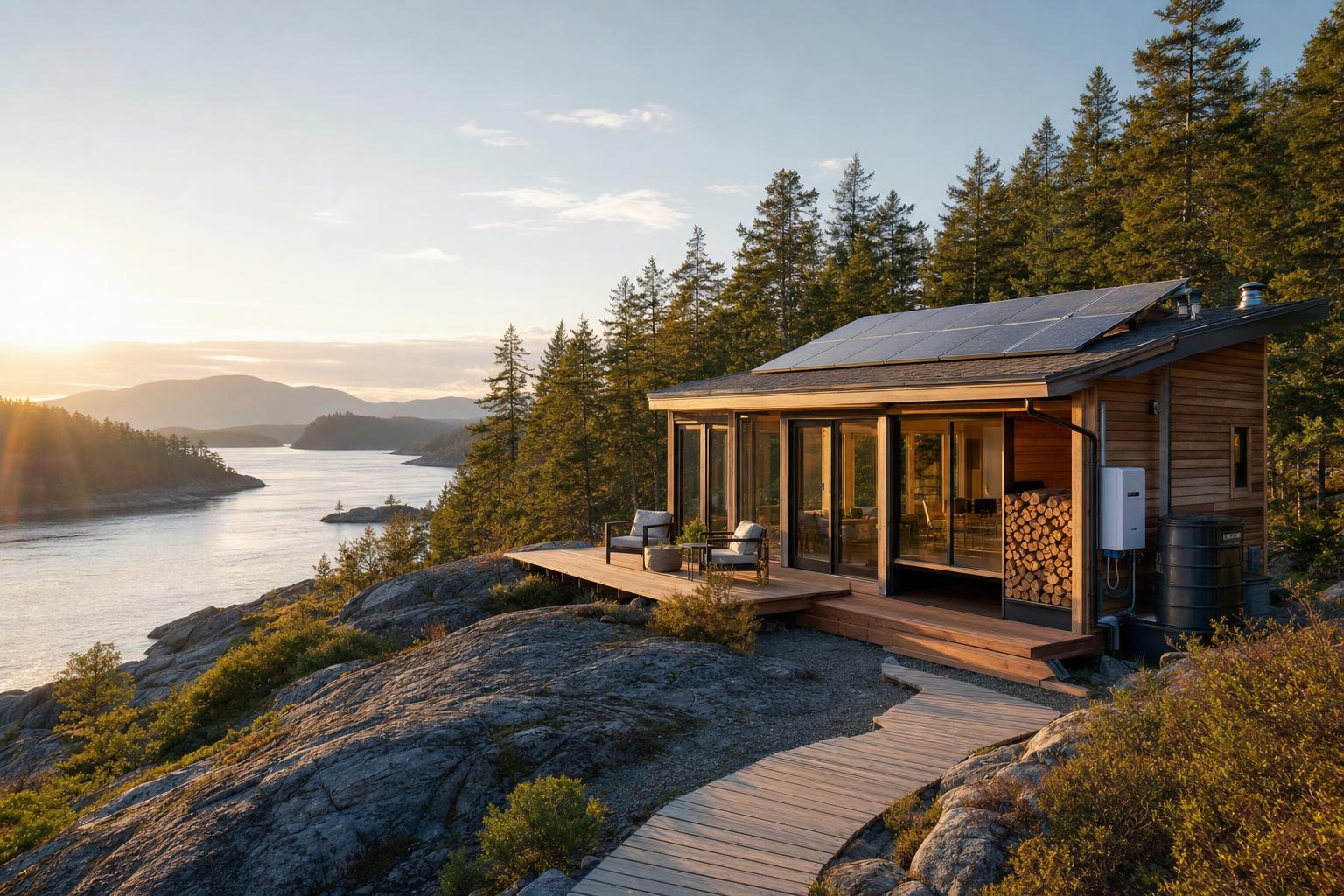
Off-Grid ADU for Remote Hunting and Fishing Properties in Canada: 2026 Planning Guide
Estimated reading time: 16 minutes
Key Takeaways
- An off-grid ADU on a remote cabin Canada site is not just a small building; it is a complete self-reliant system.
- Site selection affects everything from solar output to drainage, winter access, and long-term maintenance.
- Rules, permits, and insurance can vary widely across Canada, so early verification is essential.
- Power, water, sanitation, and heating must be planned together for reliable seasonal or year-round use.
- The best layouts for a hunting cabin or fishing retreat prioritize durability, gear storage, and easy cleanup.
- Many recreational landowners exploring compact cabins and tiny home solutions should confirm legal classification before buying or building.
Table of contents
- Quick overview: who this guide is for and why an off-grid ADU is different
- Planning and site selection for remote properties
- Regulations, permits, zoning, and insurance in Canada
- Foundation, structure, and exterior materials for Canadian durability
- Thermal performance and seasonal flexibility
- Off-grid power systems for remote cabins, hunting cabins, and fishing retreats
- Water supply, treatment, and freeze protection
- Waste management, toilets, and sanitation
- Heating, cooking, and hot water in an off-grid setup
- Interior layout and tiny home solutions for compact footprints
- Specialized features for a hunting cabin or fishing retreat
- Construction logistics and build methods
- Costing, budgeting, and operating expenses
- Maintenance, resilience, and emergency planning
- Environmental stewardship and low-impact design
- Sample builds that show the design logic
- Practical planning checklists
- Conclusion
- Frequently Asked Questions
Quick overview: who this guide is for and why an off-grid ADU is different
An off-grid ADU is a self-reliant accessory dwelling unit that must make its own power, manage water and waste on site, and handle long empty periods plus harsh Canadian weather. That is what makes it very different from a normal backyard suite. On a remote cabin Canada property, you are not just putting up a small building. You are creating a full working system.
This guide is built for people planning a hunting cabin, a fishing retreat, or looking at compact tiny home solutions for recreational land. It covers the key 2026 decisions: where to place the building, what rules may apply, which foundation and wall systems make sense, how to plan solar and backup power, how to handle water and sanitation, and how to make the layout work for gear-heavy outdoor use.
For broader context on remote living and compact self-sufficient dwellings, see this guide to off-grid living Canadian tiny homes.
The focus here is practical: designing and building an accessory dwelling for remote hunting and fishing land in Canada with durability, off-grid performance, and seasonal flexibility in mind.
This guide is for:
- Landowners with access by road, ATV trail, snowmobile trail, boat, barge, or floatplane
- People planning a dedicated hunting cabin
- Owners building a fishing retreat near a lake or river
- Buyers comparing compact cabins and tiny home solutions
- Designers and builders assessing a remote cabin Canada project
A city ADU usually connects to:
- Grid electricity
- Municipal water
- Municipal sewer
- Paved road access
- Nearby service crews
An off-grid ADU does not get those easy supports. It must:
- Generate and store its own power
- Find, pump, treat, and protect its own water
- Manage sewage and waste safely
- Stand up to snow, wind, moisture, rodents, and wildlife
- Be easy to shut down and restart if used only part of the year
The big decision is not just the floor plan. It is the system plan.
A well-designed off-grid ADU for a remote cabin Canada site should be tougher, smarter, and easier to close up and reopen seasonally than a backyard garden suite.
Planning and site selection for remote properties
For a remote build, the site is everything. Good siting lowers long-term costs and makes the off-grid ADU more reliable. It also helps if the building is designed with a solar-ready ADU design guide Canada mindset from the start.
Start with access and logistics
Before final design, confirm how the site is reached:
- Year-round road
- Seasonal road
- Snowmobile trail
- Boat or barge
- ATV trail
- Floatplane access
This changes almost every build choice. Access affects:
- Foundation type
- Size of materials you can deliver
- Whether prefab modules will fit
- Propane delivery options
- Generator servicing
- Battery replacement
- Emergency access
- Routine maintenance visits
Plan unloading and staging areas early. A great plan on paper can fail if trucks, trailers, barges, or sleds cannot unload safely. This is especially important when moving a tiny home in Canada or hauling modular components to a difficult site.
Study slope, drainage, and sun
A modest slope is often ideal. It helps water drain away without forcing expensive retaining walls. Low spots are risky because they collect:
- Water
- Ice
- Cold air
- Frost
For solar performance, try to orient the building and solar array toward the south or southwest where possible. Heavy tree shading may look nice, but it can cut winter solar output badly. Building efficiency and solar exposure work together, so siting should support both. Natural Resources Canada provides useful information on energy efficiency for homes.
Be careful near water
A waterfront location feels perfect for a fishing retreat, but placing the cabin too close to shore can create bigger problems:
- Flood risk
- Erosion
- Ice push
- Shoreline damage
- Water contamination risk
Higher ground is usually safer. Always check setbacks and waterfront rules before choosing the final spot. Sensitive fish habitat and shoreline areas may be protected even on private land. Start with Fisheries and Oceans Canada, federal guidance on floods, and practical design ideas for a cottage ADU lakeside guide.
Respect wildlife movement and habitat
Avoid placing the building in:
- Wetlands
- Wildlife corridors
- Bedding areas
- Game trails
- Spawning zones
- Nesting areas
If you plan fish cleaning or game processing, keep that area separate from sleeping and main entry zones. This cuts odour, improves hygiene, and lowers wildlife attraction.
Siting priorities by use
For a hunting cabin, prioritize:
- Privacy
- Quiet approach routes
- Discreet sightlines
- ATV and snowmobile staging
- Outdoor game-handling space
For a fishing retreat, prioritize:
- Easy shoreline path
- Dock access
- Hose access
- Fish-cleaning zone
- Space for coolers and freezer delivery
Think beyond the first season
- Road maintenance agreements
- Snow clearing
- Fuel storage placement
- Future shed or bunkie space
- Extra solar space later
Site selection questions to answer before design starts
- Is access year-round or seasonal?
- Can large materials reach the site?
- Where will unloading happen?
- Does the site drain well?
- Is there strong southern solar exposure?
- Are setbacks from water met?
- Is the site outside flood-prone low ground?
- Will wildlife movement be disrupted?
- Is there room for future systems and storage?
Regulations, permits, zoning, and insurance in Canada
Rules for an off-grid ADU vary across Canada. They can differ by province, territory, municipality, regional district, and Indigenous jurisdiction. So use this section as a planning framework, not legal advice.
Who regulates what
At the federal level, rules may affect:
- Fisheries and fish habitat
- Navigable waters
- Species at risk
- Migratory birds
- Some environmental triggers
At the provincial or territorial level, rules often cover:
- Building code adoption
- Onsite wastewater approvals
- Water rights or water-taking
- Crown land matters
- Resource management
At the municipal, regional, or First Nations level, rules may cover:
- Zoning
- Setbacks
- Occupancy
- Fire bylaws
- Development permits
- Building permits
Permits often needed
Depending on the site, a remote cabin Canada build may need:
- Building permit
- Development or zoning permit
- Septic or onsite sewage approval
- Well or water registration
- Dock, shoreline, or watercourse approval
A key point: not every rural or recreational lot legally allows an ADU. Some places may classify the structure differently if it is seasonal, movable, or accessory to another use. Movable tiny home solutions are not automatically legal as a fixed off-grid ADU. Helpful comparisons include this guide to a tiny home on wheels comparison, plus provincial resources on tiny home permits BC, tiny home permits Ontario, and broader tiny home legal requirements in Canada.
Insurance matters earlier than many people expect
Insurers may ask about:
- Distance from fire response
- Wood stove use
- Propane systems
- Electrical certification
- Vacancy periods
- Theft exposure
- Wildlife damage
Remote buildings often cost more to insure. It is smart to ask for quotes before final design, because insurer requirements can affect stove choice, alarms, access, and storage decisions. See guidance on tiny home insurance for remote Canada and an ADU insurance Canada guide.
Important caution
Always confirm local rules before design or construction begins. Electrical, gas, water, sewage, and structural work must be designed and installed by licensed or certified professionals.
National model code information starts here: Canada’s national model construction codes.
Housing guidance and secondary dwelling context: CMHC.
Federal starting point for construction regulation research, then verify your province or territory: construction permits and regulations.
Foundation, structure, and exterior materials for Canadian durability
A remote building must be strong, simple, and low maintenance. The best off-grid ADU choices are usually the ones that handle snow, frost, moisture, wind, and animal pressure with the fewest future repairs.
Common foundation options
Raised piers or post-on-pad
- Lower site disturbance
- Good for sloped or uneven ground
- Easier to install in remote areas
- Need proper bracing
- Must be protected against frost movement and animal access
Helical piles
- Strong choice for frost-prone soils
- Fast installation
- Useful where digging is hard
- Need specialized installer access
Slab-on-grade
- Solid and rodent resistant
- Good for some accessible sites
- Harder on remote land
- Must be designed properly for frost protection
Structure and weather loads
For a remote cabin Canada project, structure must suit local conditions. Roof and framing should be engineered for local snow loads. Wind also matters, especially on open shorelines, ridges, and prairie land. Use continuous load paths and proper connectors so the whole structure acts as one system.
Overhangs should be balanced. Too little overhang can leave walls exposed. Too much can create wind or snow issues. Wall and roof assemblies should also manage air leaks and moisture well.
Good exterior materials
- Metal roofing for long life, snow shedding, and fire resistance
- Metal, fibre-cement, engineered wood, or marine-grade finishes depending on site
- Pressure-treated or rot-resistant trim in splash areas
- Corrosion-resistant fasteners, especially in coastal or wet forest zones
Rodent and wildlife proofing
Remote sites need careful sealing. Include:
- Proper skirting where needed
- Vented enclosures as designed
- Metal mesh at penetrations
- No food or waste in exposed cavities
Wildfire risk should also shape material choice and site clearing. Use FireSmart Canada resources, and consider upgrades that support FireSmart tiny home upgrades in Canada.
For codes and climate design, review Canada’s national model construction codes. For efficiency and envelope durability, see NRCan home efficiency guidance and this article on climate resilient ADUs in Canada.
Thermal performance and seasonal flexibility
Thermal design should match how the building will be used. A year-round off-grid ADU needs a different strategy than a mostly seasonal hunting cabin or fishing retreat.
If you plan year-round use
Aim for:
- High insulation in roof, walls, and floor
- Reduced thermal bridging
- High-performance windows
- Triple glazing in colder regions
- Plumbing kept inside the conditioned space where possible
This improves comfort and lowers fuel or battery demand. See advice on a winter-proof tiny home in Canada and cold climate tiny home construction.
If you plan seasonal use
You still need enough insulation to control comfort and condensation. But the priorities may shift to:
- Easy drain-down
- Fast warm-up
- Good ventilation during vacancy
- Moisture control while closed up
This is where some tiny home solutions work well, especially if they are designed for quick startup and shutdown.
Passive solar still helps
Use south-facing windows carefully to gain winter heat. Keep north-facing and windward glazing smaller and more efficient. Add shading or roof design to reduce overheating in sunny shoulder seasons and summer. Explore passive cooling for tiny homes in Canada and solar shading for tiny homes.
Winterized vs drain-down systems
A winterized build keeps systems protected through freezing weather, often with some ongoing heat or carefully protected plumbing.
A drain-down build is designed to shut off fully and be drained before freeze-up.
The right choice depends on:
- How often you visit
- Power budget
- Fuel logistics
- Reliability needs
For envelope basics, review home insulation and efficiency guidance. For openings, see window, door, and skylight performance guidance.
Off-grid power systems for remote cabins, hunting cabins, and fishing retreats
Power design should start with loads, not panel size. Many off-grid problems happen because people buy solar first and calculate use later. A good starting resource is how much solar an ADU needs.
Build a real load list
List essential loads:
- Lights
- Water pump
- Fridge
- Freezer
- Ventilation fans
- Phone and radio charging
Then list intermittent loads:
- Microwave
- Small tools
- Pressure washer
- Fish-cleaning equipment
Then note peak-start loads:
- Pumps
- Compressors
- Freezers
A fishing retreat may need larger freezer and pumping loads. A hunting cabin may use less annual power but more winter lighting and communications power.
Solar PV basics
In Canada, winter and shoulder-season production are often the hard part. That means the system should be sized for the worst useful period, not just sunny summer weekends.
Roof-mounted arrays save ground space. Ground-mounted arrays can be easier to angle, clean, and clear of snow. In either case, think about:
- Snow shedding
- Winter sun angle
- Shade
- Maintenance access
Batteries and controls
LiFePO4 batteries are popular because they offer:
- Good cycle life
- Strong usable capacity
- Lower maintenance than older battery types
But batteries still need temperature management. Follow the manufacturer’s rules and place them in a protected space if required.
A good system also includes:
- Pure sine wave inverter
- MPPT charge controller
- Monitoring tools for state of charge and fault tracking
Generator backup is normal
A generator is not a sign of failure. It is part of a resilient off-grid ADU setup. It helps during:
- Long cloudy periods
- Winter stays
- Heavy tool use
- Battery recovery
What about wind or micro-hydro?
These can work, but only in the right place. Wind needs strong, steady wind. Micro-hydro can be excellent where water flow, head, law, and environmental conditions all line up. Many sites do not meet those conditions.
For background, review renewable energy sources in Canada, energy efficiency guidance, and electrical safety information such as ESA Safe, while verifying your own province’s rules.
Water supply, treatment, and freeze protection
Choose the water source early. Water affects layout, permits, power use, and winterization in any off-grid ADU.
Common water source options
Drilled well
- Usually more dependable
- Higher up-front cost
- Yield depends on site
Dug well
- Lower cost in some cases
- Higher contamination risk
Spring capture
- Can work very well
- Must be protected and legal
Surface intake from lake or river
- Common for a fishing retreat
- Needs strong filtration and intake protection
- Needs a freeze strategy
Rainwater harvesting
- Best as a supplemental source in many Canadian climates
For system ideas, review rainwater harvesting for tiny homes and rainwater harvesting tiny homes Canada.
Basic treatment train
A common setup is:
- Sediment filter
- Carbon filter
- UV disinfection
Water testing may show a need for more treatment depending on the source.
Freeze protection
Good design matters more than heat trace alone. Use:
- Short runs from source entry into the insulated envelope
- Burial below frost depth where practical
- Heat trace only where truly needed
- Low-point drains
- Isolation valves
- Easy pump and filter draining for shutdown
Graywater systems may reduce septic demand where allowed, but they still need local approval and must be easy to inspect and maintain. See greywater recycling for ADUs and greywater solutions for tiny homes Canada 2026.
For public guidance, review drinking water quality in Canada, Canada’s water overview, and surface water and habitat protection.
Waste management, toilets, and sanitation
Sanitation is one of the first systems to resolve, not one of the last. Rules can be strict, especially near water.
Toilet and waste options
Composting toilet
- Very low water use
- Helpful on difficult sites
- Needs owner discipline
- Needs venting and approval
Explore composting toilets for tiny homes in Canada and composting toilet tiny home Canada.
Septic tank and field
- Familiar to use
- Works with standard fixtures
- Can be costly
- Depends on soil, setbacks, and approvals
Holding tank
- Useful on some constrained sites
- Needs pump-out access
- Creates ongoing service costs
Fish-cleaning and game-processing zones
For a fishing retreat, a proper fish-cleaning station should include:
- Stainless or HDPE work surface
- Hose access
- Approved drainage
- Distance from sleeping areas
- Secure waste storage
For a hunting cabin, processing and washdown areas should also be:
- Durable
- Easy to hose clean
- Located away from air intakes and doors
Disposal rules vary a lot. Check them carefully, especially on waterfront property.
For broader context, start with Environment and Climate Change Canada and Health Canada environmental workplace health resources.
Heating, cooking, and hot water in an off-grid setup
In most Canadian remote buildings, heating is the biggest comfort issue.
Heating options
Wood stove
- Reliable
- Works without large electrical loads
- Good for a hunting cabin
- Needs dry fuel, chimney cleaning, and clearances
- May affect insurance
- Often tied to WETT expectations
Propane direct-vent heater
- Easy control
- Good backup or main heat for intermittent use
- Depends on fuel delivery and certified install
Pellet stove
- Efficient
- Less ideal for very remote use because of fuel handling and electrical needs
Hot water
For many off-grid builds, on-demand propane water heaters make sense, especially for intermittent use. They still need freeze protection or drain-down planning. Small electric tanks only work if the power system is strong enough. See water heating for tiny homes in Canada and solar water heating for tiny homes in Canada.
Cooking
A propane cooktop or range is usually the practical choice. Wood cookstoves can suit traditional cabin users, but they take more effort and skill.
Safety basics
Always include:
- Smoke alarms
- Carbon monoxide alarms
- Proper venting
- Correct clearances
- Certified gas fitting and inspection
Review wood heating and air quality guidance, WETT information, and home heating and cooling efficiency guidance.
Interior layout and tiny home solutions for compact footprints
Layout matters more in a small remote building because every part must work hard. An off-grid ADU may need to hold wet gear, food, tools, batteries, and sleeping space all at once.
Core layout zones
A strong plan usually includes:
- Mudroom entry with hooks, bench, boot trays, and easy-clean floor
- Living and kitchen core sized for real movement
- Loft or compact bedroom based on user age and mobility
- Mechanical and storage zone protected from freezing
Smart space-saving ideas
Good tiny home solutions often use:
- Built-in bench storage
- Fold-down tables
- Murphy beds
- Overhead shelving
- Vertical rod storage
- Gear lockers
For inspiration, see tiny home storage solutions and tiny home storage ideas.
Layout by use
A hunting cabin benefits from:
- Lockable storage
- Drying space
- Durable surfaces
- Room for bulky outerwear
A fishing retreat benefits from:
- Wader storage
- Tackle organization
- Cooler and freezer space
- Wash-down transition area
Fixed ADU vs movable tiny unit
Some trailer-based tiny home solutions may be movable, but that does not mean they are approved as an ADU. Local zoning and code review is essential before buying one.
Accessibility also matters. Many older cabin owners prefer single-level sleeping and wider paths inside. See accessible tiny home guide Canada and universal design for tiny homes. Additional housing guidance is available from CMHC and NRCan home efficiency resources.
Specialized features for a hunting cabin or fishing retreat
These features turn a generic small cabin into a working basecamp.
For a hunting cabin
Useful features include:
- Compliant locking gun storage
- Organized ammunition storage
- Drying room or drying closet
- Exterior processing zone with washable surfaces
- Good exterior lighting
- ATV or snowmobile staging area
- Safe separated fuel storage
For a fishing retreat
Smart features include:
- Fish-cleaning station
- Chest freezer or bait fridge planned into electrical loads
- Rod racks
- Lure boards
- Wader and rain gear drying storage
- Hose bibs near shoreline or boat area
Wildlife deterrence
For both uses:
- Never leave fish or game waste near the building
- Use sealed waste handling
- Use bear-resistant storage where needed
- Control odour sources
Review wildlife habitat and attractant management and firearm storage laws in Canada.
Construction logistics and build methods
Remote success depends as much on transport and sequencing as on design.
Main build methods
Prefab or modular
- Less on-site labour
- Faster dry-in
- Must fit route size and weight limits
On-site build
- More custom
- Better for hard-to-reach sites
- Longer exposure to weather
- Needs stronger planning
Kit, panelized, or SIP systems
- Useful middle option
- Easier to move in pieces
- Faster than full stick-build in many cases
Trailer-based tiny home solutions may seem simple, but they can face serious classification and permit limits. Compare a prefab ADU vs custom build, review prefab house modern housing, and explore modular homes cost-efficient green.
Build windows
Many regions build best from late spring to early fall. In some places, winter access is better if frozen ground supports transport. Septic and excavation timing should also match soils and contractor schedules.
Simple process timeline
- Approvals
- Site access prep
- Foundation
- Shell delivery or framing
- Systems rough-in
- Commissioning
- Winterization test
For transport research, start with Transport Canada. For modular and factory-built code context, see Canada’s national model construction codes.
Costing, budgeting, and operating expenses
A remote off-grid ADU usually costs more than an urban one because everything is harder to deliver, install, inspect, and maintain. Cost planning is easier when you review resources on ADU build costs in Canada, hidden ADU construction costs, and how to budget a tiny home in Canada.
Main build cost categories
- Shell and structure
- Foundation
- Transportation and logistics
- Solar, batteries, inverter, generator
- Water system
- Sanitation or septic
- Heating appliances
- Interior fit-out and storage
Main cost drivers
- Distance and access type
- Terrain and soil
- Degree of winterization
- Solar autonomy target
- Well drilling complexity
- Septic difficulty
Ongoing operating costs
- Propane or fuel
- Generator service
- Battery replacement over time
- Water testing
- Filter changes
- Startup and shutdown travel
- Insurance
Financing realities
Some lenders are cautious with off-grid recreational buildings. Also check whether any efficiency or renewable-energy programs apply in 2026 before relying on them in a budget. Start with CMHC, and compare options like a tiny home financing Canada guide or an ADU financing Canada guide.
For incentives and efficiency context, review NRCan energy efficiency resources.
Maintenance, resilience, and emergency planning
A remote building needs a maintenance plan that assumes help may be far away. Useful planning resources include an ADU maintenance checklist Canada, tiny home emergency preparedness Canada, and disaster-proofing tiny homes in Canada.
Annual checklist
- Inspect roof, flashing, and drainage
- Check snow load risk areas
- Clean stove and chimney
- Review battery health and monitoring logs
- Service generator
- Change filters
- Replace UV lamp as needed
- Test water
- Check for rodents and insects
- Inspect skirting and screens
Seasonal shutdown checklist
- Drain plumbing
- Secure or remove food
- Clean fridge and freezer
- Leave doors ajar if shut down
- Close storm protection if used
- Check backup batteries and communication tools
Remote monitoring
If service is available, use:
- Remote temperature sensors
- Battery monitoring
- Satellite or cellular alerts
Examples include remote sensing basics and air quality sensors for tiny homes.
Emergency planning
Keep:
- Satellite messenger or satellite phone
- First aid kit
- Evacuation plan
- Fire extinguishers
- Defensible space around the cabin
- Safe backup fuel and food storage
This is a key part of making a remote cabin Canada build durable and easy to reopen each season. See FireSmart Canada, Get Prepared Canada, and drinking water safety guidance.
Environmental stewardship and low-impact design
A good off-grid ADU should support recreation without damaging the land and water that make the property special.
Low-impact design principles
- Minimize clearing
- Keep native vegetation where possible
- Avoid wetlands and unstable shorelines
- Stay away from spawning and nesting areas
- Reduce fuel spill risk with proper storage
- Right-size systems so the building uses less energy
- Choose durable materials that last longer
Practical Leave No Trace habits for cabins
- Pack out or manage waste properly
- Keep runoff compliant and away from sensitive areas
- Prevent fish and game waste from contaminating shorelines
- Avoid casual dumping or trenching near water
Helpful references include Leave No Trace Canada, fisheries and habitat protection, and species and habitat stewardship.
Sample builds that show the design logic
These are example profiles only. Actual legal classification, engineering, and system design depend on local rules and site conditions.
Case study 1: Northern Ontario hunting cabin off-grid ADU
This off-grid ADU is a 480 sq ft hunting cabin on helical piles with a SIP shell. It uses solar, LiFePO4 batteries, and a propane generator for backup. Heat comes from a wood stove with propane backup. Waste is handled by a composting toilet.
Relevant system references include greywater recycling for ADUs and composting toilets for tiny homes in Canada.
Main lesson: early approvals and a well-designed drying mudroom made the cabin far more usable in wet and cold seasons.
Case study 2: Coastal remote cabin Canada fishing retreat
This remote cabin Canada example is a modular fishing retreat delivered by barge. It uses corrosion-resistant materials, intake water with filtration and UV, and a solar system supported by micro-hydro where site conditions allow. The fish-cleaning station is placed away from the main structure to reduce bear attraction.
For comparable design approaches, see coastal ADUs in Atlantic Canada, floating ADU waterfront living, and floating ADUs waterfront living.
Main lesson: on marine sites, durability details matter as much as the structure itself.
Case study 3: Prairie tiny home solution adapted as a seasonal guest ADU
This example uses one of several trailer-based tiny home solutions adapted as a seasonal off-grid ADU. It sits on adjustable piers, uses ground-mount solar, propane cooking and hot water, and fast drain-down plumbing.
Useful references include tiny home on wheels comparison and rainwater harvesting tiny homes Canada.
Main lesson: the ability to re-site the unit can improve solar access over time, but mobility does not remove the need for local approval.
Practical planning checklists
This article covers the main checklist items directly, so readers can use them right away.
Site checklist
- Confirm legal use
- Confirm access type
- Map unloading area
- Check drainage and flood risk
- Review solar exposure
- Verify setbacks from water
- Protect habitat areas
Off-grid load checklist
- List daily essentials
- List occasional high loads
- Check starting surges
- Match battery storage to real use
- Add generator backup for resilience
Winterization checklist
- Choose winterized or drain-down design
- Add low-point drains
- Protect water entry points
- Plan vacancy ventilation
- Test startup and shutdown steps
Permit and professional checklist
- Local zoning office
- Building department
- Septic authority
- Water approvals if needed
- Insurer
- Certified electrician
- Certified gas fitter
- Water treatment specialist
- Structural designer or engineer
Emergency checklist
- Fire extinguishers
- CO and smoke alarms
- Satellite communication
- First aid
- Fuel storage plan
- Evacuation route
Additional references: home efficiency planning pages and emergency checklist resources.
Conclusion
A successful off-grid ADU for a remote cabin Canada property is not just a small structure. It is an integrated system built for reliability, low maintenance, and simple seasonal startup and shutdown.
The key decisions are clear:
- Choose the right site and access plan
- Verify zoning, permits, and insurance early
- Match the foundation and envelope to snow, frost, and moisture
- Size power from real loads, with backup in place
- Resolve water and sanitation early
- Pick a heating and winterization strategy that fits real use
- Design the interior around how a hunting cabin or fishing retreat actually works
- Confirm whether fixed or movable tiny home solutions are legally allowed
A practical planning path looks like this:
- Define whether the build is mainly a hunting cabin, fishing retreat, or one of several tiny home solutions
- Verify local zoning and permit rules before buying plans or units
- Get site-specific structural and systems design
- Speak with certified electrical, gas, water, and sewage professionals
- Compare prefab and on-site methods based on access and transport limits
When these choices work together, an off-grid ADU becomes a durable, comfortable base for remote Canadian land rather than a fragile cabin that is hard to maintain.
Frequently Asked Questions
What is the biggest difference between an off-grid ADU and a normal backyard suite?
An off-grid ADU must create its own power, water, and waste systems on site. A normal backyard suite usually depends on municipal services and easier maintenance access.
Can I place a tiny home on recreational land and call it an ADU?
Not automatically. Many tiny home solutions are movable units, and local governments may classify them differently from a fixed ADU. Always confirm zoning, code, and permit rules first.
Is solar enough for a remote hunting cabin in Canada?
Often yes for modest loads, but only if the system is properly sized for real use and seasonal conditions. In many Canadian locations, generator backup is still a smart and normal part of the setup.
What water system works best for a fishing retreat?
That depends on the site. A drilled well is often the most dependable, while lake or river intake systems are common on waterfront land but need stronger filtration, legal review, and freeze protection.
Are composting toilets legal for remote cabins in Canada?
They can be, but approval depends on local regulations. Some jurisdictions allow them more readily than others, and venting, maintenance, and graywater handling still matter.
What foundation is best for a remote cabin Canada project?
There is no universal answer. Helical piles and raised piers are often popular for remote sites because they reduce disturbance and work well on uneven terrain, while slabs can be excellent on accessible sites with proper frost design.
Should I build for year-round use or seasonal drain-down?
That depends on visit frequency, fuel logistics, power budget, and maintenance plans. If you use the building often in winter, full winterization may be worth it. If visits are occasional, a drain-down design may be simpler and more resilient.
Leave a Reply