

Estimated reading time: 14 minutes
Key Takeaways
- Tiny homes culture in Canada has moved from a niche interest to a mainstream housing and policy conversation in 2026.
- Social acceptance now matters almost as much as zoning, because public attitudes influence what gets built, opposed, financed, and normalized.
- ADUs and tiny homes are not the same thing; understanding the difference helps communities debate them more clearly and fairly.
- Regional housing attitudes vary widely across the West Coast, Prairies, Ontario, Quebec, Atlantic Canada, and Northern and Indigenous communities.
- Good advocacy starts with local needs, not slogans. Listening, strong design, and practical policy reform are what build trust.
- Equity risks are real, including segregation, gentrification, weak accessibility, and projects imposed without community control.
Table of contents
- Why tiny homes culture shapes real housing outcomes
- The historical roots of tiny homes culture Canada
- Regional housing attitudes: how Canadian communities differ
- The biggest drivers of social acceptance and resistance
- ADUs in Canada: policy, perceptions, and paths to acceptance
- Case studies: what tiny homes culture looks like on the ground
- A practical advocacy playbook for building social acceptance in 2026
- Communication tools for advocates, planners, and local organizers
- Risks and equity considerations advocates should not ignore
- Conclusion: tiny homes culture Canada is changing—and local action matters
- Frequently Asked Questions
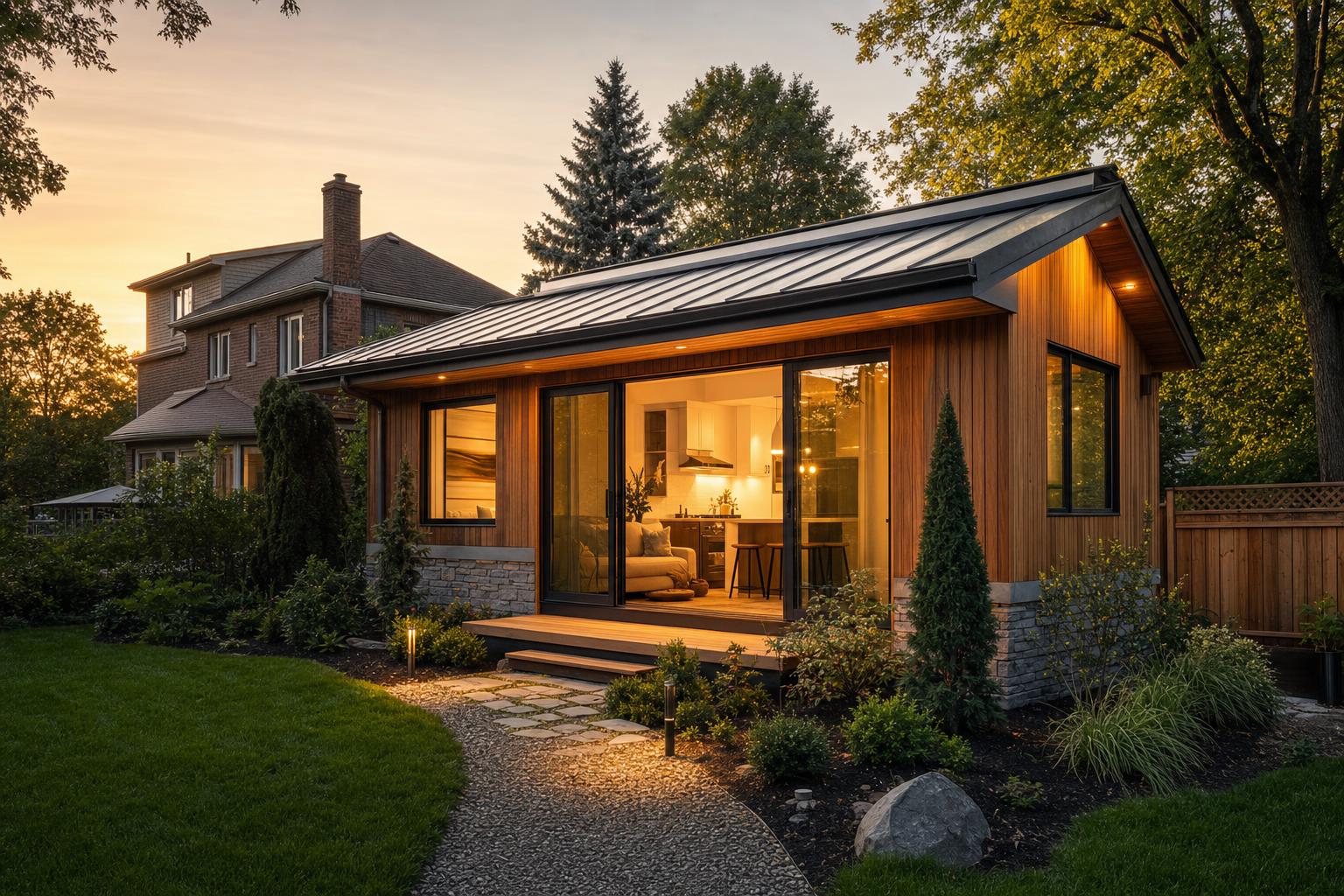
Tiny homes culture Canada has shifted from a niche lifestyle topic into a mainstream housing and policy conversation in 2026. Across Canadian communities, tiny homes and accessory dwelling units now show up in council debates, neighbourhood planning talks, affordability stories, and daily media coverage.
That shift matters because housing attitudes shape what gets built, what gets blocked, and what people accept next door. In many places, social acceptance is now as important as zoning rules or building design. Good advocacy can help, but only when it starts with local needs and real concerns.
This article explains the social, cultural, and historical roots of tiny homes and ADUs in Canada. It compares regional housing attitudes and outlines practical ways to improve social acceptance.
For clarity, “tiny homes” means very small standalone dwellings. Some are movable. Some are built on permanent foundations. “ADUs” are accessory dwelling units on the same lot as a main home, such as basement suites, laneway houses, garden suites, and over-garage units.
This matters in 2026 because affordability pressure is high, households are smaller, Canada’s population is aging, and many municipalities are looking at gentle density. But the point is not that tiny homes are always good. Public support depends on design, location, policy, and who gets included in decision-making. That is also why people keep asking whether ADUs are a real solution to the housing crisis.
Why tiny homes culture shapes real housing outcomes
Tiny homes culture is not only about architecture or floor area. It is about what people think a “real home” should be.
That includes beliefs about:
- ownership
- privacy
- permanence
- independence
- neighbourhood identity
It also includes values that often support smaller homes, such as environmentalism, anti-consumerism, affordability, and community care. At the same time, tiny homes culture can carry stigma. Some people link very small homes to poverty, homelessness, instability, or lifestyles they see as outside the norm. This concern appears often in discussions about tiny home solutions in Canada.
These housing attitudes have real effects. They influence zoning debates and public hearings. They shape whether neighbours support or oppose projects. They affect lending and insurance because financial systems often follow what is seen as normal housing. They also influence how fast ADUs and backyard homes become accepted in Canadian communities, especially in places identified as tiny-home-friendly municipalities and in conversations around tiny home insurance in Canada.
A project can be legal, buildable, and safe, yet still fail if it lacks cultural permission.
That is why technical feasibility is not enough. To scale, small housing needs social acceptance as much as engineering and policy. Critics and analysts alike have pointed out this tension in discussions of what stalled parts of the tiny house movement and in broader overviews of the tiny-house movement.
The historical roots of tiny homes culture Canada
Tiny homes culture Canada did not appear overnight. It grew from older housing patterns that have been part of Canadian life for a long time.
Secondary suites and basement apartments
Secondary suites have long helped families, newcomers, students, and lower-income renters live in established neighbourhoods. Many basement apartments existed informally before cities legalized or standardized them. That history matters because it shows that compact housing is not new. In many places, it was already there, just not fully accepted or well regulated. This background is clear in discussions of basement ADU conversions and the broader benefits of secondary units in Canada.
Laneway houses and garden suites
Laneway houses and garden suites are small homes built behind or beside a main house. They became more important as cities looked for gentle density without replacing whole blocks with towers. These homes helped reframe small housing as a practical urban tool rather than a fringe lifestyle choice. See the rise of this approach in the urban infill guide and the discussion of how backyard homes can add value in Canada.
Seasonal cottages, cabins, and bunkies
Many Canadians already know compact living through cottages, cabins, bunkies, and camp structures. A small dwelling does not always feel strange in a country with strong seasonal and rural traditions. That familiarity can reduce resistance. Still, year-round living raises different questions around insulation, servicing, fire safety, and code compliance. Those practical issues show up clearly in guides on small cabin eco-design and how to winter-proof a tiny home in Canada.
Remote and modular housing
In resource regions, northern areas, and remote communities, modular and prefabricated housing has long been part of the landscape. This practical history can make compact dwellings feel less foreign. In some regions, people see small homes less as design statements and more as useful, buildable solutions. That helps explain interest in prefab housing as modern housing and in the realities of tiny homes in Northern Canada.
Why interest has grown again in 2026
Several forces are pushing tiny homes culture back into public debate:
- rising rents and home prices
- environmental concern and lower-footprint living
- aging in place
- intergenerational housing needs
- smaller households
- changing family structures
- demand for flexible homes near jobs, schools, and relatives
Environmental motivations are especially important. Many supporters are drawn to smaller homes because they can use fewer materials, consume less energy, and encourage simpler living. This part of the story shows up in historical summaries like a brief history of the tiny home movement, broader references to the tiny-house movement, and in practical lifestyle discussions such as zero-waste tiny home living.
Indigenous contexts need careful framing
Indigenous communities have long histories of small, portable, and seasonal dwellings tied to land-based living. But these histories should not be romanticized or treated as the same as today’s market-driven tiny-home movement.
A better frame is sovereignty, self-determination, and local leadership. The Tiny House Warriors example shows how movable, solar-powered tiny homes can be used not only as shelter, but also as a statement of land rights, cultural continuity, and resistance. That is very different from a generic housing trend. Related discussions also appear in writing about Indigenous-led tiny home communities and Indigenous tiny home villages.
Regional housing attitudes: how Canadian communities differ
There is no single national view of tiny homes or ADUs. Canadian communities interpret them through local history, land prices, planning culture, climate, and politics. In one city, a backyard suite may look like a smart family housing option. In another, it may be seen as a threat to neighbourhood character.
The regional picture becomes clearer when we look at four questions:
- What are the prevailing housing attitudes?
- What blocks social acceptance?
- What opportunities exist in policy or local culture?
- What can advocacy learn from that region?
West Coast: visible acceptance, but ongoing neighbourhood tension
British Columbia, especially Metro Vancouver and Victoria, has some of the country’s most visible examples of laneway houses, garden suites, and secondary suites. In these areas, small homes are often framed as practical responses to high housing costs and limited land. That context is central to understanding tiny home permits in British Columbia.
This visibility helps. Younger renters, many younger families, and housing advocates often support compact housing because they see it as one of the few realistic ways to expand supply in expensive areas. The case is often made through the language of urban infill and ADUs and the idea that ADUs are smart urban housing.
But acceptance is still uneven. In established single-detached neighbourhoods, opposition often centres on parking, privacy, noise, shadowing, and fears about changing neighbourhood character. That phrase can sound neutral, but it often acts as a proxy for exclusivity and discomfort with more people living in low-density areas. These concerns show up often in questions like whether an ADU requires parking and how to handle privacy in tiny home design.
The West Coast also shows two key lessons. First, visible and well-designed ADUs help normalize small housing. When people can see that a laneway home does not ruin a street, support often grows. Second, isolated tiny-home projects can become controversial if they separate people from services and neighbourhood life. Critics, including disability and housing advocates, warn that some tiny-home villages can become a form of segregation rather than true inclusion. That critique is clearly stated by Inclusion Canada. BC also offers a very different example through the Tiny House Warriors, where tiny homes represent sovereignty and cultural continuity, not just housing supply.
Prairies: practical openness mixed with suburban resistance
Across Alberta, Saskatchewan, and Manitoba, housing attitudes are often split between urban cores, suburbs, and rural towns. That makes practical guidance on ADU permitting in Alberta especially relevant.
In larger cities, affordability pressure and infill debates create space for ADUs and smaller homes. In older suburban areas, resistance can be stronger because detached-home zoning has long been tied to stability, privacy, and status. For some residents, a tiny home sounds less like a housing option and more like a challenge to the post-war suburban ideal.
Rural towns can be more pragmatic. They may see compact homes as workforce housing, senior housing, or a low-cost way to welcome new residents without opening a major subdivision. The Prairies also have a practical relationship with modular and factory-built housing. That can make small homes feel buildable and familiar rather than trendy. This perspective appears in discussions of modular homes as cost-efficient and green and prebuilt tiny homes in Canada.
Still, barriers remain:
- unclear rules for movable homes
- zoning that treats tiny homes as temporary or non-compliant
- stigma that small homes are only for extreme poverty or outsiders
A strong advocacy lesson in the Prairies is to lead with practicality. Messages about workforce retention, aging in place, and construction efficiency often work better than lifestyle branding or minimalist imagery. That is why topics like seasonal housing through tiny homes and ADUs and tiny homes for seniors resonate so strongly.
Ontario: densification debate meets growing acceptance
Ontario sits at the centre of many housing debates because affordability pressure is intense and municipal planning systems are highly active. ADUs, laneway suites, and garden suites are now closely linked to missing middle housing and gentle density. This is reflected in the need for clear guidance on Ontario ADU zoning and ADU permitting in Ontario.
Support tends to be stronger among:
- younger adults
- multigenerational families
- homeowners seeking rental income or flexible space
- people caring for aging parents or adult children
Resistance is still common in low-density suburbs. Concerns often focus on parking, school crowding, drainage, and loss of neighbourhood identity. In Ontario, the challenge is often not lack of awareness that small housing exists. It is confusion about what is allowed and political caution about how voters will react. That is why questions around tiny home permits in Ontario remain so prominent.
Many residents do not know current local rules. Some councillors may privately support more small-scale housing but worry that visible support for tiny homes will trigger backlash.
That means advocacy in Ontario works best when it emphasizes:
- clear rules
- attractive design
- family-focused use cases
- privacy protections
- simple explanations of what changes actually mean
Stories matter here. A caregiver suite, a student apartment over a garage, or a backyard home for grandparents usually gets a better hearing than abstract densification language. Helpful examples include discussions of home health care ADUs and student housing through ADUs. Because rules differ widely, any discussion of current provincial or municipal reforms should still be checked against verified 2026 sources before citing specifics.
Quebec and Atlantic Canada: distinct traditions and emerging experiments
Quebec has its own planning and legal culture, so tiny homes and ADUs may be discussed differently than in anglophone policy debates. In both Quebec and Atlantic Canada, compact housing can feel culturally familiar because of mini-homes, cottages, coastal dwellings, and smaller settlement patterns. That familiarity appears in discussions of coastal ADUs in Atlantic Canada and in lists of tiny-home-friendly municipalities.
That familiarity can help social acceptance. So can the urgent housing pressure felt in places such as Halifax and in smaller coastal or rural communities where labour shortages and high rents are affecting daily life. These links to retention and fairness are central to discussions of affordable housing and social equity and rural ADUs for small-town revitalization.
Still, barriers are real:
- unclear municipal definitions
- concern about preserving heritage character
- fear of changing a small-town feel
- limited local examples
When residents have not seen a good local project, it is easier for fear to grow around imagined problems. This is especially visible in conversations about ADUs in heritage homes and retrofitting heritage homes for ADUs.
Opportunities in this region are often closely tied to community survival. Small homes can support youth retention, housing for seasonal workers, and options for seniors who want to stay in their town. Because of that, advocacy often works better when it uses local retention language rather than generic pro-density arguments. A message about helping young workers stay, or helping older residents remain close to family, is often more persuasive than abstract policy terms. Examples include transitional housing through affordable ADUs and farm worker housing through rural ADUs.
Northern and Indigenous communities: housing, climate, and sovereignty
Northern and Indigenous communities face housing conditions that differ sharply from many southern urban debates. These include overcrowding, high construction and transport costs, unsuitable standardized designs, climate constraints, and infrastructure limits. That is why resources on Northern Canada ADU solutions and tiny homes in Northern Canada require a different lens.
In some places, small-form or movable dwellings may fit local needs. But they should never be treated as a universal fix. Unit size alone does not solve problems tied to logistics, durability, governance, and long-term operations.
This is where framing matters most. Tiny homes can support self-determination and practical housing needs when they are locally led, culturally grounded, and designed for climate realities. They can also repeat harmful patterns if outsiders promote them as cheap, isolated, one-size-fits-all answers. That distinction is central in discussions of Indigenous-led housing innovation and Indigenous building and ADUs in Canada.
Important questions include:
- Is the design climate-suitable?
- Is it energy efficient and durable?
- Who governs the project?
- Who controls land and long-term use?
- Does it connect people to community life and services?
Indigenous-led tiny-home efforts show that small dwellings can support land-based living and sovereignty. But there are also valid concerns that isolated tiny-home communities can recreate segregation or under-resourced housing if they are imposed from outside. Those tensions are visible in the Tiny House Warriors story and in warnings from Inclusion Canada.
The biggest drivers of social acceptance and resistance
Social acceptance usually grows when people can see a clear benefit and a clear plan. This is especially visible in topics like house hacking with ADU rental income and the emotional benefits of ADUs in Canada.
What helps
Affordability matters most. People are more likely to support tiny homes and ADUs when they believe these homes will create realistic lower-cost options. This is why affordable housing and social equity and housing costs for ADUs and tiny homes remain central talking points.
Demographic change also matters. Seniors, single adults, students, newcomers, and multigenerational families all create visible demand for smaller homes. See the role of demographic change in discussions of the retiring accessory dwelling unit and multigenerational living with ADUs.
Environmental appeal can build support too. Smaller homes are often linked to lower material use, lower energy use, and simpler living. This idea appears in zero-waste tiny home living and tiny sustainable living homes.
Design quality is a major factor. Acceptance rises when homes look permanent, attractive, and respectful of privacy. See examples in luxury tiny home design and tiny home design in Canada.
Familiarity reduces fear. Once a successful local project exists, many worries become less abstract. That is why stories of Canadian ADU successes and access to a tiny home showroom in Canada can matter so much.
What triggers resistance
Resistance often grows around:
- safety or crime fears
- parking pressure
- strain on infrastructure
- fear of lower property values
- stigma toward low-income residents or unhoused people
- mistrust of projects seen as imposed without consultation
A key nuance matters here. Resistance is not always purely ideological. Sometimes residents raise valid concerns about servicing, design, access, or process. Good advocacy does not dismiss those concerns. It addresses them directly. That practical approach is reflected in guidance on neighbour relations for tiny homes in Canada and utility connections for Canadian ADUs.
There is also a sharp warning around isolated tiny-home villages. These may answer urgent shelter needs, but they can create concerns about segregation or institutionalization if they are cut off from neighbourhood life and services. That critique is central to Inclusion Canada’s analysis and to broader debates around tiny home solutions in Canada.
ADUs in Canada: policy, perceptions, and paths to acceptance
ADUs are self-contained secondary homes on the same lot as a main dwelling. Common examples include:
- basement suites
- garden suites
- laneway houses
- over-garage apartments
For readers new to the terminology, see this guide to types of ADUs in Canada and this Canadian ADU glossary.
They are often more accepted than standalone tiny homes for a simple reason: they fit within an existing residential lot. To many neighbours, that feels less disruptive than a new detached unit on a separate site. This is one reason urban infill through tiny homes and ADUs and concerns like parking space for ADUs in urban infill get so much attention.
ADUs also fit neatly into the language of gentle density. They can add housing supply without changing a street all at once. They support family-based use cases that people understand, such as space for an aging parent, an adult child, a caregiver, or a renter. See examples in future-proof ADUs for multigenerational living and ADUs for caregiving and flexible housing.
Policy matters a lot. The biggest levers include:
- allowing ADUs as of right
- reducing parking minimums, especially near transit
- clarifying code and servicing rules
- offering pre-approved designs
- streamlining permits
- using grants, loans, or tax incentives tied to affordability or accessibility
These reforms are discussed in guidance on Canadian ADU regulations, ADU grants and municipal incentives in Canada, and ADU financing in Canada.
ADUs can act as a bridge toward wider social acceptance of smaller housing. Once residents become comfortable with backyard suites or laneway homes, broader housing attitudes often soften. That pattern appears in conversations about ADU-friendly neighbourhoods in Canada and practical questions such as whether an ADU can have separate meters.
But design standards still matter. Privacy, overlooking, setbacks, landscaping, and materials strongly affect neighbour reactions. A well-designed ADU feels like part of the block. A poorly designed one can harden opposition for years. That is why good advocacy should link policy reform with good design, not treat them as separate issues. See resources on privacy in tiny home design and landscaping ideas for ADUs in Canada.
Case studies: what tiny homes culture looks like on the ground
Case studies help explain how tiny homes culture works in real life. The lesson is rarely just “small homes good” or “small homes bad.” The real story is usually about context, rules, and trust.
1. West Coast laneway and garden suite normalization
In major BC cities, clear design guidelines and visible examples helped normalize laneway housing. As more residents saw attractive units tucked behind existing homes, fear dropped. The local issue was not whether all neighbours loved them. It was whether they looked manageable and familiar. That dynamic is visible in resources on ADU permitting in British Columbia and tiny home permits in BC.
What happened over time was simple but powerful: repeated exposure changed housing attitudes. People saw that ADUs could add homes without destroying a street. The lesson for Canadian communities is that visibility matters. Familiar projects often build social acceptance faster than reports alone. Tactics such as a tiny home open house and thoughtful tiny home staging in Canada can help.
2. Prairie pilot approach
In Prairie settings, pilots often work better than broad symbolic campaigns. A city or town can test a small number of ADUs or modular homes, gather local data, and involve nearby builders and trades. This kind of practical rollout is reflected in guidance on Alberta ADU permitting and in comparisons like prefab ADU vs. custom build.
That practical framing reduces controversy. Instead of asking residents to accept a big theory, it asks them to assess a local example. The lesson is that advocacy often succeeds when it speaks the language of local practicality, not imported branding. Related thinking appears in discussions of housing targets and ADUs and modular homes as cost-efficient and green.
3. Tiny-home village with an inclusion critique
Some tiny-home clusters have been created to meet urgent shelter needs. The local issue is often speed: they can be delivered faster than larger housing. But what policy or project tries to solve one problem can create another if the homes are isolated from transit, services, or normal neighbourhood life. This tension appears in discussions of tiny home solutions in Canada and emergency tiny home shelters in Canada.
The lesson is that social acceptance is not only about unit size. It is about dignity, integration, services, and long-term belonging. Inclusion Canada warns that tiny-home communities can risk segregation and institutionalization if they are not well integrated.
4. Indigenous-led tiny homes and sovereignty
The Indigenous-led tiny homes example linked to the Tiny House Warriors shows a very different kind of project. Here, solar-powered movable homes were tied to reclaiming nomadic traditions, asserting land rights, and supporting Indigenous jurisdiction.
The local issue was not just affordability. It was sovereignty and cultural continuity. What happened was that tiny homes became both housing and political expression.
The lesson for advocacy is clear: some projects cannot be reduced to market housing or gentle density. External advocates should not flatten Indigenous-led work into a generic tiny-home story. That is why resources on Indigenous building and ADUs in Canada should be approached with care.
A practical advocacy playbook for building social acceptance in 2026
Good advocacy starts with listening, not slogans. If the goal is stronger social acceptance in Canadian communities, the process has to feel fair and grounded. That mindset appears in guidance on community-led tiny home development and community workshops for tiny homes.
1. Start with local listening
Begin by asking what residents are worried about.
Useful tools include:
- listening sessions
- short surveys
- kitchen-table meetings
- small group discussions
- online Q&As
Common concerns include parking, safety, aesthetics, affordability, privacy, and servicing. Naming those concerns early makes later policy conversations more honest. See resources on neighbour relations and tiny home community workshops in Canada.
2. Lead with community benefit
People respond better when the message is concrete. Talk about homes for seniors, caregivers, students, workers, and family members. Local benefit is usually more persuasive than abstract density language. This is why examples like ADUs for healthcare in Canada and student housing through ADUs work well.
3. Use demonstration and visibility
Seeing a real ADU often changes housing attitudes faster than reading a policy summary.
Helpful tactics include:
- model homes
- open houses
- virtual tours
- before-and-after images
- simple design boards
These tactics are reflected in resources like the tiny home showroom guide and the tiny home open house guide.
4. Ask for specific policy changes
Advocacy works best when it is clear.
Focus on practical reforms such as:
- ADUs allowed as of right
- fewer parking minimums
- pre-approved plans
- faster permits
- grants or loans tied to affordability
- accessibility incentives
See examples in digital permitting for ADUs in Canada and ADU grants and municipal incentives.
5. Build broad coalitions
Strong housing advocacy is rarely done by one group alone.
Useful partners may include:
- nonprofits
- builders
- trades
- seniors’ groups
- universities
- faith organizations
- employers
- Indigenous governments, where relevant and appropriately led
Coalition-building becomes more practical when linked to resources such as community services for tiny homes and ADUs and tiny homes education in Canada.
6. Measure progress
Track signs that social acceptance is changing.
Look at:
- attendance at meetings
- tone of public comments
- permit uptake
- media framing
- survey shifts in housing attitudes
Good advocacy is not just persuasive messaging. It also requires policy literacy, trust-building, and ethical engagement. See related approaches in community workshops and even cultural visibility tools like tiny home festivals in Canada.
Communication tools for advocates, planners, and local organizers
Clear communication can lower fear and improve social acceptance.
Message to homeowners
Frame tiny homes or ADUs as flexible housing for family, caregivers, students, or workers. Emphasize design quality, privacy, and neighbourhood fit. A strong message is simple: this adds housing choice without changing the whole block. Helpful references include tiny home privacy strategies and practical small-space thinking like tiny home furniture in Canada.
Message to councillors and planners
Frame ADUs as low-cost, incremental supply. Focus on permit streamlining, clear rules, and predictable design standards. Stress that confusion and delay often create more backlash than the homes themselves. See ADU digital permitting in Canada and housing-finance discussions such as mortgage considerations in Canada.
Message to neighbourhood associations
Describe projects as gentle additions that help communities stay inclusive. The key message is that these homes can preserve community life while broadening housing options. This framing connects well with the urban infill guide and examples of ADU-friendly neighbourhoods in Canada.
Quick checklist for a demonstration project
- secure a site
- find a builder or designer partner
- confirm code compliance
- prepare a safety fact sheet
- hold an open house and Q&A
- gather community feedback
For implementation, see how to find a contractor for a tiny home and tiny home certification in Canada.
Where to find data
Useful evidence can come from:
- CMHC
- Statistics Canada
- municipal bylaw repositories
- provincial planning documents
- academic research
Risks and equity considerations advocates should not ignore
Tiny homes and ADUs are not automatically equitable. They need safeguards. That starts with resources on accessible tiny home design in Canada and accessible ADU design.
Displacement and gentrification: small homes can become high-end design products instead of affordable housing. Without affordability tools, they may help wealthier buyers more than people in need. That risk is visible in conversations about ADU investment in Canada and ADU resale and Canadian property value.
Segregation risk: tiny-home villages for unhoused or disabled people can become isolated and institutional if they are separated from services and everyday neighbourhood life. See the warning from Inclusion Canada.
Indigenous sovereignty: projects affecting Indigenous lands or communities must be rooted in consent, governance, and long-term control by Indigenous governments and organizations. Indigenous-led tiny-home initiatives should be understood through land, rights, and self-determination. This is central to Indigenous-led housing innovation and the Tiny House Warriors story.
Accessibility: small size is not an excuse for poor access. Level entries, wider doors, and adaptable layouts still matter. That principle appears in universal design for tiny homes and accessibility in tiny homes in Canada.
Long-term affordability: tools such as affordability agreements, rent caps for subsidized ADUs, and nonprofit partnerships can help keep these homes useful to the people they are meant to serve. See ADU finance for intergenerational living in Canada and again the broader framework of affordable housing and social equity.
A constructive approach is best: name the risk, then build the safeguard into policy and design.
Conclusion: tiny homes culture Canada is changing—and local action matters
Tiny homes culture Canada is not uniform. It changes from region to region based on history, politics, land values, and local experience. Some Canadian communities see tiny homes and ADUs as practical answers to affordability. Others remain cautious because of long-standing housing attitudes around privacy, status, and neighbourhood identity. Those differences are reflected in resources on tiny home bylaws in Canada and the evolving question of tiny home resale in 2026.
What tends to build social acceptance is not hype. It is visibility, good design, fair process, local benefit, and thoughtful advocacy. ADUs often work as the easiest first step because they feel familiar and fit into existing neighbourhoods more easily. Open houses and presentation matter here, which is why guides to a tiny home open house and tiny home staging can be surprisingly influential.
Housing attitudes can change. They shift through exposure, policy reform, respectful engagement, and trust. In 2026, the future of tiny homes culture Canada will depend less on whether small homes are possible, and more on whether communities see them as belonging.
Frequently Asked Questions
What is the difference between a tiny home and an ADU in Canada?
A tiny home is generally a very small standalone dwelling, sometimes movable and sometimes on a permanent foundation. An ADU is a secondary self-contained home on the same lot as a main dwelling, such as a basement suite, laneway house, or garden suite. For terminology, see the Canadian ADU glossary and this guide to types of ADUs in Canada.
Why does social acceptance matter so much for tiny homes?
Because public attitudes influence council decisions, zoning reform, neighbourhood reactions, financing, and the pace of normalization. A project may be technically feasible but still face strong resistance if residents do not see it as appropriate or beneficial.
Are ADUs more accepted than standalone tiny homes?
Often, yes. ADUs usually feel more familiar because they fit on existing residential lots and are easier to frame as gentle density. This is one reason they are frequently seen as a practical bridge to broader acceptance of smaller housing forms.
Which parts of Canada are most open to tiny homes and ADUs?
Acceptance tends to be strongest where affordability pressure is high, local examples already exist, and planning culture has adapted to gentle density. Parts of British Columbia and some Ontario municipalities are especially active, but local attitudes still vary widely.
What are the biggest concerns neighbours usually raise?
The most common concerns are parking, privacy, infrastructure strain, safety, neighbourhood character, and property values. Some of these concerns are exaggerated, but others are legitimate and should be addressed through design, servicing, and consultation.
Can tiny-home projects create equity problems?
Yes. Without safeguards, they can contribute to gentrification, weak accessibility, segregation, or poorly integrated shelter models. Projects are more equitable when they are accessible, community-led, well-located, and tied to long-term affordability tools.
What is the best way to improve social acceptance locally?
Start with listening. Then use visible demonstration projects, clear design standards, simple policy asks, and concrete stories about who benefits—such as seniors, caregivers, students, workers, and multigenerational families.
Leave a Reply