

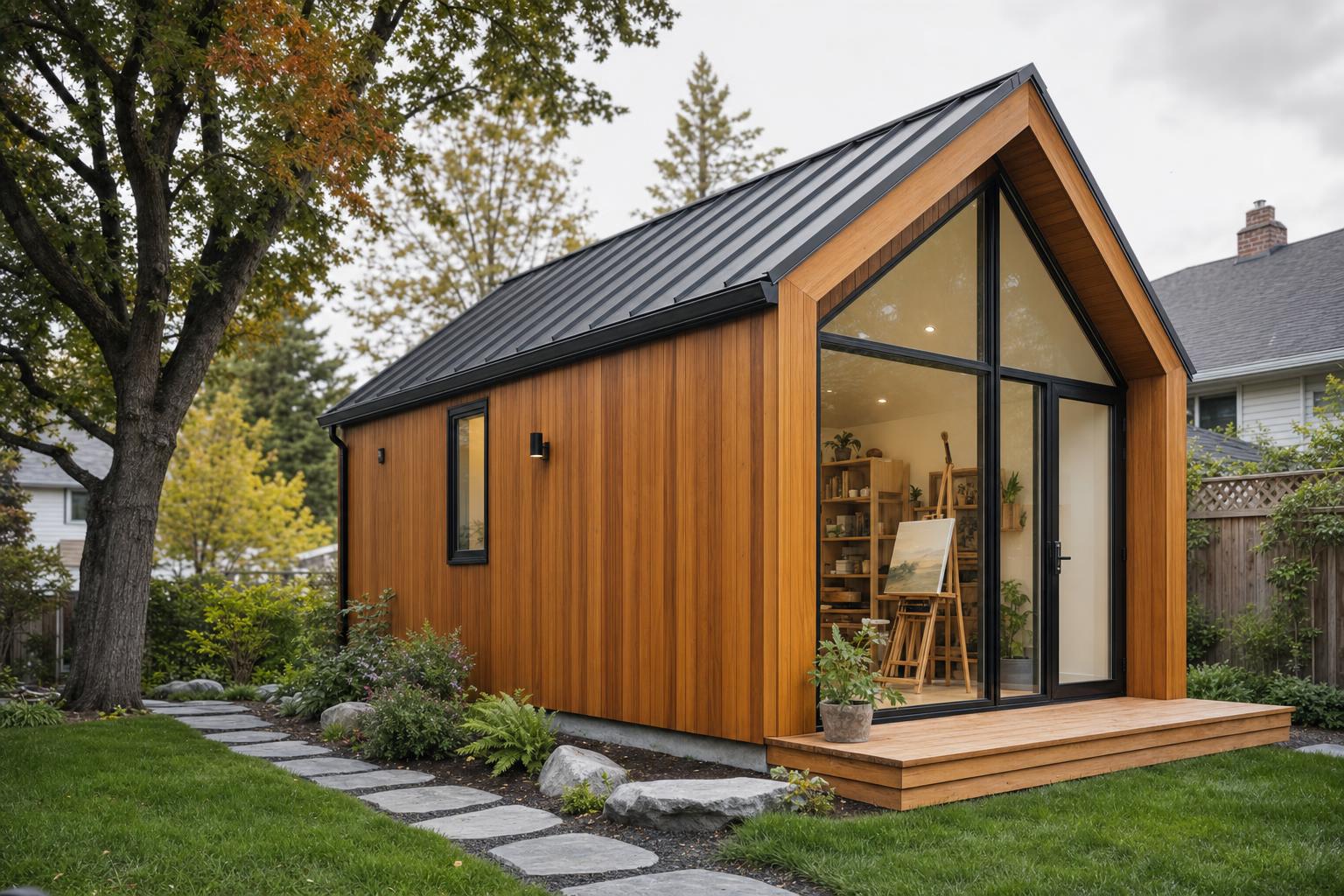
Tiny Home Studio for Canadian Artists: Design, Live/Work Layouts, Costs, and 2025–2026 Updates
Estimated reading time: 16 minutes
Key Takeaways
- A tiny home studio can combine daily living and serious creative work in one compact footprint, usually around 100 to 400 square feet.
- Canadian artists can benefit from lower overhead, better focus, and more control compared with paying for both housing and a separate studio.
- The best setups are designed around workflow first—light, storage, ventilation, safety, and zoning matter more than decoration.
- Different disciplines need different essentials, from drying racks and sinks to blackout systems, ergonomic desks, and tool walls.
- Permits, heating, humidity control, insurance, and municipal rules can make or break a project, so early planning is critical.
- Across Canada, tiny home studio ideas, garden suites, laneway homes, and artist-supportive housing trends that gained traction in 2025 still matter in 2026.
Table of contents
- Why a tiny home studio makes sense for Canadian artists
- Design ideas for your tiny home studio
- Workspace essentials for a tiny home studio
- Live/work space: zoning and practical tips
- 2025 creative housing initiatives for artists
- Tiny home studio case studies from Canadian artists
- Artistic tiny living: routines, mindset and community
- Tiny home studio checklist and decision matrix
- Resources for Canadian artists building tiny home studios
- Frequently Asked Questions
A tiny home studio is a compact home-and-creative setup built to support both living and art-making in one place. For many Canadian artists, that combination is not just appealing—it can be practical, affordable, and deeply motivating.
Imagine waking up a few steps from your easel, edit desk, press, or workbench. No commute. No second lease. No daily setup from scratch.
That is the promise of a well-planned live/work space. But for it to work long term, the design has to serve real artistic practice, not just a minimalist aesthetic. This guide covers what to include, what to avoid, and how to decide whether a tiny setup fits your discipline, budget, and lifestyle.
Why a tiny home studio makes sense for Canadian artists
What a tiny home studio really is
A tiny home studio is a small dwelling or compact converted structure designed to combine living needs with a dedicated art area. That might mean a backyard building, a converted garage, a laneway suite, a structure on a foundation, or a tiny house on wheels.
This is not just a spare room with a desk in it.
A real tiny home studio is a professional live/work environment with proper light, storage, power, ventilation, and defined zones.
For broader compact-living context that overlaps with studio planning, see tiny home living, mini homes, and tiny homes.
If you are comparing creative space options, it can also help to look at a general home office or ADU office.
The biggest benefits
Affordability and lower overhead
For many artists, the strongest argument is financial. A tiny home studio can reduce:
- Build costs
- Heating and power bills
- Commute expenses
- Rent pressure
- The need for a second lease on a separate studio
That can free up money for things that directly support your practice:
- Supplies
- Exhibitions
- Residencies
- Framing
- Marketing
- Equipment upgrades
If you are weighing the numbers, related reading on ADU investment, housing costs, and budget tiny homes can help.
Creative focus
Compact studios often encourage more consistent work. Tools stay ready. Surfaces stay available. Setup friction drops.
That matters more than most people expect. When your materials are always within reach, starting becomes easier—and starting is often the hardest part.
Flexibility
Some artists build in a backyard. Others use rural land. Some prefer mobility for festivals, residencies, or seasonal work.
That flexibility can fit uneven income, changing projects, and hybrid creative careers. Explore related models like portable homes, moving tiny homes, and tiny home mobility.
Sustainability
Smaller spaces usually use less energy to heat, cool, and power. Many artists also like the material logic of building small: fewer resources, less waste, and more thoughtful choices.
For one example of low-impact small-space design thinking, see this tiny-house studio example.
For more on low-impact construction, review eco-friendly building materials, reclaimed materials, upcycling in Canadian ADUs, and zero-waste design.
Common challenges to expect
Space constraints
Large canvases, packaging, props, archive work, paper stock, and tools all compete for room. Storage is not optional in a tiny home studio.
Useful solutions include:
- Wall storage
- Loft storage
- Under-bench drawers
- Rolling cabinets
- Off-site archive storage
- Rotating inventory by season or project
For more ideas, see tiny home storage solutions, tiny home storage ideas, and revolutionizing tiny home storage.
Climate control in Canada
Canadian weather is hard on people and artwork alike. Moisture swings and cold snaps can damage:
- Paper
- Wood panels
- Textiles
- Electronics
- Musical tools
- Finished artwork
Insulation, air sealing, heating, cooling, and humidity control all matter. For winter-focused planning, see winter-proof tiny homes, cold climate tiny home construction, Canadian tiny home winterization, and tiny home insulation.
Zoning and legal complexity
A live/work setup may be treated differently depending on the municipality. It could fall under rules for garden suites, laneway suites, detached accessory buildings, accessory dwelling units, or mobile structures.
Start with Canadian ADU regulations, ADU permits in Canadian cities, tiny home permits in British Columbia, and tiny home permits in Ontario.
Health and safety
Solvents, resin, paint fumes, dust, heat tools, and electrical loads become more serious in a tight enclosed space.
Safety references worth reviewing include tiny home fire safety, tiny home safety, and forest fire safety for tiny homes.
Lifestyle limits
Tiny living is freeing for some and frustrating for others. It can be harder if you have:
- Family members sharing the footprint
- Frequent students or clients
- Large fabrication needs
- Heavy shipping volume
- A strong need to keep work and home fully separate
Why artistic tiny living can improve productivity
Small spaces create useful limits. Only your best tools stay. Every shelf has a purpose. Every surface must justify itself.
That often leads to better routines and fewer distractions. And if the studio sits apart from the main house, even in the same yard, it can create a stronger mental boundary between life and work.
For more on separation and comfort, see privacy in tiny homes, enhancing privacy in tiny home design, and sound management in tiny home communities.
Design ideas for your tiny home studio
Start with function before style
Before choosing finishes or colour palettes, decide what the space must actually do.
Ask yourself:
- Will you paint?
- Sew?
- Edit video?
- Print?
- Photograph products?
- Build small objects?
- Mix digital and messy work?
Then map your workflow:
- Where messy work happens
- Where clean work happens
- Where finished work is stored
- Where you sleep
- Where you eat
- Where you clean tools
A beautiful layout that fights your process will not help for long.
Multi-functional furniture and transformable zones
In a small live/work space, one area may need to perform two or three jobs in a single day.
Useful pieces include:
- Fold-down desks that become drawing or cutting tables
- Murphy beds that disappear during work hours
- Loft beds that free up floor area below
- Rolling carts for supplies
- Benches with hidden storage
- Wall-mounted drop-leaf tables
- Nesting stools and stackable chairs
For inspiration on transformable layouts, see this space-saving tiny-house layout video and this compact studio design example.
Related reading: smart furniture for ADUs and tiny homes, modular furniture for tiny homes, and flex spaces tiny home design.
Light and sightlines
Light is one of the most important design factors in any tiny home studio.
Natural light helps:
- Painters judge colour
- Illustrators work longer with less fatigue
- Textile artists see fine detail
- Photographers use softer daylight setups
North-facing light is often preferred because it stays more consistent through the day.
If wall space is limited, consider:
- Clerestory windows
- Skylights
- Light tubes
To make the room feel bigger:
- Use lower furniture
- Add mirrors carefully
- Try glazed interior partitions
- Avoid too many solid dividers
Related guides include tiny home light design and interior lighting for tiny homes.
Durable, easy-clean, healthier finishes
Small rooms show wear quickly and hold smells longer.
Choose finishes that can handle repeated use:
- Sealed plywood
- Good laminate flooring
- Washable wall paint
- Easy-clean counters
- Low-VOC paints and sealants
For material planning, see sustainable flooring options, biobased building materials, and eco-friendly homes.
Acoustic design
If the space includes music, audio work, or noisy tools, acoustic planning matters.
Basic sound control may include:
- Insulation in wall cavities
- Resilient channels
- Double drywall
- Acoustic sealant around gaps
- Rugs, curtains, and soft panels inside
Remember the difference:
- Soundproofing helps keep sound from leaving or entering
- Reverberation control reduces echo inside the room
For inspiration on sound-conscious small-space design, revisit this tiny-house studio example.
Also see noise reduction in Canadian housing, soundproofing tiny homes, acoustic design for Canadian tiny homes, and ADU recording studio tips.
Zoning the interior within 100 to 400 square feet
Most tiny home studio layouts work best when split into three zones:
- Creative workspace
- Living or sleeping area
- Display and storage area
Give the workspace the best light and easiest access. Let storage occupy less prime edges and corners.
Simple separators that help without making the room feel smaller include:
- Rugs
- Open shelving
- Curtains
- Sliding panels
- Half-walls
Keep at least one clear walking path through the studio. If movement feels blocked, the whole room will feel cramped.
Accessibility and ergonomics
A tiny home studio should fit the artist—not force the artist into painful habits.
Helpful choices include:
- Adjustable desk height
- Flexible easel height
- Reach-friendly storage
- Wider doorways if needed
- Ramp access
- Strong task lighting
- Supportive seating
For accessible design paths, see accessible tiny homes, universal design principles, accessible ADU design, and curbless entry tiny homes.
Workspace essentials for a tiny home studio
Painters
A painter’s setup should usually include:
- A compact or wall-mounted easel
- Vertical drying racks
- Slim storage for canvases and panels
- Shallow drawers for brushes, paints, and mediums
- A utility sink if possible
If no sink is available, plan a safe brush-cleaning routine using sealed containers and proper waste handling.
Printmakers
Printmakers often need:
- A small-format press or hand-printing setup
- Flat paper storage
- Drying racks or drying lines
- An easy-clean inking surface
- Strong ventilation if solvents are used
Paper needs stable storage away from cooking steam and window condensation.
Photographers
A photographer’s tiny home studio works best when setup and takedown are fast.
Useful tools include:
- Foldable backdrops
- Collapsible light stands
- Rolling gear cases
- Blackout coverings
- Wall or ceiling storage for paper rolls
Photographers benefit most from clear floor space and reliable organization.
Digital artists and illustrators
Digital artists need fewer bulky materials, but comfort and technical reliability matter more.
Essentials include:
- Ergonomic desk
- Supportive chair
- Monitor arm
- Colour-accurate display
- Good cable management
- Reliable internet
- Surge protection
- Battery backup
Also see best internet for tiny homes, universal Wi‑Fi for tiny home communities, smart home tech for tiny homes, and remote work ADU design.
Makers, sculptors, and mixed-media artists
These disciplines often need more robust fit-outs:
- A strong workbench
- Clamp-on vises
- A modular tool wall
- Sealable bins for dusty or sharp tools
Heavy, loud, or dusty fabrication may be better handled in a separate shed, outdoor station, or shared maker lab. A tiny live/work space is not the safest place for every process.
For more business-oriented making, see business ADU, how to launch a tiny home business, and tiny home business incubator.
Storage systems and vertical organization
Artistic tiny living depends on using walls intelligently.
Strong options include:
- Pegboards
- French cleats
- Slatwall
- Overhead shelving
- Under-bed drawers
- Toe-kick drawers
- Rolling cabinets
Use clear bins or strong labels. Searching wastes time and creates stress.
For more, see tiny home storage solutions, smart storage, and tiny home furniture Canada.
Lighting plan
A good tiny home studio uses layered lighting:
- Ambient lighting for the full room
- Task lighting for close work
- Accent lighting for display or mood
For colour accuracy, high-CRI lighting above 90 is ideal. For colour-critical work, 5000K to 6500K often works well, while warmer lighting can suit resting zones.
Related lighting resources include smart lighting solutions, tiny home light design, and interior lighting for tiny homes.
Ventilation, fumes, and fire safety
Mechanical extraction is often necessary for:
- Solvents
- Resin
- Spray varnish
- Soldering
- Dust
- Smoke
- Heat tools
Every live/work setup should also have:
- Fire extinguisher
- Smoke detector
- Carbon monoxide detector
- Metal bin for oily rags
- Clear exit path
Review tiny home fire safety, tiny home safety, fire-smart tiny home upgrades, and ADU fire insurance.
IT and digital workflow
A tiny home studio still needs strong digital systems, especially if you sell online, teach virtually, edit video, manage commissions, or apply for grants.
Plan for:
- Reliable internet
- Cloud backup
- External hard drives
- Surge protection
- Good cable routing
- Battery backup
See also remote work trends, digital nomads in Canada, and smart home maintenance for tiny homes.
Small-canvas vs large-format strategies
If your work tends to be large, small-space methods can extend what the studio can do.
Try:
- Modular panels
- Series-based formats
- Collapsible supports
- Outdoor temporary work areas
- Off-site finishing space for priming, assembly, or varnishing
Related inspiration: climate-adaptive decks, rooftop decks, and shared workshops.
Live/work space: zoning and practical tips
Main setup types
Backyard detached studio
Best for artists with land access who want physical separation and easier focus.
Start with backyard studio Canada and artist studio ADU.
Garage conversion
Often cheaper than a new build, though it may still need major upgrades for insulation, windows, power, moisture control, and heating.
See garage conversion, tiny home permits in Ontario for garage and shed conversions, and building an office: shed vs ADU.
Tiny house on wheels
This option offers mobility and lower long-term site commitment, but zoning, parking, utility hookups, and winter use may be harder.
Related reading includes tiny home on wheels vs stationary ADU, tiny home parking in Canadian cities, and moving tiny home across provinces.
Foundation-based tiny home studio
Usually better for permanent living, stronger utilities, and reliable winter performance. It may, however, require a fuller permit process.
Compare tiny home foundation options, prefab passive house ADU, and solar-ready ADU design.
Floorplan examples
240 sq ft mobile studio
- Front work area with large window
- Rear wet zone
- Loft sleeping
Best for solo painters, illustrators, or digital artists who want light and mobility.
320 sq ft backyard studio
- Separate entrance
- Central workspace
- Compact bathroom
- Small kitchenette
- Full wall storage
Best for artists who want a stable backyard live/work setup with stronger day-to-day comfort.
400 sq ft foundation build
- Ground-floor studio
- Partial divider
- Raised sleeping platform or loft
- Better utility integration
Best for year-round use, one-on-one teaching, or mixed digital and physical work.
Plumbing
Your live/work space may include:
- Full bathroom
- Half-bath
- Composting toilet
- No bathroom if the main house is nearby
A utility sink is one of the most valuable upgrades for many artists.
Plan waste handling carefully. Paint, ink, clay, and plaster residue should not just be washed into any drain. See tiny home utilities, utility hookup for tiny homes, tiny home wastewater solutions, and greywater recycling tiny home plumbing.
Heating, cooling, and humidity control
For Canadian artists, stability matters as much as comfort.
Common systems include:
- Mini-split heat pumps
- Electric baseboards
- Radiant floor heat
Support them with:
- Strong insulation
- Good air sealing
- Vapour control
- Controlled ventilation
- Dehumidification where needed
Compare heat pump for tiny home, under-floor heating for tiny homes, hydronic heating tiny homes, and eco-friendly heating ADU guide.
Electrical planning
Poor electrical planning creates problems quickly in a compact space.
A tiny home studio may need:
- Dedicated circuits for tools or heaters
- Many outlets at desks and benches
- Well-planned lighting circuits
- Outdoor-rated outlets for exterior work
Too few outlets usually means extension cords, clutter, and risk.
Privacy and separation
When sleeping and working share one footprint, visual separation helps your brain switch modes.
Useful tools include:
- Sliding partitions
- Curtains
- Pocket doors
- Loft sleeping
- A small entry vestibule
For deeper reading, see tiny home privacy strategies, privacy in tiny homes, and soundproofing tiny homes privacy.
Zoning, permits, and code considerations
Rules vary widely by municipality. Before building or buying, check whether your setup is allowed as a:
- Garden suite
- Laneway suite
- Accessory dwelling unit
- Detached accessory building
- Mobile structure
You may also face rules about minimum size, setbacks, occupancy, foundation type, parking, utility hookups, and fire separation.
If you plan to receive clients, teach classes, sell on site, or use noisy equipment, extra rules may apply.
Helpful references include tiny home legal clinic, ADU legal clinic Canada, tiny home bylaws Canada, and tiny home friendly municipalities.
Budget ranges and breakdown
Instead of chasing one headline number, break the project into categories:
- Design and engineering
- Permits
- Site prep or foundation
- Trailer or shell
- Insulation and windows
- Plumbing, electrical, HVAC
- Interior finishes
- Studio fit-out
- Furniture and storage
Costs vary dramatically between DIY shells, prefab units, and custom builds. Urban servicing and permit complexity can increase costs fast. See hidden costs in ADU construction, ADU cost to build in Canada, tiny home financing Canada, and ADU financing Canada.
Timeline and milestones
A simple tiny home studio project often follows this order:
- Feasibility and zoning check
- Design and floorplan development
- Permits and approvals
- Site prep or trailer prep
- Build or delivery
- Studio fit-out
- Move-in and adjustment
Most layout issues only become obvious after real use, so expect to refine the space once you live and work in it.
2025 creative housing initiatives for artists
What “2025 creative housing” means here
In this context, 2025 creative housing refers to housing, zoning, grant, and municipal pilot programs launched, expanded, or updated in 2025 that still shape artist housing choices in 2026.
This includes:
- Artist housing programs
- Garden suite policy changes
- Affordable creative-space initiatives
- Live/work-friendly planning updates
What Canadian artists should look for
Artists should watch for support at three levels:
- Federal
- Provincial
- Municipal
The most useful support rarely appears as one perfect tiny home grant. More often, artists combine several pathways tied to affordable housing, accessibility upgrades, cultural infrastructure, workspace development, or retrofit programs.
For policy context, see Canada federal housing policy 2025, provincial housing targets and ADU policies, and ADU grants Canada.
Funding pathways
Possible funding routes include:
- Canada Council for the Arts programs that may support eligible project or accessibility needs
- Provincial arts councils
- Municipal creative-space grants
- Retrofit support programs
- Co-op and shared-space models that lower private build costs
Eligibility depends on ownership, intended use, business structure, and exact program rules.
Tax and financial considerations
A live/work space may create useful tax opportunities, but details matter.
Possible areas include:
- Home office or studio expense deductions
- Equipment depreciation
- Separation of personal and business use
This is one place where professional advice is worth paying for.
Municipal and co-op examples to watch
Garden suite and laneway suite programs
Many cities have expanded rules for small detached dwellings in yards or lanes. These can create an opening for a tiny home studio on a residential lot.
See backyard cottages, backyard homes Canada, laneway houses and backyard homes, and types of ADUs.
Affordable creative-space programs
Some municipalities support cultural spaces through grants, leases, or retrofit assistance. Even if these are not tiny-home specific, they may support a hybrid live/work model.
Co-op and shared housing models
Artist co-ops and shared ownership models can lower costs while preserving access to tools, community, and larger work areas.
Related reading: tiny home communities, tiny home co-op, co-housing ADUs, and co-ownership.
Resource links and next-step contacts
Useful places to check include:
- Canada Council for the Arts
- Provincial arts councils
- Municipal planning departments
- Municipal culture departments
- Housing and co-op support groups
These sources help with different parts of the puzzle: land use, funding, legal compliance, and long-term support.
Tiny home studio case studies from Canadian artists
The profiles below are realistic model examples based on common Canadian artist needs and small-studio patterns.
Case study 1: Vancouver Island painter
- Location and discipline: Vancouver Island, painter
- Size: 240 sq ft
- Type: Detached backyard studio with off-grid influence
- Budget range and timeline: Mid-range build, about 6 to 9 months
- Main design choices: North-facing window, narrow sleeping loft, deck for outdoor painting, vertical canvas storage
- Utility and climate strategy: Strong insulation, electric heat, dehumidifier, rain-smart exterior details
- What worked well: Excellent light and direct access to outdoor work
- What they would change: More drying rack space
- Quote: “Once my tools had a home, I stopped waiting for the perfect day to paint.”
This type of project often pairs well with reclaimed finishes and natural materials. For inspiration, see this studio-focused tiny-house video.
Related ideas: eco tiny homes, green roof tiny home, and biophilic design tiny homes.
Case study 2: Toronto sculptor
- Location and discipline: Toronto, small-scale sculptor
- Size: About 300 sq ft
- Type: Converted garage
- Budget range and timeline: Moderate to high retrofit cost, about 4 to 8 months
- Main design choices: Stronger electrical service, insulated slab, heavy-tool wall, outdoor cutting station
- Utility and climate strategy: Added heating, air sealing, dust control, and noise management
- What worked well: Lower cost than renting a separate studio
- What they would change: Better client entry and more covered outdoor work area
- Quote: “The studio became usable year-round only after we treated heat, power, and sound as core design issues.”
Case study 3: Montreal multimedia artist
- Location and discipline: Montreal, multimedia artist
- Size: 220 sq ft
- Type: Mobile tiny setup
- Budget range and timeline: Mid-range, about 5 to 7 months
- Main design choices: Fold-down edit desk, storage bench, transportable gear, projection wall
- Utility and climate strategy: Compact heat pump, blackout shades, strong battery backup
- What worked well: Easy shift between editing, sketching, and travel
- What they would change: Slightly more headroom in the sleeping loft
- Quote: “Mobility gave me freedom, but the real win was learning exactly what tools I actually use.”
For mobile context, see tiny homes on wheels vs stationary ADU, portable homes for modern nomads, and mobile tiny homes for seasonal work.
Case study 4: Prairie photographer
- Location and discipline: Prairie region, photographer
- Size: 300 sq ft
- Type: Backyard studio
- Budget range and timeline: Mid-range, about 6 to 8 months
- Main design choices: Blackout system, foldable backdrops, rolling storage, clear shooting floor
- Utility and climate strategy: High insulation, efficient winter heating, dehumidifier, sealed windows
- What worked well: Fast setup and clean gear storage
- What they would change: Add a small changing area for portrait sessions
- Quote: “My work improved when I could leave the lights set and come back to the same scene tomorrow.”
Constraint-solution callouts
- Cold-weather solution: Extra insulation, thermal curtains, vestibule, efficient heating
- Humidity solution: Dehumidifier, vented skylight, sealed storage
- Mobility solution: Trailer-safe dimensions, lightweight materials, lockable cabinets
- Workflow solution: Separate messy and clean zones, even within one room
Artistic tiny living: routines, mindset and community
Daily routines that keep a tiny home studio workable
In artistic tiny living, routines are part of the architecture.
A useful morning ritual might be:
- Open blinds or switch on task lights
- Turn on ventilation
- Uncover tools
- Set out one project only
An evening reset might be:
- Ten-minute cleanup
- Return tools to labelled storage
- Cover or protect wet work
- Clear one main surface
In a tiny space, clutter grows quickly. Routines stop the room from taking over your energy.
Mindset and mental health
There are real benefits to artistic tiny living:
- Lower overhead stress
- More focus
- A stronger sense of control
- More daily contact with your creative practice
There are also challenges:
- Isolation
- Cabin fever
- Pressure to stay ultra-minimal
- Blurred lines between work and rest
Helpful strategies include daily walks, critique groups, shared studio days, community classes, and planned time away from the studio.
For more on the psychology of small-space living, see exploring the psychology of tiny homes, the impact of tiny homes on mental health, wellness design for tiny homes, and meditation spaces for small homes.
Minimalism versus material reality
Artists do not need to become strict minimalists to live small.
A better approach is selective storage:
- Rotate seasonal supplies
- Store archive work elsewhere
- Digitize references
- Buy fewer bulk materials
- Use a keep/use/store system
The goal is not to own almost nothing. The goal is to make the space support your actual practice.
Community models that complement tiny living
For many artists, a private tiny home studio works best when paired with outside support.
That may include:
- Shared maker labs for messy work
- Artist co-ops
- Equipment-sharing groups
- Pop-up shows in a yard, deck, or carport
- Local artist networks
A tiny live/work space does not need to do everything alone. Explore community tool sharing, tool library for tiny home developments, shared workshops and skills-sharing, and ADU community events.
Tiny home studio checklist and decision matrix
Practical checklist
Big decision
- Build new or convert an existing structure?
- Full live/work space or studio-only?
- Solo setup or hybrid with shared space?
Mobility
- Fixed unit or mobile tiny studio?
- Seasonal use or year-round use?
- Need to move for work, markets, or residencies?
Permit and zoning checks
- Is the unit allowed on the property?
- What use class applies?
- Are setbacks, servicing, or parking required?
Insurance questions
- Is studio use covered?
- Are tools and artwork covered?
- Are clients, students, or business activities covered?
Utility planning
- Water source
- Waste handling
- Heating and cooling
- Power needs
- Internet reliability
Ventilation and fire safety
- Need extraction for fumes or dust?
- Smoke and CO detectors installed?
- Fire extinguisher and exit path ready?
Discipline-specific needs
- Easel, press, workbench, or photo setup
- Sink or washout area
- Drying and flat storage
- Strong enough electrical service
Budget planning
- Design and permits
- Build shell
- Systems
- Fit-out
- Furniture
- Contingency
Storage and workflow review
- Where do raw materials go?
- Where does finished work go?
- Can you move easily through the room?
- Can the studio reset quickly each day?
Decision matrix
| Option | Upfront cost | Operating cost | Zoning complexity | Privacy | Flexibility | Large-format work | Best fit | Community access |
|---|---|---|---|---|---|---|---|---|
| Fixed tiny home studio | Medium to high | Low to medium | Medium to high | High | Medium | Medium | Artists with land access and stable routines | Lower unless paired with outside groups |
| Mobile tiny studio | Medium | Low to medium | High | Medium | High | Low to medium | Artists who value movement and seasonal use | Medium |
| Shared live/work space or co-op | Low to medium | Medium | Lower for the user | Lower | Medium | Higher | Artists needing more tools, space, or community | High |
No option is best for everyone. The right answer depends on discipline, budget, land access, climate, independence, and the level of community you want.
Quick starter shopping list
- Tiny house plans and builder inspiration
- Modular storage systems
- Task lighting with high CRI
- Ventilation fans
- Insulation and cold-climate windows
- Fire extinguisher, detectors, and safety bins
- Cable management and surge protection
For plan inspiration, see Canadian tiny house plans.
If you are moving toward construction, compare tiny home builders in Canada, find a contractor for a tiny home, and how to choose a reliable tiny home builder.
Resources for Canadian artists building tiny home studios
Funding and arts support
Useful sources include:
- Canada Council for the Arts for national grants and programs
- Provincial arts councils for regional support
- Municipal arts funding pages for city-based creative-space opportunities
These may help with project support, accessibility upgrades, or broader creative development linked to 2025–2026 housing trends.
Tiny home and plan inspiration
- Canadian tiny house plans and builder ideas
- Tiny house artist studio inspiration
- Inside a tiny house studio
More related inspiration: artist retreat tiny homes, tiny home creative studio, and tiny home art gallery.
Safety and code resources
For any compact live/work space, look up:
- Provincial building code pages
- Fire safety resources
- Electrical safety authorities
- Safe studio practice guidance for dust, fumes, and solvents
These issues matter even more in small spaces because risks build faster in tight footprints.
Community and marketplace links
Artists exploring artistic tiny living can also benefit from:
- Tiny home groups
- Artist forums
- Co-op housing organizations
- Second-hand studio equipment marketplaces
These networks can reduce costs, share lessons, and lower isolation.
Visual and multimedia support that strengthens planning
A strong tiny home studio plan becomes easier when you can see examples clearly.
Useful supporting materials include:
- Before-and-after builds
- Annotated floorplans
- Artist portraits in use
- Storage close-ups
- Lighting setup examples
- Convertible furniture examples
For additional inspiration, watch this transformable tiny-house layout, this dual-use compact studio example, and this tiny-house studio walkthrough.
A tiny home studio can be a realistic and inspiring option for Canadian artists who want a more affordable, intentional live/work space. The best results come from matching the layout to your discipline, workflow, climate, legal setting, and everyday habits.
Artistic tiny living works best when it serves real creative practice—not just a nice-looking idea of minimalism.
Frequently Asked Questions
What size is a tiny home studio?
Most tiny home studios fall between 100 and 400 square feet. Smaller setups may work for digital artists or illustrators, while painters, photographers, and makers often benefit from more floor area and stronger storage.
Is a tiny home studio legal in Canada?
It can be, but legality depends on your municipality, lot type, intended use, servicing, and whether the structure is treated as a garden suite, laneway suite, ADU, detached accessory building, or mobile unit. Start with local planning staff and resources like Canadian ADU regulations.
Can I both live and work in a tiny home studio?
Yes—if the design, zoning, and utility systems support true live/work use. The best setups clearly separate sleeping, working, and storage zones, even inside one compact footprint.
What is the best tiny home studio setup for painters?
Painters often benefit most from north-facing light, vertical canvas storage, drying racks, washable finishes, a utility sink, and humidity control. Good ventilation and heat stability also matter for materials and finished work.
Are tiny home studios good for photographers and digital artists?
Yes. Photographers do well with blackout systems, collapsible gear, and clear floor space. Digital artists often thrive in tiny spaces if they have ergonomic furniture, reliable internet, glare control, and strong cable management.
How much does a tiny home studio cost in Canada?
Costs vary widely depending on whether you build new, convert an existing structure, choose a mobile unit, or buy prefab. Budget for design, permits, site prep, systems, insulation, windows, interior finishes, and studio fit-out—not just the shell.
Can I use a tiny house on wheels as an artist studio?
Yes, but zoning, parking, winter use, and utility hookups can be more complicated than with a foundation-based build. It is often best for artists who value mobility and can work with compact, adaptable setups.
What is the biggest mistake in designing a tiny home studio?
The biggest mistake is designing for appearance before workflow. If storage, safety, lighting, power, and ventilation are weak, the space may look good but fail in daily use.
Leave a Reply