

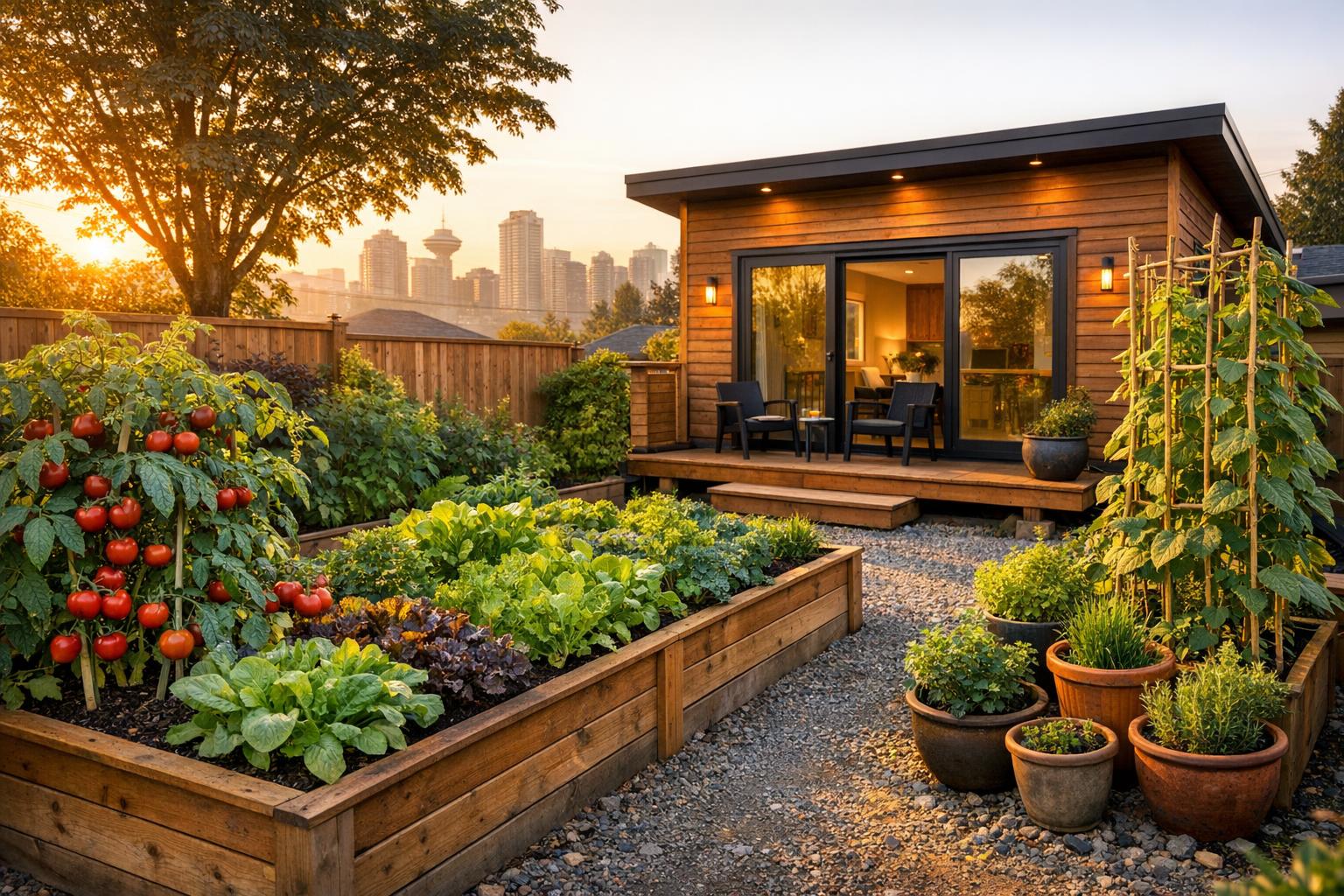
Urban Gardening for Tiny Homes, Balconies, Rooftops, and Canada ADUs in 2026
Estimated reading time: 16 minutes
Key Takeaways
- Urban gardening can produce meaningful food in very small spaces, including balconies, rooftops, tiny yards, and Canada ADU setups.
- The goal is not full self-sufficiency; it is consistent, high-value harvests from a small footprint.
- Success depends on five things: site assessment, system choice, crop selection, water management, and soil fertility.
- Best beginner crops include greens, herbs, bush beans, strawberries, radishes, and compact tomatoes.
- Canadian growers need to plan for frost, wind, weight limits, bylaws, and short seasons, especially in tiny home and ADU settings.
- Helpful background on Canadian tiny homes and small-space living can be found via Canada tiny house news, tiny homes in Nova Scotia, and this small-space gardening video.
Table of contents
- Why urban gardening matters for tiny homes and ADUs in 2026
- Assess your site before you plant anything
- Space-saving design principles that increase yield
- Best small-space systems for maximum food production
- Best vegetables and crops for a tiny home garden in Canada in 2026
- Soil, composting, and fertility for tight spaces
- Water, irrigation, and resource efficiency
- Pest, disease, and maintenance plan for edible small spaces
- Climate-specific advice for Canada ADU and small-space growers
- Ready-made layout examples with realistic yields
- Budget, materials, and ROI
- Regulations, permissions, and community support for Canada ADU gardeners
- How to track success in your urban gardening system
- Troubleshooting common tiny home garden problems
- Frequently Asked Questions
Urban gardening is one of the most practical ways to boost food production in a tiny home garden, balcony, rooftop, or Canada ADU setup in 2026. If you live in a small space, you do not need a full backyard to grow useful food. With smart, space-saving methods, even a balcony or a 200 sq ft yard can produce greens, herbs, tomatoes, berries, and roots for several meals each week.
This guide shows what actually works. You will learn how to assess a small site, choose the best growing systems, pick high-yield crops, manage water and fertility, and estimate realistic harvests.
The reality check: the goal is not full self-sufficiency. The real goal is meaningful output from a small footprint.
This is especially helpful for tiny home owners, backyard suite residents, renters with balconies, and Canadian readers dealing with local rules, frost, and limited space. If you want practical urban gardening ideas for 2026, this is where to start.
Why urban gardening matters for tiny homes and ADUs in 2026
Urban gardening matters because small-space growing solves real problems.
Food security and lower grocery stress
Growing part of your own food helps reduce dependence on store prices and stock issues. Fresh greens and herbs are often expensive in Canada, yet they are some of the easiest crops to grow at home. See more on tiny home greenhouse options in Canada and urban gardening ADU solutions.
Cost savings from high-value crops
A tiny home garden can replace frequent purchases of:
- Lettuce
- Basil
- Parsley
- Chives
- Cherry tomatoes
- Strawberries
These are small items at the store, but the total adds up fast. More ideas are in this ADU greenhouse guide.
Mental health and routine
A daily 15-minute gardening habit can create calm, structure, and a stronger connection to the outdoors. That matters in dense neighbourhoods and small homes. Related reading: tiny homes and mental health in Canada and biophilic design for tiny home wellness.
Better microclimate around your home
Plants, mulch, and shade structures can help cool hot balconies and small yards. They also soften reflected heat from walls and hard surfaces. See green roofs for tiny homes in Canada and climate-adaptive decks.
Why 2026 matters
In 2026, small-space gardening is easier than it used to be because:
- More dwarf and cold-hardy varieties are available
- Drip timers and moisture sensors are easier to buy
- Self-watering containers are more common
- Backyard suites and garden suites make Canada ADU gardening more relevant
See related technology notes on remote sensing basics and solar-ready ADU design.
Urban gardening yields: how much food production can a small space really provide?
A realistic beginner target is:
- 10–20 lbs of greens and vegetables per 50 sq ft each year
- About 0.5–1 lb of greens per sq ft per season
- Roughly 2–4 meals per week per person from a well-run small system
That is meaningful food production, even if it is not a full diet.
What success looks like
One balcony can produce:
- Salad greens
- Herbs
- Beans
- Strawberries
One 200 sq ft yard can support:
- Greens
- Tomatoes
- Root crops
- Peas or beans
- Dwarf fruit
Quick checklist
- Aim for useful harvests, not perfection
- Focus on high-value crops first
- Expect better results in year two
- Measure success in meals, not just pounds
For broader context, see Green Building Canada on tiny homes and Tiny House Alliance Canada coverage.
Assess your site before you plant anything
A good site audit is the base of successful urban gardening. If you skip it, you may buy the wrong plants, wrong containers, and wrong system.
Step-by-step tiny home garden site audit
- Measure your usable space
Count real growing space, not total floor area. - Track sunlight for one full day
Full sun means about 6–8+ hours of direct light. - Notice shade patterns
Check railings, fences, buildings, and overhangs. - Check the wind
Balconies and rooftops often dry out plants much faster. - Find your water source
Note hose access, sink distance, and drainage. - Check weight limits
Wet soil is much heavier than dry soil. - Think about access
You need space to water, prune, harvest, and clean. - Notice heat reflection and privacy
Walls can increase heat. Privacy screens can also create shade.
See related design guidance on ADU outdoor design in Canada and landscaping ideas for ADUs.
Rooftops and decks: weight matters
Containers, soil, and water create real load. Before adding raised beds or many large planters, confirm what the surface can safely hold. A prompt often used for checking is around 20–30 lbs per sq ft, but readers should verify with building management or a qualified professional where needed. See climate-adaptive deck considerations and tiny home foundation options.
Canadian planning basics
Know your:
- Last spring frost date
- First fall frost date
- Hardiness zone
A hardiness zone is a simple guide to how cold your area gets. For example, Zone 5 Ontario often sees a last frost around May 15, but local conditions vary. Always check your local microclimate before buying seeds. Helpful references include tiny home-friendly municipalities in 2026 and cold-climate gardening for tiny homes.
Canada ADU rules to check
There is no single national rule for garden structures. Rules may come from:
- Municipal bylaws
- Condo or strata boards
- Landlords
- Building management
Check rules for:
- Trellises
- Rain barrels
- Rooftop gardens
- Composting
- Fencing
- Permanent planters
Also note that tiny homes on wheels may be treated differently from foundation-based suites in some Ontario settings. See the Canadian ADU regulations guide, Ontario tiny home permits guide, and HOA and ADU rules in Canada.
5-minute site plan template
Draw a simple sketch and mark:
- Sunniest spots
- Water source
- Windy corners
- Places for trellises
- Weight or legal limits
Then assign each zone a job:
- Climbing crops
- Leafy greens
- Herbs
- Compost
- Storage
- Seating
For layout inspiration, see Canadian ADU architecture and small-space ADU landscaping.
Quick checklist
- Measure first
- Track sun before shopping
- Confirm water and drainage
- Check load limits on decks and rooftops
- Look up frost dates before planting
More Canada tiny house updates here.
Space-saving design principles that increase yield
Space-saving means growing more food per square foot by using height, layering, mobility, and tighter layouts. It does not just mean adding more pots. Related context: tiny home design in Canada and modular furniture guide.
Space-saving design ideas for a Canada ADU garden
Vertical gardening
Vertical gardening uses upward space for:
- Peas
- Beans
- Cucumbers
- Strawberries
- Herbs
- Some tomatoes
Useful structures include:
- Trellises
- Strings
- Railing frames
- Wall pockets
- Pallet planters
Why it works:
- Better airflow
- Easier harvest
- More output from the same footprint
For some crops, vertical systems can nearly double productive area. Explore urban farming for tiny homes in Canada and rooftop spaces for ADUs.
Stackable and modular systems
Tiered shelves, stacked planters, and grow-bag racks work well in small spaces. They are great for renters and Canada ADU residents because they can move with you. See smart furniture for Canada ADUs and modular furniture for tiny homes.
A smart setup is:
- Shallow-rooted greens on top
- Medium herbs in the middle
- Heavier fruiting crops at the bottom
Multi-use furniture and integrated planting
Use items that serve two jobs:
- Bench planters
- Railing boxes
- Planter dividers
- Storage-seat combos
These protect walking space in a deck or tiny yard. More ideas: outdoor storage for small backyards.
Intensive layouts
Square-foot gardening divides a bed into 1×1 ft grids. Then each square gets planted by crop spacing. A common example is up to 16 carrots in 1 sq ft.
Other useful layouts include:
- Keyhole beds
- Narrow edge planters
- Long wall-side beds
Mobility
Wheeled planters are very useful in Canadian conditions. They let you:
- Chase sunlight
- Move crops away from hot walls
- Bring sensitive plants in before frost
Related reading: moving a tiny home in Canada.
Weekend project: low-cost vertical module
A simple railing box or vertical module can be built with:
- PVC or light framing
- Fabric pots
- Basic fasteners
A low-cost version can often be built for a modest budget and finished in a weekend. See DIY prefabricated ADU kit guide and reclaimed materials for tiny homes.
Quick checklist
- Use walls and railings first
- Grow upward before spreading outward
- Put heavy pots low
- Choose movable systems when possible
Useful inspiration: watch this video example, plus Canada tiny house news and Nova Scotia tiny home coverage.
Best small-space systems for maximum food production
The best system matters more than the number of containers you buy. See tiny home gardening and year-round food in a tiny home greenhouse.
Wicking beds
A wicking bed is a container with a water reservoir below the soil. Moisture moves upward through capillary action, which means the soil pulls water up slowly from below.
Why it works:
- Less frequent watering
- More stable moisture
- Lower drought stress
On a balcony or small deck, one well-built unit may go up to about two weeks without watering, depending on weather, crop, and size. Related idea: greywater and sustainable landscaping.
How to build a wicking bed on a balcony
A simple balcony wicking bed usually needs:
- A strong container
- A water reservoir section
- A separator layer
- Soil mix
- A fill tube
- An overflow hole
This system is especially useful where daily watering is hard. See urban ADU rainwater recycling.
Self-watering containers
These are excellent for:
- Tomatoes
- Peppers
- Herbs
They reduce swings between dry and soaked soil, which can help lower blossom-end rot risk in tomatoes and peppers. Related: water leak detection in ADUs.
Grow bags and shallow wide containers
Grow bags work well for:
- Potatoes
- Bush beans
- Peppers
- Dwarf tomatoes
Shallow trays work well for:
- Lettuce
- Salad greens
- Microgreens
Season extension systems
Mini hoop houses, cold frames, and row covers can extend the season by about 4–6 weeks in many Canadian conditions.
Use them for:
- Spring hardening
- Fall harvest extension
- Wind protection
See cold-climate gardening and tiny home greenhouse options.
Hydroponics and aeroponics
These are optional. They can produce a lot in a tiny footprint, especially in tower systems, but they need:
- More monitoring
- Nutrient management
- Power
- More setup cost
Pollinator support and companion planting
Even a small edible garden benefits from flowers and good plant pairing.
Examples:
- Nasturtiums for pollinator support and trap cropping
- Basil near tomatoes
- Flowers mixed into edible beds
See pollinator gardens for ADUs and wildlife-friendly landscaping.
Decision guide
Windy balcony:
Use low-profile self-watering or wicking containers.
Tiny yard:
Use raised intensive beds and one strong trellis.
Low sunlight:
Focus on greens, herbs, microgreens, and indoor support. See air quality sensor basics and tiny home light design.
Quick checklist
- Pick one reliable watering system
- Match the system to your site
- Add simple season extension early
- Mix flowers into edible beds
More examples: video guide and Canada tiny house updates.
Best vegetables and crops for a tiny home garden in Canada in 2026
In small spaces, “high-yield” means a crop has:
- Fast maturity
- Repeated harvests
- High grocery value
- Good container performance
- Vertical potential where possible
Best vegetables for tiny home gardens in Canada 2026
Fast, high-value vegetables
Loose-leaf lettuce
Ready in about 30 days. Great for shallow containers. You can harvest it more than once.
Radishes
Ready in about 25 days. Good for quick wins and tight spaces.
Baby carrots
Need deeper loose soil, but work well in containers.
Bush beans
Very productive without a large trellis.
Cherry tomatoes
High-return crop for sunny warm spots.
Peppers
Excellent in hot sheltered containers. See urban gardening ADU solutions and compact living and smart storage design.
Perennials and dwarf fruit
Everbearing strawberries
Shallow-rooted and ideal for rails or vertical systems.
Alpine raspberries
Compact and useful in specialty small-space setups.
Columnar apples and dwarf apples or pears
Possible in larger containers if they suit your local hardiness zone. More ideas: ADU landscaping ideas.
Herbs and microgreens
Top picks:
- Basil
- Chives
- Parsley
- Cilantro
- Pea shoots
- Sunflower shoots
These are among the highest-value crops per square foot. Many can also grow indoors nearly year-round with extra light. See winter gardening for tiny homes and ADU greenhouse guide.
Succession planting and intercropping
Succession planting means replanting right after a crop is harvested so the space keeps producing.
Intercropping means growing fast crops under or beside slower crops.
Examples:
- Carrots under peas
- Greens between young tomato plants
- New lettuce or radish seed every 2 weeks
See year-round food production ideas.
Practical crop table
| Crop | Container depth | Days to first harvest | Sun needs | Yield estimate | Canada notes |
|---|---|---|---|---|---|
| Loose-leaf lettuce | 15–20 cm | ~30 days | Part sun to full sun | Repeated cuttings | Strong choice across Zones 3–7 with timing |
| Radishes | 15–20 cm | ~25 days | Full sun to part sun | Fast single harvest | Great for cool seasons |
| Baby carrots | 20–30 cm | 50–70 days | Full sun | Moderate | Needs loose soil |
| Bush beans | 25–30 cm | 50–60 days | Full sun | Good repeated harvest | Great for containers |
| Cherry tomatoes | 30–45 cm | 60–80 days | Full sun | High in warm spots | Best in sheltered sunny areas |
| Peppers | 30–45 cm | 60–90 days | Full sun | Moderate to high | Loves heat |
| Strawberries | 15–20 cm | First flush varies | Full sun | Repeated berries | Good for rails and stacked planters |
Quick checklist
- Choose crops you already buy often
- Mix quick crops with long crops
- Re-sow every 2 weeks in peak season
- Start with greens, herbs, beans, and strawberries
Extra inspiration: watch this crop planning video, plus Green Building Canada and Tiny House Alliance.
Soil, composting, and fertility for tight spaces
Small-space gardens usually fail from poor soil and weak feeding, not lack of effort. Related background: zero-waste tiny home living and eco-friendly building materials in Canada.
Potting mix basics
A useful lightweight container mix is:
- 1/3 compost
- 1/3 peat or perlite
- 1/3 vermiculite
Why it works:
- Good drainage
- Air around roots
- Moisture retention
- Basic fertility
Ground soil is usually too dense for containers.
Composting options for tiny living
Vermicomposting
A worm bin that turns food scraps into castings. It can work indoors or outdoors if managed well.
Bokashi
A fermentation system for food scraps. Good when you do not have room for a full compost pile.
Tumblers
Useful in a tiny yard if enclosed outdoor composting is allowed.
Enclosed systems are often easier to approve in rentals and ADU settings. Always check local bylaws and landlord or strata rules first. See composting systems for tiny homes and urban homesteading guide.
Fertilizer strategy
Containers lose nutrients faster because watering washes them out.
A simple plan:
- At planting: compost plus slow-release pellets
- Every 1–2 weeks: liquid organic feed for fruiting crops
- Midseason: top-dress with compost or worm castings
- Monthly: check pH if plants look weak
Slow-release feed often covers 2–3 months. Fish emulsion or another liquid organic feed can support heavy growth. See greywater recycling guidance.
Quick checklist
- Use container mix, not yard soil
- Feed fruiting plants more often
- Choose enclosed compost systems in tight spaces
- Refresh soil every season
More tiny house living context here.
Water, irrigation, and resource efficiency
Water management is one of the biggest leverage points in urban gardening. Containers dry out fast, especially on hot balconies and rooftops. Related: smart water management for Canadian ADUs.
Tiny home garden irrigation tips for hot Canadian summers
Drip and micro-irrigation
Drip irrigation sends water slowly to the root zone. This reduces waste and gives steadier moisture.
Helpful add-ons:
- Timers
- Moisture sensors
A drip system can save roughly 50% water compared with less targeted watering. See remote sensing basics.
Water budgeting
A simple rule of thumb is about 1 gallon per sq ft per week, then adjust for:
- Container size
- Wind
- Heat
- Crop type
- Sun exposure
Tomatoes, peppers, and rooftop planters usually need more water than shaded greens.
Rainwater and greywater
Rain barrels can help if local rules allow them. A 55-gallon barrel is a common example. On balconies, collection is only suitable if drainage, weight, and bylaws permit it.
Greywater should be treated carefully. Always check provincial and municipal rules before using any greywater on edible crops. See rainwater harvesting for tiny homes and greywater solutions in Canada for 2026.
Drought-proofing strategies for 2026
- Mulch the top of containers
- Use self-watering systems
- Group pots by water needs
- Shade greens during heatwaves
- Water early in the morning
See passive cooling for tiny homes and eco-friendly heating for ADUs.
Quick checklist
- Automate watering if possible
- Use mulch on all big containers
- Budget more water for wind and heat
- Check local rules before using barrels
Related tiny house context here.
Pest, disease, and maintenance plan for edible small spaces
Tiny gardens do best with prevention and close observation. See pest control for tiny homes in Canada.
What IPM means
Integrated Pest Management, or IPM, means:
- Check often
- Identify the problem correctly
- Prevent first
- Use low-toxicity controls only when needed
Simple IPM workflow
- Inspect leaves, stems, and soil weekly
- Remove damaged leaves
- Hand-pick pests
- Use row covers or netting
- Add sticky traps for monitoring
- Grow flowers to support helpful insects
- Use edible-safe treatment only when needed
Common remedies
- Neem oil: may help with some soft-bodied pests if used carefully and by label
- BT: useful for caterpillars
- Insect netting: great for greens and brassicas
Maintenance rhythm
Daily
- Quick look at moisture
- Quick look for pests
Weekly
- Prune
- Deadhead
- Tie vines
- Refill reservoirs
- Check under leaves
Seasonal
- Clean tools
- Rotate crops if possible
- Remove tired plants
Related maintenance reading: ADU maintenance checklist and smart home maintenance for tiny homes.
Quick checklist
- Look often instead of spraying often
- Catch pests early
- Keep tools clean
- Use barriers before treatments
See more tiny house resources.
Climate-specific advice for Canada ADU and small-space growers
Canada changes everything in gardening. Frost, wind, and short seasons matter as much as container choice. See cold-climate homes in northern Canada and weatherproof tiny homes in Canada.
Frost planning
- Start warm-season crops indoors before last frost
- Harden them off slowly
- Use row covers or cold frames in shoulder seasons
Kale can tolerate around -10°C in some conditions, which makes it one of the best cool-season crops for Canadian growers. See Canadian tiny home winterization checklist.
Regional notes
Coastal BC
- Milder winters
- Better for year-round greens
- Watch damp conditions and low light
Coastal tiny homes weatherproofing
Prairies
- Short season
- Strong sun
- High wind
- Cold nights
Use windbreaks, hoops, and quick-maturing crops. See wildfire-resistant tiny homes.
Atlantic Canada
- Salt air and wind may be issues
- Secure vertical systems well
- Berries and greens are good choices
Coastal ADUs in Atlantic Canada
Southern Ontario and Quebec
- Strong potential for tomatoes, peppers, apples, and longer-season crops
- Manage frost dates carefully
- Watch shade from garages, fences, and main homes in a Canada ADU lot
See Ontario ADU zoning guide and Ontario ADU permitting guide.
Winter-growing options
- Indoor shelves with LED lights for herbs and microgreens
- Cold frames for hardy greens
- Small unheated greenhouses used carefully with extra crop protection
See year-round greenhouse food production and winter gardening guide.
Quick checklist
- Know your frost dates
- Pick crops for your region, not just trends
- Use cover for shoulder seasons
- Check shadows on ADU properties
Additional context: Tiny House Alliance and Green Building Canada.
Ready-made layout examples with realistic yields
Good layout design improves food production more than random extra pots. See small-space ADU landscaping and urban gardening solutions for ADUs.
Balcony layout (6×3 ft)
Use:
- One vertical wall or trellis
- Two wicking beds or self-watering boxes
Suggested crops:
- Lettuce
- Herbs
- Peas or beans
- Strawberries
Expected seasonal yield: around 15 lbs
Deck layout (8×12 ft)
Use:
- Tiered shelving against one wall
- 3–4 medium planters for tomatoes and peppers
- One herb rail or bench planter
Expected seasonal yield: around 40 lbs. See climate-adaptive decks.
Rooftop layout (10×10 ft)
Start with:
- Weight check
- Wind check
Then add:
- Low-profile modular containers
- Weighted trellis systems
- Heat-tolerant crops
Suggested crops:
- Greens
- Herbs
- Compact tomatoes
- Peppers
Expected seasonal yield: around 50 lbs if conditions are suitable. See rooftop ADUs in Canadian cities and rooftop spaces for ADUs.
Tiny yard layout (200 sq ft)
Use:
- L-shaped raised beds
- One central path
- Trellises along edges
- Small compost solution
- Water-efficient irrigation
Expected seasonal yield: around 200 lbs with good succession planting. See urban farming for tiny homes and rain garden integration for ADUs.
Typical Canada ADU plot
Fit the garden around:
- Setbacks
- Access paths
- Bins
- Privacy needs
Smart choices include:
- Side-yard trellis
- Container orchard with dwarf fruit
- Compact salad bed near the door
See backyard homes and value in Canada and ADU-friendly neighbourhoods.
Before and after
Before: random scattered pots with weak yields
After: zoned layout with vertical supports, crop groups, and clear access
Structure helps more than quantity. See tiny home storage solutions.
Quick checklist
- Zone crops by light and water needs
- Put trellises on edges
- Keep access paths clear
- Use layout, not clutter, to improve yield
More examples: video guide and Canada tiny house news.
Budget, materials, and ROI
A small-space food garden does not need a huge budget. See budget tiny home tips in Canada.
Low-cost starter setup
A basic setup may include:
- Grow bags or simple containers
- Potting mix
- Seeds or transplants
- Watering can or small drip kit
Approximate startup benchmark: about $100 CAD
Premium setup
A more advanced setup may include:
- Wicking bed kits
- Better trellises
- Drip timer
- Moisture sensor
- Premium soil
- Modular planters
Approximate benchmark: about $500 CAD. See solar-ready ADU design guide.
One-time vs recurring costs
One-time costs
- Planters
- Trellis
- Shelving
- Irrigation hardware
- Grow lights
Recurring costs
- Soil refresh
- Seeds
- Compost
- Fertilizer
- Replacement plants
ROI for small-space food production
One research example suggests 50 sq ft can produce around $300 in food value per year against about $150 in costs. ROI usually improves after year one because durable materials get reused. See ADU investment guide and housing costs for ADUs and tiny homes.
Canada-friendly sourcing ideas
- Local nurseries
- Seed swaps
- West Coast Seeds
- Veseys
Quick checklist
- Start small
- Reuse materials where safe
- Spend more on soil than fancy pots
- Expect the best ROI after year one
Regulations, permissions, and community support for Canada ADU gardeners
This section is practical guidance, not legal advice. See ADU legal clinic Canada 2026 and the Canadian ADU regulations guide.
Rules may come from:
- Municipal bylaws
- Building management
- Condo or strata boards
- Landlords
- Insurance and safety requirements
Key Canada ADU examples
In the referenced context:
- Edmonton allows garden suites or foundation-based tiny homes citywide without minimum width rules
- Toronto has advanced pathways for backyard and garden suites
- Wheeled tiny homes may be treated differently from foundation-based units in some places
See tiny home-friendly municipalities in 2026 and tiny home permits in Ontario.
What to verify before building anything
Check:
- Maximum structure or trellis height
- Temporary vs permanent installation rules
- Water capture rules
- Rooftop use
- Drainage rules
- Composting rules
- Fire egress and access paths
See ADU permits in Canadian cities and tiny home fire safety in Canada.
Simple landlord or strata negotiation template
Offer a contained plan:
- Non-damaging containers
- Drainage trays
- No permanent drilling
- Visual mockup
- Full removal at move-out
That makes approval more likely. See strata approval for condo ADUs and HOA and ADU rules guide.
Community support that helps
- Seed swaps
- Tool libraries
- Master gardener programs
- Urban agriculture groups
- Some grants or youth funding opportunities
See tool libraries for tiny home developments and community gardens for tiny homes in Canada.
Quick checklist
- Ask before building
- Keep systems contained
- Protect surfaces and drainage
- Use local gardening groups for support
More Canada tiny house resources.
How to track success in your urban gardening system
Tracking helps you stay motivated. Small gardens can feel slow, but records show real progress. See tiny home staging 2025.
Simple metrics to track
- Pounds or kilograms harvested per sq ft
- Number of meals supported
- Grocery savings
- Number of succession rounds
- Watering consistency
- Crop survival during heat or frost
Target benchmarks
- 2–4 kg per sq ft over time in productive systems where conditions allow
- 20 meals per month as an aspirational contribution
- About $200 per year in savings as an early practical target
See ADU investment Canada 2025.
Milestones
At 3 months
- First harvests
- Better understanding of sun and wind
- First crop replacement
At 6 months
- Irrigation routine in place
- Compost routine in place
- More confidence with succession planting
At 12 months
- Meaningful annual output
- Better crop choices
- Better layout
- Stronger setups may approach 100 lbs total output
Simple log format
Track:
- Date planted
- Variety
- Harvest amount
- Problems seen
- What to change next time
Quick checklist
- Record small wins
- Track meals, not just weight
- Review each crop at season end
- Improve one thing each round
Troubleshooting common tiny home garden problems
This section answers the most common small-space growing issues. See tiny home garden FAQ.
Plants become root-bound
Root-bound means roots are packed tightly and circling with little soil left.
Fix:
- Move to a larger pot
- Root-prune if suitable
- Refresh soil yearly
Rooftop or balcony plants overheat
Reflective walls and strong wind increase stress.
Fix:
- Shade cloth
- Mulch
- Bigger containers
- Reservoir watering
- Group pots together
See passive cooling strategies.
Frost kills seedlings
Fix:
- Harden off slowly
- Check overnight temperatures
- Keep row cover ready
- Use movable containers for emergency protection
Limited sunlight
Part-shade crops that still work:
- Lettuce
- Spinach
- Herbs
- Microgreens
- Some brassicas
You can also add LED grow lights indoors. See tiny home light design.
Too much wind
Fix:
- Low-profile planters
- Lattice
- Mesh windbreaks
- Strong ties
Not enough harvest to feel worthwhile
Shift toward repeat high-value crops:
- Lettuce
- Herbs
- Microgreens
- Peas
- Strawberries
Add succession planting before adding more square footage. See year-round food production guide.
When to scale up
After year one, if all containers are well used, then consider:
- One raised bed
- One more trellis zone
- A community garden plot
See co-building tiny home developments.
Best vegetables for tiny home gardens in Canada 2026
The best choices are still lettuce, radishes, strawberries, herbs, bush beans, and compact tomatoes because they offer quick or repeated returns in small spaces.
How to build a wicking bed on a balcony
Use a strong low-profile container, add a water reservoir below, create an overflow, and use a light potting mix so the soil can pull moisture upward.
How much food can urban gardening produce in a 200 sq ft yard
A well-planned 200 sq ft yard can produce around 200 lbs per season with good sun, steady watering, and succession planting, though results vary.
Space-saving ideas for a Canada ADU garden
Try side-yard trellises, railing planters, movable grow bags, compact salad beds near the door, and dwarf fruit in containers.
Quick checklist
- Fix layout before buying more pots
- Protect from heat, frost, and wind
- Grow high-value repeat crops
- Scale only after optimizing what you have
More resources: Canada tiny house news, tiny homes in Nova Scotia, and this helpful video.
Successful urban gardening in 2026 is about system design, not land size. A tiny home garden or Canada ADU setup can create meaningful food production with space-saving methods if the site is assessed well, crops are chosen wisely, and water and soil are managed properly.
A simple action plan looks like this:
- Do a 10-minute site audit
- Choose one system, like a vertical wall or wicking container
- Plant 6 beginner-friendly crops
- Set up drip irrigation and one small compost method
- Join one local gardening, ADU, or urban agriculture group
Useful tools for staying organized include a printable tiny home garden site audit checklist, a Canadian planting calendar for Zones 3–7, a weekly maintenance checklist, a Canada ADU rules reminder checklist, a crop-spacing and succession planner, and a balcony wicking-bed build guide.
The best time to begin is with a small, workable setup and one weekend of focused effort.
See more at Canada tiny house news, this starter video, Green Building Canada, and this additional guide.
Frequently Asked Questions
Can a balcony really produce enough food to matter?
Yes. A well-run balcony garden can produce salad greens, herbs, beans, and strawberries regularly enough to support several meals each week.
What are the best beginner crops for a tiny home garden?
Start with loose-leaf lettuce, radishes, basil, parsley, chives, bush beans, strawberries, and one compact tomato variety.
What is the best watering setup for small-space growing?
Self-watering containers, wicking beds, or drip irrigation with a timer are usually the most reliable systems for balconies, decks, and ADU gardens.
How much sun do I need?
Most fruiting crops need 6–8 hours of direct sun. Greens and herbs can often still perform in part sun.
How much food can a 200 sq ft yard produce?
With good sun, succession planting, and strong watering habits, around 200 lbs per season is possible, though actual results vary by climate, layout, and skill.
Do I need to check rules before setting up planters or trellises?
Yes. Depending on where you live, you may need to check municipal bylaws, strata rules, landlord restrictions, rooftop use rules, or drainage and fire access requirements.
What is the biggest mistake in urban gardening?
The biggest mistake is usually skipping the site audit. Poor sun, weak watering plans, and overcrowded layouts cause more failures than lack of effort.
Leave a Reply