

Estimated reading time: 14 minutes
Key Takeaways
- ADUs for birdwatchers can turn even a small urban lot into a practical, daily birdwatching space that supports native bird habitat.
- Smart ADU landscaping combines food, water, shelter, and safety rather than relying on feeders alone.
- Native plants and layered planting are some of the most effective ways to attract and support birds in Canadian cities.
- Bird-safe windows, warm low-glare lighting, and predator management are essential parts of a bird-friendly ADU design.
- Even balconies, rooftops, and containers can support urban wildlife when planned carefully.
- Rules for setbacks, trees, drainage, and rooftop systems vary, so always check local municipal requirements before building or planting.
Table of contents
- Why birdwatching and urban wildlife matter in Canadian cities
- Core ADU design principles for birdwatchers
- ADU landscaping fundamentals that actually attract birds
- Regional native plants for bird-friendly ADU landscaping in Canadian cities
- Small-space and container planting strategies for ADU landscaping
- Bird-friendly features to include around the ADU
- Winter and seasonal planning for Canadian cities
- Regulations, permits, and municipal considerations for ADU landscaping
- Monitoring success through birdwatching and community science
- Maintenance plan and timeline for the first year and beyond
- Cost estimates and ways to scale the project
- Case studies: how bird-friendly ADU landscaping can work
- Practical resources and suppliers readers should use
- Printable checklist
- FAQ
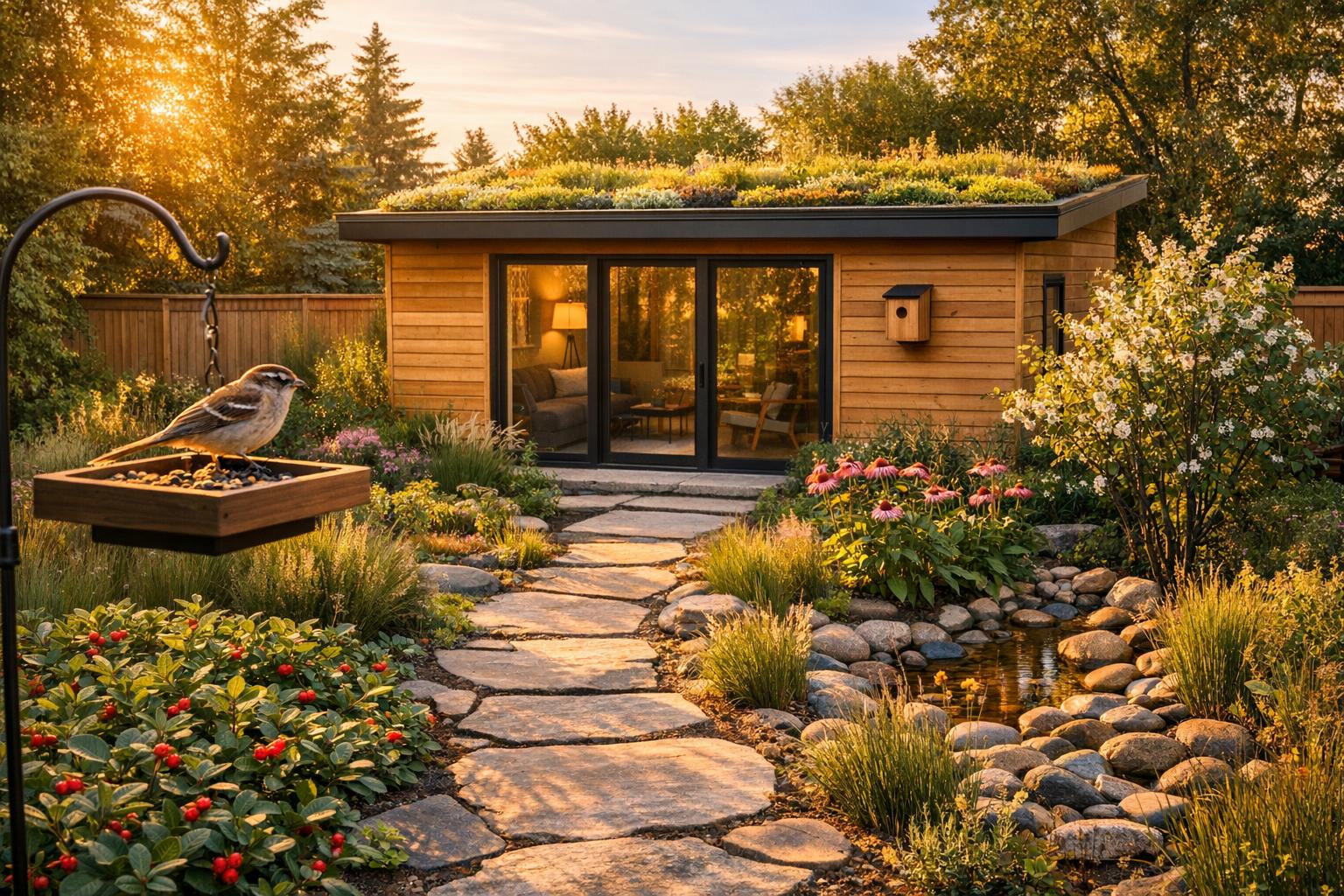
ADUs for birdwatchers are one of the most practical ways to turn a small urban lot into a daily birdwatching space while supporting native bird habitat in Canadian cities. If you want your yard, balcony, rooftop, or even a few containers to support birds, this guide shows how to do it in a simple and useful way through ADU landscaping, wildlife-friendly landscaping, and practical urban gardening tips.
The focus here is small-space design for 2026. In many Canadian cities, lots are getting smaller, weather is less predictable, and habitat loss keeps growing. That makes every planted space more important. A bird-friendly ADU can bring more bird activity to your property, improve how the site looks, and give native birds food, water, shelter, and safer places to rest through ideas linked to biophilic design and a compact pollinator garden.
This guide covers practical design principles, regional native plants, safety steps, maintenance, permits, and ways to track results over time. Small residential habitats can help biodiversity, strengthen people’s connection to nature, and support habitat stewardship when planned with care, as shown through habitat stewardship projects for species at risk, bird-friendly gardening guidance, and advice on what to plant this spring.
Why birdwatching and urban wildlife matter in Canadian cities
Birdwatching in cities is not just a hobby. It is also a way to notice how much birds depend on small patches of habitat. Many bird species are under pressure from habitat loss, and even a compact city lot can help by giving birds a place to feed, shelter, or stop during migration.
An urban wildlife corridor is a simple but powerful idea. It means a chain of gardens, trees, shrubs, balconies, and green spaces that birds can use to move through a city more safely. One yard alone is small, but many bird-friendly yards together can make a real difference. This is the logic behind wildlife corridor ADU design and the role of urban pocket parks.
ADUs for birdwatchers matter because ADU projects often change the whole site. New suites can affect drainage, fences, walkways, roof edges, plant beds, and open space. That makes an ADU project a key moment to create micro-habitats instead of leaving the lot covered in gravel, turf, or hard paving. Useful examples include rain garden integration and stronger ADU outdoor design.
This matters even more in 2026. Habitat stewardship and species-at-risk work are national priorities. Federal support for projects linked to birds such as bobolink, chimney swift, barn swallow, and piping plover shows that habitat design matters at every scale. A small ADU lot will never replace a wetland, forest, or grassland, but it can still provide real value for resident and migrating birds when designed with care, as noted by Garden for Birds and Birds Canada’s planting guidance.
Core ADU design principles for birdwatchers
Good ADU landscaping starts with one big idea:
The building should be part of the habitat plan, not just a structure beside the habitat.
Site orientation and placement
Place windows, chairs, patios, or balconies where you can enjoy birdwatching without walking through planting areas all the time. East- or south-facing spaces often provide better morning light, which helps both plant growth and bird viewing. This fits well with tiny home light design and thoughtful Canadian ADU architecture.
Try to keep the quietest part of the lot for denser planting, shelter zones, and water features. Birds use calm spaces more often than busy ones. If one side of the ADU gets less foot traffic, make that the main habitat side. That idea pairs nicely with privacy-focused design.
Building-integrated habitat features
Bird-friendly design can be built right into the ADU through ideas such as green roofs for tiny homes and compact rooftop spaces for ADUs.
- balcony planter boxes with nectar plants and seed-bearing species
- green roofs where the structure can handle the load
- screened porches or quiet viewing corners
- species-specific nest boxes on nearby structures or safe building edges
If you add nesting features, make sure they match the target species and local rules. Species-specific work matters, and recent Canadian habitat support for birds such as chimney swifts and barn swallows shows why targeted design can be effective.
Bird-safe windows
Glass is a major danger for birds. A simple feeder rule helps reduce collision risk:
- place feeders less than 1 metre from glass, or
- place feeders more than 10 metres away
You can also add:
- exterior films
- visible dot or stripe patterns
- screens
- decals used properly across the surface
- bird-safe glazing treatments
These steps are among the most important safety upgrades for ADUs for birdwatchers, supported by Birds Canada’s bird-friendly gardening tips and complementary design options such as smart glass.
Lighting
Use warm, downward-facing, motion-sensor lights instead of bright flood lights that stay on all night. Less light pollution helps nocturnal migrants and keeps the garden calmer for urban wildlife. It also makes evening spaces more pleasant for people. Consider adapting ideas from smart lighting for Canadian tiny homes.
ADU landscaping fundamentals that actually attract birds
Effective ADU landscaping gives birds four basics:
4 essentials for birds
– Food
– Water
– Shelter
– Safety
Start with native plants
Native plants are species that naturally occur in your region. They are usually better matched to local soils, weather, insects, and birds than imported ornamentals. In many cases, they support stronger insect food webs, better berry crops, better nectar sources, and better shelter. See bird-friendly habitat with native seed and plant partnerships and Birds Canada’s advice on what to plant this spring.
That matters because many birds do not just eat seed. They also rely on insects, especially when raising young. Native plants support that whole chain better than most exotic landscaping plants, which is one reason wildlife-friendly landscaping works so well.
Use vertical layers
Layered planting gives more birds more ways to use the site.
Think in four layers:
- Canopy or small tree layer: serviceberry
- Shrub layer: red-osier dogwood, highbush cranberry
- Flowering understory: asters, goldenrod
- Ground layer: native grasses, sedum
Different birds feed and hide at different heights. Layering creates more nesting cover, safer movement, and more feeding options.
Simple planting-layers diagram
- Canopy: Serviceberry
- Shrubs: Red-osier dogwood, highbush cranberry
- Understory: Asters, goldenrod
- Ground: Native grasses, sedum
Add water
Water brings birds in quickly. A shallow bird bath with a gentle slope or textured surface is safest. Moving water often attracts more birds, so a small recirculating pump can help. In colder Canadian cities, a heated bath or gentle de-icer can make the space useful in winter too. For related home systems, see solar water heating and smart water management for Canadian ADUs.
Build shelter
Dense shrubs, hedges, conifers, brush piles, and safe retained deadwood give birds places to hide and rest. Shelter is especially important in winter and when birds need to escape predators.
Supplement food carefully
Planting should be the main food source over time. Start with berries, seed heads, nectar flowers, and insect-friendly native plants. Then add feeders as a supplement, not the whole strategy.
Useful feeder types include:
- tube feeders for seed
- suet feeders in cold months
- platform feeders for mixed foods
Healthy planting makes the site useful even when feeders are empty, and it pairs well with practical urban gardening tips.
Avoid pesticides
Many birds feed heavily on insects, especially in nesting season. Routine pesticide use breaks that food chain. A better option is integrated pest management, which means solving pest problems with the least harmful method first. See pest control for tiny homes for lower-impact approaches.
Regional native plants for bird-friendly ADU landscaping in Canadian cities
Choose native plants for your local ecozone, not just plants that are native somewhere in Canada. Always check final plant choices with Birds Canada resources, provincial native plant groups, and local municipal guidance. Birds Canada’s plant database is a strong place to start, along with Nature Canada’s advice on native seed and plant partnerships.
Regional quick-reference table
| Region | Good native plants | Likely birds |
|---|---|---|
| Pacific Coast | salal, red-flowering currant, Pacific dogwood, western redcedar | juncos, varied thrush, hummingbirds |
| Prairies | serviceberry, prairie crocus, common chokecherry, blue grama grass | lark sparrows, grosbeaks |
| Great Lakes | highbush cranberry, dogwood, nannyberry, native asters, red-osier dogwood | robins, chickadees, warblers, goldfinches |
| Quebec / St. Lawrence | elderberry, wild raspberry, mountain maple | waxwings, titmice |
| Atlantic Provinces | bayberry, lowbush blueberry, red spruce | sparrows, finches, thrushes |
Pacific Coast: Vancouver and similar west coast Canadian cities
Good choices include salal, red-flowering currant, Pacific dogwood, and western redcedar. These support layered habitat and work well in coastal conditions. If you are planning regionally, related reading on coastal ADUs may still offer useful site-planning ideas.
- salal gives dense cover and berries
- red-flowering currant offers early nectar
- Pacific dogwood adds structure
- western redcedar gives evergreen shelter
This mix can support juncos, varied thrush, and hummingbirds.
Prairies: Calgary, Winnipeg, Saskatchewan and similar cities
Try serviceberry, prairie crocus, common chokecherry, and blue grama grass. These work particularly well in open-sky urban settings and can fit into compact lots influenced by dry summers and wind. See also urban homesteading for tiny homes for productive small-lot planning.
- serviceberry and chokecherry provide fruit
- prairie crocus gives early seasonal value
- blue grama adds seed and grassland texture
This palette can help birds such as lark sparrows and grosbeaks.
Great Lakes: Ontario including Toronto
Useful plants include highbush cranberry, dogwood, nannyberry, native asters, and red-osier dogwood. These are excellent choices for layered yards and compact urban habitat, especially when paired with small-space ADU landscaping.
Why they work:
- shrubs offer berries and winter cover
- asters support late-season insects and later seed value
- red-osier dogwood gives berries and strong winter stems
These plants can attract robins, chickadees, warblers, and goldfinches.
Quebec / St. Lawrence including Montreal
Consider elderberry, wild raspberry, and mountain maple. These are practical options for urban lots and compact gardens, especially if you are already using urban gardening tips to work in a smaller footprint.
- fruit for food
- cover in shrub form
- structure from mountain maple
This kind of planting can support waxwings and titmice. In the wider conservation picture, species-at-risk work linked to birds such as bobolink and chimney swift shows why local habitat improvement still matters.
Atlantic Provinces: Halifax and similar cities
Good native plants include bayberry, lowbush blueberry, and red spruce. They fit well in coastal and cool-climate landscapes and can be combined with smaller built features such as green roofs.
- bayberry and lowbush blueberry give berries
- red spruce offers evergreen shelter
They can help sparrows, finches, and thrushes. In the wider Atlantic context, habitat work for birds such as Bicknell’s thrush and barn swallows shows how important regional habitat design can be.
Small-space and container planting strategies for ADU landscaping
Even if your ADU has no open soil, you can still support birdwatching and urban wildlife with containers, balcony planters, trellises, and rooftops. Small-space approaches are especially useful for compact living formats such as container homes in Canada and a tiny home garden.
Containers
Use deep containers, ideally at least 45 cm, for shrubs and stronger root growth. Group containers in odd-numbered clusters to create a thicker, more natural look and better shelter.
A simple cluster can include:
- one shrub
- one flowering perennial
- one grass-like plant
That mix gives food, cover, and texture in a very small footprint. It also works well with flexible outdoor furnishings such as smart furniture for ADUs.
Balcony strategy
Balconies can still help birds.
Good choices include:
- tubular flowers for hummingbirds
- seed-bearing plants for finches
- compact shrubs for cover
- a small bird bath or water dish if it is safe and easy to clean
Simple balcony layout
- Wall with espalier shrub
- Deep pots with dogwood, aster, and native grass
- Bird bath centred nearby
Espalier and vertical uses
Espalier means training a shrub or small fruiting plant flat against a wall or fence. It saves space and still adds habitat value. This works well on narrow side yards and balconies and connects nicely with multi-purpose ADU spaces.
Rooftop gardens
Rooftop planting needs extra care. Check weight limits, waterproofing, root barriers, and drainage before you build. Extensive systems usually work best with lightweight growing media and native sedum or grass mixes. Review ADU rooftop gardens and rooftop spaces for ADUs before planning.
Bird-friendly features to include around the ADU
This is the built habitat part of the project.
Nest boxes
Nest boxes should match the bird you want to support. One generic box does not suit every species.
Useful basics include:
- mount about 3 to 5 metres high
- face east where suitable
- use predator guards
Special designs, such as multi-chimney structures for chimney swifts, are possible in some contexts, but they are highly specific and should be checked carefully before installation. Basic site safety guidance from tiny home safety in Canada can also help.
Feeders
Use tube feeders for seed and platform feeders for suet or mixed foods. Place feeders near shrub cover so birds can escape quickly, but still follow the safe window rule. For more yard design ideas, see landscaping ideas for ADUs.
Clean feeders every week to lower the risk of disease spread.
Water
The best bird bath is:
- shallow
- gently sloped
- easy to clean
- refreshed 2 to 3 times each week, or more in hot weather
In winter, a heated bath can make a big difference. If you are integrating utilities, see water heating for tiny homes and smart water management.
Shelter
Add shelter with:
- brush piles
- hedgerows
- conifers
- rock piles where suitable
- safe snag retention where allowed
Predator management
Free-roaming cats are a serious risk to birds. Better options include supervised outdoor time, cat-proof fencing where possible, and keeping bird areas near cover but not in places where predators can hide and ambush. Bells may help a little, but containment is much more effective. Related planning ideas can be found in a pet-friendly ADU guide and pet-friendly landscaping for small yards.
Simple nest box placement diagram
- ADU eave: nest box, east-facing, about 4 m high
- Below: dense shrub shelter
- Feeder: about 1 m from window
Winter and seasonal planning for Canadian cities
Bird-friendly ADU landscaping has to work all year, not just in spring. Planning for all seasons is easier when you understand year-round vs seasonal tiny homes and cold-climate gardening.
Winter value
Keep evergreen shelter, berry shrubs, and standing seedheads in place through fall and winter. Plants such as highbush cranberry and conifers help birds when food and shelter are harder to find. This approach also complements broader cold-climate construction planning around the ADU.
Migration support
During spring and fall migration, birds need fast access to food, water, and safe cover. Even small city sites can work as stopover habitat if they are layered and calm.
Snow and ice management
Do not over-tidy in autumn. Leave some leaf litter in planted beds. It shelters insects and supports soil health. Also try to limit salt near planting beds and water features, since salt can damage roots and reduce plant health. For practical winter prep, review a Canadian tiny home winterization checklist.
Regulations, permits, and municipal considerations for ADU landscaping
This guide is not legal advice. In 2026, rules still vary by municipality, so always check your own city requirements. A good starting point is a Canadian ADU regulations guide and an ADU legal clinic resource.
Key items to verify:
- ADU setbacks
- lot coverage limits
- drainage rules
- fence height limits
- tree protection bylaws
- heritage restrictions
- whether rooftop systems, deadwood, or snags are allowed
Cities such as Toronto and Vancouver allow ADUs with setback rules, while places like Calgary and Montreal may have extra limits tied to trees, site access, or other lot conditions. Related references include tiny home-friendly municipalities in 2026 and tree preservation laws for ADUs.
Bring in the right professionals when needed:
- an arborist for protected trees or safe snag retention
- a structural engineer for green roofs
- the planning department for ADU compliance
- stormwater or conservation staff for drainage-sensitive sites
Monitoring success through birdwatching and community science
Measure success by more than bird numbers alone. Look for:
- plant survival
- feeding activity
- bathing use
- nesting signs
- pollinator visits
- fewer window collisions
Simple ways to track change:
- take before-and-after photos
- keep a weekly or monthly species list
- note first hummingbird sightings
- note winter finch visits
- track nesting activity by season
Community science can also help. eBird, iNaturalist, and Birds Canada programs can turn private yard observations into useful conservation data. That helps strengthen neighbourhood habitat corridors over time. Sharing plant lists and learning with neighbours can make nearby lots more useful too, especially through local efforts such as community gardens for tiny homes.
Maintenance plan and timeline for the first year and beyond
A good bird-friendly garden is easier to manage when it follows a simple schedule. Useful support tools include an ADU maintenance checklist and smart home maintenance guidance.
Year 1 establishment
- Plant mainly in spring or fall
- Mulch 5 to 10 cm deep
- Water deeply about twice a week in the first growing season, adjusting for rain and plant type
Ongoing annual maintenance
- Winter: prune dormant shrubs lightly; check heated baths or de-icers
- Spring: inspect nest boxes; add plants; divide perennials if needed
- Summer: deep watering; check invasive weeds; deadhead selectively
- Fall: leave seedheads; refresh mulch; set up winter feeders and water
- Weekly: clean feeders and bird baths
A slightly less tidy space is often better for birds than a heavily cut and cleaned garden.
Seasonal maintenance table
| Season | Main tasks |
|---|---|
| Spring | plant natives, install nest boxes |
| Summer | water deeply, selective deadheading |
| Fall | mulch, prep feeders |
| Winter | de-ice baths, monitor berries |
Cost estimates and ways to scale the project
The smartest approach is to phase the work over time. For broader planning, see ADU cost to build in Canada and green upgrades financing.
Budget comparison table
| Budget level | Typical range | What it can include |
|---|---|---|
| Low-cost | $500–$2,000 | containers, about 10 native plants, one bird bath, one feeder |
| Mid-range | $3,000–$8,000 | in-ground hedgerow, more shrubs and perennials, nest boxes, custom planters |
| Premium | $10,000+ | full layered planting, water feature, roof system, custom built habitat features |
Main cost drivers include:
- soil work
- irrigation
- hardscape removal
- rooftop structural work
- size of plants at purchase
Best order for spending:
- native plants
- water
- shelter and nest features
- premium built features
Case studies: how bird-friendly ADU landscaping can work
These mini-profiles show how the same ideas can work across different lot types in Canadian cities.
Toronto tight urban lot, container-focused
Before, the area around the ADU was mostly gravel with very little planting. After, the space used grouped deep containers with red-osier dogwood, asters, and native grasses, similar to ideas in landscaping ideas for ADUs.
Observed birds included chickadees and goldfinches.
Lesson: clustered containers can mimic real habitat structure even on a hard site.
Vancouver laneway ADU with small yard
This layout used a salal hedge, balcony nectar planters, and a green roof sedum layer based around compact rooftop space design.
Results included more juncos and hummingbirds.
Lesson: combining ground shelter with vertical planting broadens bird use and improves urban wildlife value.
Calgary rooftop ADU
This project used a native grass mix, serviceberry espalier, and a rooftop growing system designed for weight limits and drainage. Helpful related references include a solar-ready ADU design guide. For rooftop planning, confirm the exact project resources you use and verify municipal and structural requirements carefully.
Winter berries attracted grosbeaks.
Lesson: on rooftops, engineering and drainage matter just as much as plant choice.
Practical resources and suppliers readers should use
A strong bird-friendly project usually depends on a few trusted sources. Alongside local experts, readers may benefit from practical ADU planning resources such as a tiny home builder guide and ADU concierge services.
Use:
- Birds Canada resources for plant lookup and bird-friendly gardening advice
- eBird for bird records
- provincial native plant societies for local species checks and nursery lists
- municipal ADU permit pages for setbacks and lot rules
- municipal urban forestry pages for tree protection and planting rules
These sources help make sure your native plants, ADU landscaping, and site decisions fit local conditions in Canadian cities.
Printable checklist
Use this checklist to plan ADUs for birdwatchers in a simple order.
- assess sun, shade, wind, drainage, and viewing angles
- identify local native plants for your region
- choose at least one food source, one water source, and one shelter feature
- verify feeder and window safety distances
- confirm permits and bylaws before tree work or construction
- create a weekly and seasonal maintenance routine
- start a birdwatching log
Helpful planning tools can include:
- a printable planting map template
- a feeder cleaning log
- a seasonal maintenance calendar
- a regional native plant starter list
FAQ
Will a small ADU yard really help birds?
Yes. Small micro-habitats can connect larger green spaces and give birds food, shelter, and migration stopovers in cities. That is why even small urban wildlife patches matter, especially when supported by ideas like urban pocket parks and regional habitat stewardship.
Won’t native plants look messy?
Not if they are designed well. Native plants often look more natural than formal, but clear bed edges, selective pruning, and layered planting keep ADU landscaping attractive. Seedheads can stay through winter because they also feed birds. For design inspiration, see landscaping ideas for ADUs.
How do I avoid window collisions?
Use the feeder rule: less than 1 metre from the window or more than 10 metres away. Add visible window treatments such as patterns, films, or screens. You can also review smart glass options for safer glazing choices.
What about pests?
Bird-friendly gardens should avoid routine pesticides. Use integrated pest management so birds still have access to insect food sources. See pest control approaches for tiny homes for lower-impact strategies.
Should I feed birds in winter?
Yes, but think of feeders as a supplement. The main landscape should still provide berries, shelter, and standing seedheads. Suet and seed can help during harsh weather in Canadian cities.
Do I need permits?
Sometimes, yes. ADU work, tree removal, rooftop systems, drainage changes, and structural site changes may all need approvals. Check municipal rules early using resources such as a Canadian ADU regulations guide.
Final thoughts
ADUs for birdwatchers can become meaningful habitat when the design combines bird-safe building choices, layered native plants, water, shelter, and low-chemical maintenance. You do not need a large property to help. One shrub, one safe bird bath, one cluster of containers, or one better window treatment all count. For broader accessibility and outdoor planning, see accessible tiny home design and ADU outdoor design.
Over time, birdwatching will show you what works. A small, well-planned ADU landscaping project can support urban wildlife, improve daily life, and make planted spaces in Canadian cities more useful for native birds.
Leave a Reply